

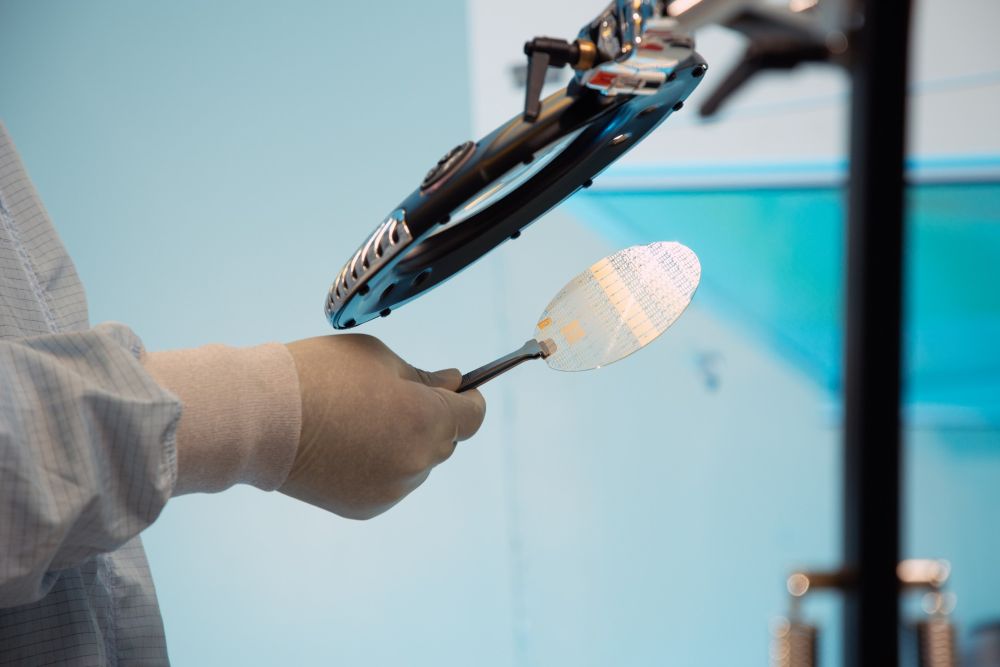
Northrop Grumman has won a $7 million DARPA contract to develop next-generation microchips cooled by real diamond materials. This diamond-cooling breakthrough solves severe overheating problems in high-speed defense electronics. By removing excess heat fast, the innovation allows mission-critical systems to run much faster and last longer without burning out.
Northrop Grumman is leading the project under Phase 2 of DARPA’s THREADS program. The defense tech company teamed up with researchers from Stanford University to design and build these advanced semiconductor units. Ben Heying, director of microelectronics at Northrop Grumman’s Space Park Foundry, oversees the engineering work.
Modern radio-frequency electronics face a major heating problem. Today’s systems must run below full speed to avoid dangerous thermal buildup that degrades chip life and triggers mission failures. Traditional cooling metals like copper simply cannot pull heat away fast enough from tiny, high-powered circuits.
READ ALSO:https://modernmechanics24.com/post/ammobia-lummus-low-cost-ammonia/
The team solved this by embedding microscopic diamond layers directly inside the tiny channels on the back of the chip. Diamond moves thermal energy 5 times faster than copper. These diamond channels pull heat away from internal hotspots instantly so the chip can operate at maximum capacity.
The new technology will directly improve military radar systems, battlefield radios, and space satellites. By keeping chips cool under heavy loads, communication links become much stronger while hardware becomes smaller and lighter.
At present, manufacturing diamond-integrated semiconductors remains complex and is restricted to specialized, high-cost defense and aerospace applications. Researchers must still work on scaling up manufacturing techniques to lower costs before widespread consumer electronics can adopt them.
WATCH ALSO: https://modernmechanics24.com/post/china-c919-first-international-flight/
This research will change the future of high-power hardware by removing the thermal barriers that limit modern computing. Diamond-backed semiconductors provide a pathway to create smaller, ultra-reliable devices for both national security and advanced global communication networks.
















2 Responses