

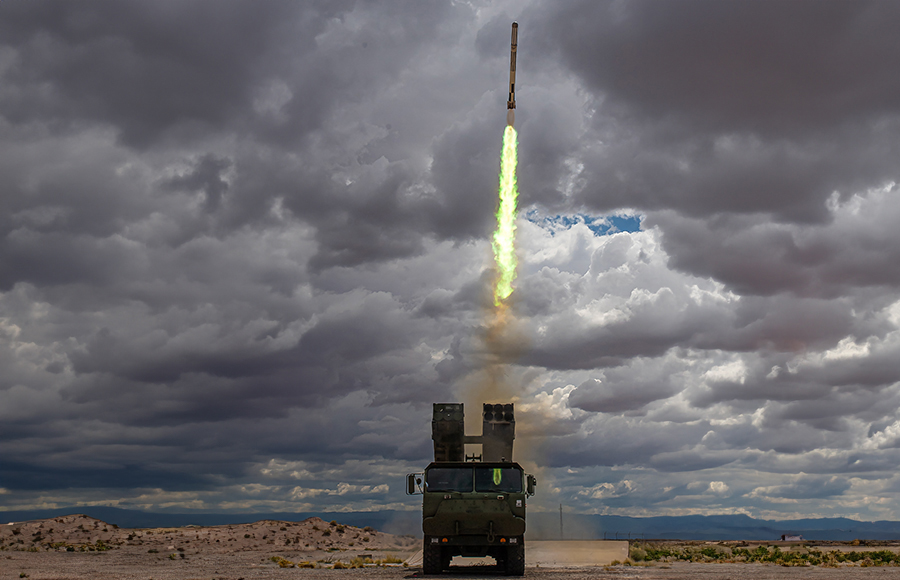
Lockheed Martin has successfully completed the second flight test of its Joint Reduced Range Rocket (JR3), a training rocket designed for the U.S. Army and international partners. The test took place at Yuma Proving Ground in Arizona and focused on range, accuracy, flight path, and marking effects.
The Lockheed Martin JR3 is being developed as a replacement for the Army’s current Reduced Range Practice Rocket. The company says the system is designed to make live-fire training more affordable and allow crews to conduct training more often.
The main problem JR3 aims to solve is the cost and availability of realistic rocket training. A lower-cost training round could allow launcher crews to carry out more live-fire exercises without using as many expensive operational rounds.
READ ALSO: https://modernmechanics24.com/post/micron-boise-training-semiconductor/
JR3 is designed to work with the HIMARS and M270 launch systems. It uses a modular rocket design with a lower-cost motor and an adaptable payload, while its launch pod can be reloaded and reused for additional training sessions.
During the latest test, multiple JR3 training rounds were launched from a HIMARS. The test examined the rocket’s range, trajectory, accuracy, and marking payload, helping Lockheed Martin collect data for further development.
The system is still being tested and is not yet a replacement in active Army service. Another JR3 flight test is planned later in 2026 to continue checking its performance.
The company says the JR3 could help increase training volume while reducing the cost of repeated live-fire exercises. Its technology could also support future U.S. Army efforts focused on producing lower-cost rockets at larger scale.
WATCH ALSO: https://modernmechanics24.com/post/nvidia-cosmos-real-world-driving/














One Response