

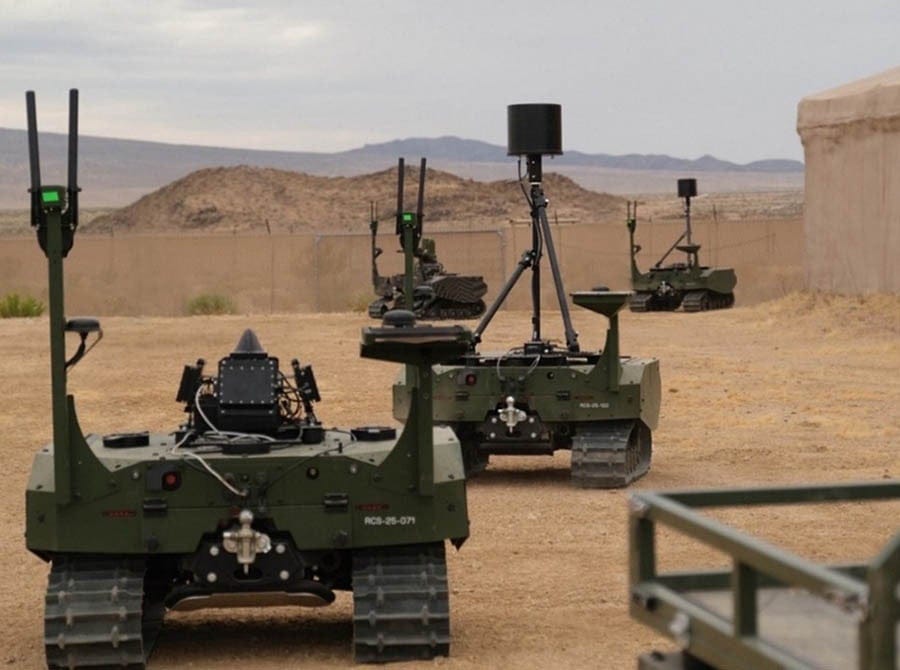
L3Harris Technologies and ARX Robotics UK have tested a remotely controlled ground robot carrying a counter-drone sensing system during a US Army exercise.
The demonstration moved the CORVUS-RAVEN system into forward or hazardous areas while allowing operators to remain farther away. The trial took place during Project Convergence-Capstone 6, an Army campaign focused on emerging military technologies and future operations.
Robotic Platform Carries Sensors
The system was mounted on ARX Robotics’ Gereon, a modular uncrewed ground vehicle designed to carry different mission payloads.
CORVUS-RAVEN uses passive sensing, meaning it listens for signals linked to possible drone threats instead of actively transmitting signals to search for them. It also gives operators bearing information that helps indicate the direction from which a potential threat is approaching.
READ ALSO: https://modernmechanics24.com/post/china-humanoid-robot-tennis-human-show/
Using a mobile platform gives the sensing system greater flexibility on the battlefield. The robotic vehicle can move closer to areas where drone threats are expected and reposition as operational needs change.
This approach also allows personnel to operate the sensor from a safer location rather than physically moving into potentially dangerous areas.
Focus On Passive Threat Detection
L3Harris said the demonstration examined how passive sensing could be extended into forward and hazardous locations.
Nicky Tabram, Managing Director of Global Spectrum Superiority UK at L3Harris, said the setup was intended to improve situational awareness while reducing personnel exposure to threats. The company described the trial as an exploration of how uncrewed ground vehicles can extend the reach of existing counter-drone technology.
CORVUS-RAVEN is designed with an open architecture, allowing it to connect with different command-and-control and battle-management applications.
It can generate messages compatible with the US Army’s Tactical Assault Kit, commonly known as TAK, for sharing information across connected systems. Threat-bearing information can also be added to a shared map, giving operators a clearer picture of potential drone activity.
Faster Integration Through Design
The system also includes an electronic defeat function, allowing it to support counter-drone operations without requiring separate external equipment for that role.
L3Harris said the use of modular hardware and open system architecture helped reduce integration challenges during the demonstration. This design approach is intended to make it easier to combine counter-drone equipment with different robotic platforms.
David Roberts, CEO of ARX Robotics UK, said modular ground robots are intended to carry important mission technologies into locations where they are needed while keeping personnel farther from threats.
The demonstration, therefore, brought together two separate capabilities: L3Harris’ counter-drone technology and ARX Robotics’ robotic transport platform. Project Convergence provides the Army with a testing environment for assessing how such technologies can work together in future operational settings.
WATCH ALSO: https://modernmechanics24.com/post/us-army-46m-autonomous-cargo-drone/
The companies said lessons from the trial will guide further development and examine other possible uses for counter-drone systems mounted on robotic vehicles.
The demonstration also highlights a broader shift toward using mobile, remotely operated platforms to place sensors and other equipment in difficult or hazardous areas. Further testing will determine how such systems can be integrated into wider military networks and future counter-drone operations.







One Response