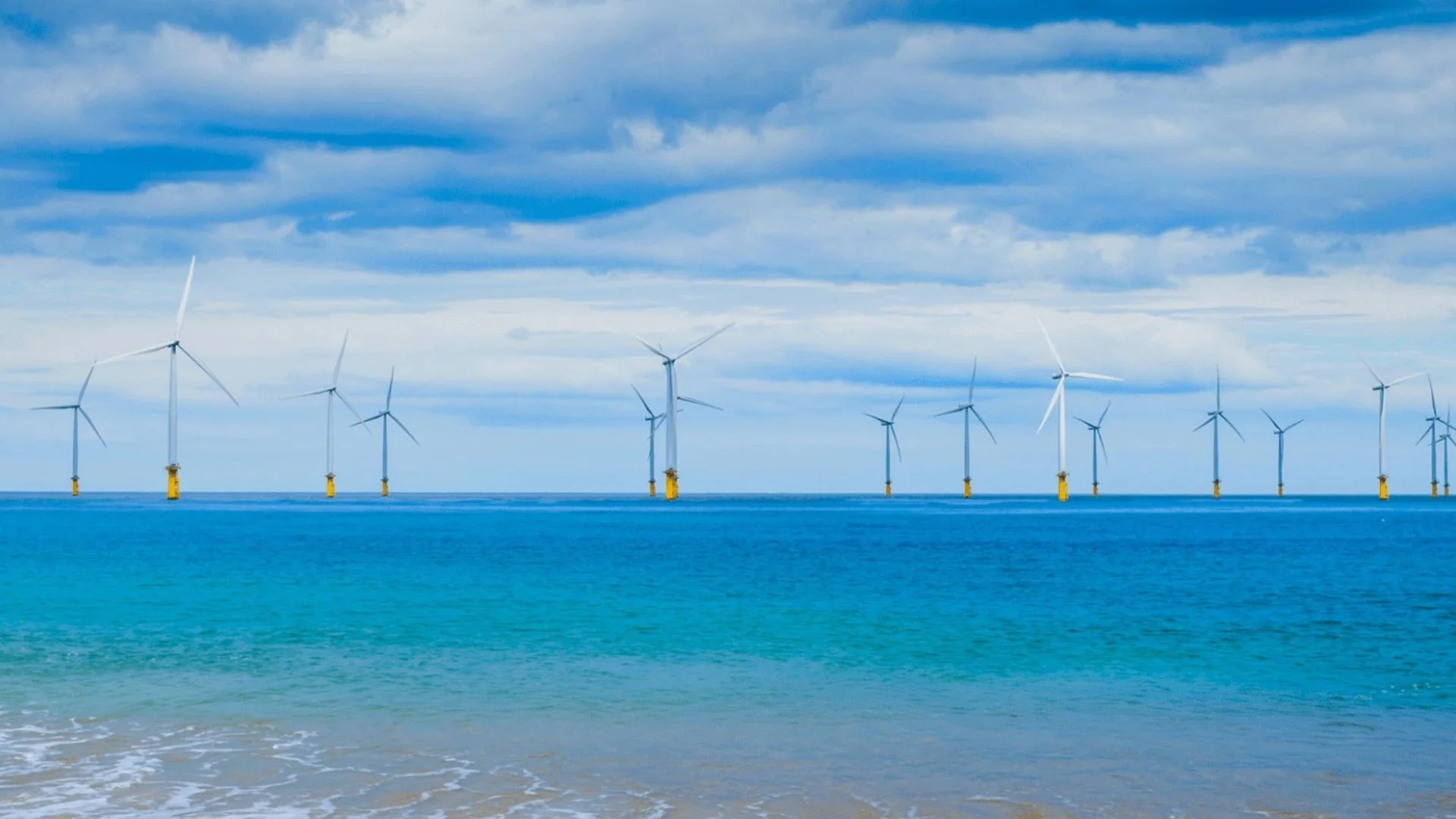
Japan is planning the world’s first 1-gigawatt floating wind farm to supply clean power to the Izu Islands and Tokyo.
However, questions are already emerging about whether the project can meet its timeline and deliver the expected output.
The proposal is backed by Yuriko Koike, the governor of Tokyo. She first introduced the idea at a climate conference in Azerbaijan in 2024. Since then, the project has been positioned as a key step in Tokyo’s push toward cleaner energy and long-term climate goals.
At its core, the plan focuses on installing floating and tethered wind turbines off the Izu Islands. These turbines would generate electricity and transmit it through undersea cables to Tokyo, located about 160 kilometers to the north.
READ ALSO: 99.99% Efficient Water-Based Zinc Batteries Solve Energy Storage Challenge
The scale of the project is significant. A capacity of 1 gigawatt is roughly equal to that of a nuclear reactor. If completed, it would far exceed the size of existing floating wind farms. For comparison, the largest operational floating wind project today, located in Norway, produces just under 100 megawatts.
Tokyo has chosen floating turbines instead of fixed ones anchored to the seabed. Officials say this approach reduces the environmental impact during construction and allows installation in deeper waters. The project will focus on several islands, including Oshima, Niijima, Kozushima, Miyake, and Hachijo.
To move the project forward, the Tokyo government has allocated 2.7 billion yen, or about $16.9 million, in its 2026 budget. This funding will support early-stage work, including wind condition surveys, transmission studies, and discussions with local communities.
Energy experts say the plan reflects Tokyo’s growing focus on renewable energy. Yasushi Ninomiya, from The Institute of Energy Economics Japan, noted that Koike has made clean energy a central part of her policy agenda.
“Koike has set a target for Tokyo to be net zero by 2050,” Ninomiya said. “To reach that goal, the city needs to expand its renewable energy sources.”
WATCH ALSO: NASA rover discovered ancient microbial life signature on Mars
He also pointed to Koike’s earlier success with the “Cool Biz” campaign, which encouraged lighter office clothing in summer to reduce energy use. That campaign helped shift public attitudes and became widely accepted across Japan.
Despite the strong vision, the wind farm project faces several challenges. Experts warn that building such a large offshore system is complex and time-consuming. Meg De Pasquale-Crighton, a consultant at Shulman Advisory, said the engineering demands alone are significant.
She highlighted key obstacles, including the need for new port infrastructure to assemble turbines, the cost of undersea cables, and lengthy environmental assessments. She also noted that government subsidies may not be sufficient to support the full project.
“The project is technically feasible,” she said. “But it is likely to fall short of its expected output.”
READ ALSO: Squire WIG Drone’s Low-Altitude 40-Knot Flight Signals New Way To Move And Fight
One reason for this is how wind farms operate. Unlike nuclear plants, which run at high capacity most of the time, offshore wind farms typically operate at around 40 percent capacity. This means the actual electricity produced may be much lower than the maximum figure suggests.
Even so, Japan has some advantages. The country has strong expertise in floating wind technology and a well-developed shipbuilding industry. The wind conditions around the Izu Islands are also considered favorable for power generation.
The project also aligns with Japan’s broader national goal of generating 45 gigawatts of offshore wind power by 2040. This makes the Izu Islands an important part of a larger energy strategy.
Still, not everyone is convinced. Some experts believe the timeline is too optimistic. Offshore wind projects often take more than a decade to complete, and this project is still in its early stages.
One energy expert familiar with the plan expressed concern. “Everything about the project seems exaggerated,” the expert said. “There is no detailed development plan, and the 2035 target appears too soon.”
The expert also noted that floating wind technology is still emerging. It currently accounts for less than 1 percent of global wind energy projects. Japan, they added, is still catching up with European countries that lead in this field.
WATCH ALSO: Drum-shaped antenna reflector on NASA-ISRO NISAR satellite deployed
Others see the announcement as more of a long-term vision than a fixed plan. De Pasquale-Crighton said initial phases may begin operating in the late 2030s, while full completion could take even longer.
“The announcement reflects strategic intent,” she said. “It is not yet a firm commitment with a clear timeline.”
There is also a political dimension to the project. Koike is known for promoting high-profile environmental initiatives. Some observers believe the wind farm plan fits into that pattern, reinforcing her image as a leader in climate policy.
Even with these concerns, the project has sparked discussion about the future of energy in Japan. As the country works to reduce its reliance on fossil fuels, large-scale renewable projects will play a key role.
For now, the floating wind farm remains a bold idea with both promise and uncertainty. Its success will depend on how Japan addresses the technical, financial, and environmental challenges ahead.