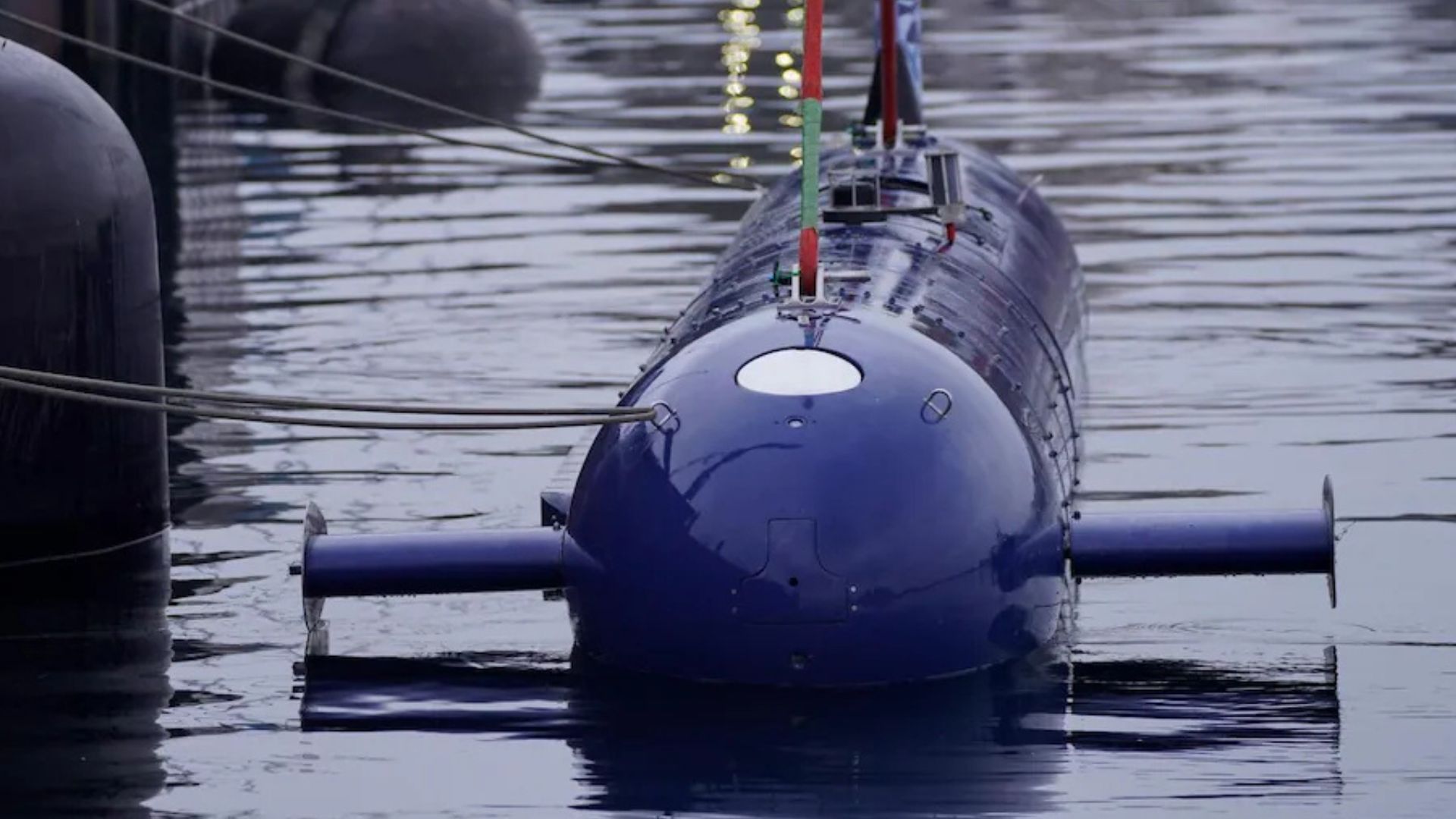
Israel Aerospace Industries (IAI) handed over the world’s first unmanned submarine to the German Navy.
The delivery ceremony of the submarine, the BlueWhale, was held at the German naval base in Eckernförde on the Baltic Sea. It marked the culmination of years of joint development between IAI and Atlas, a subsidiary of Germany’s TKMS.
Inside the BlueWhale
The BlueWhale is no ordinary piece of military legacy. The submarine is designed to operate without a human crew. It travels at 7 knots underwater and can sustain continuous operations for 2 to 3 weeks. This ability places it firmly in the category of long-range strategic assets rather than short-range tactical tools.
READ ALSO: https://modernmechanics24.com/post/solar-battery-generates-green-hydrogen/
One of its most unique features is its transportability. The entire vessel fits inside a standard 40-foot shipping container. That means it can be deployed by land, air, or sea, arriving at a conflict zone without any visible military footprint. That kind of logistics flexibility is rare among underwater systems worldwide.
The BlueWhale is equipped with both surface and subsurface sensors. It can conduct reconnaissance, detect targets above and below the waterline, gather acoustic intelligence, locate seabed mines, and serve as an extended sensor arm for manned platforms.
The BlueWhale emerged from a joint venture between IAI and Atlas. Atlas is the defense-oriented subsidiary of ThyssenKrupp Marine Systems (TKMS). TKMS is a German shipbuilder that has long supplied Israel’s own navy with Dolphin AIP submarines and Sa’ar 6 corvettes.
The irony is that the country that builds Israel’s manned submarines helped Israel develop an unmanned one for Germany.
After the German Navy completed rigorous Baltic Sea testing in November 2024 under the “Navy 2035+” program, the vessel cleared all benchmarks for formal delivery. Navy 2035+ is an initiative designed to fast-track real-world evaluation of emerging technologies.
Neither IAI nor the German Navy disclosed the total number of vessels ordered or the full financial scope of the agreement.
WATCH ALSO: https://modernmechanics24.com/post/china-astronauts-mice-space-research-mission/
BlueWhale’s Intended Missions
The BlueWhale’s envisioned operational roles go well beyond simple surveillance. The joint IAI-TKMS statement identified its primary missions as unmanned anti-submarine warfare (ASW) and covert maritime operations.
Anti-submarine warfare is one of the most demanding and high-risk disciplines in naval combat. Deploying an autonomous platform to hunt enemy submarines dramatically reduces crew risk while extending Germany’s surface fleet’s reach into contested underwater spaces.
The vessel’s acoustic collection capabilities give commanders real-time intelligence on subsurface threats.
Why This Deal Matters
The BlueWhale delivery does not stand in isolation. It is part of a broader and accelerating strategic relationship between Israel and Germany in the defense sector.
Germany has acquired the Arrow 3 long-range air defense system, also manufactured by IAI. Within the next four years, TKMS is also scheduled to begin delivering three Decker-class submarines to the Israeli Navy, vessels ordered in 2022.
These deals paint a picture of two technologically advanced democracies weaving their defense industries into a tight mutual dependency. It will be the one that goes far beyond a simple buyer-seller relationship.
READ ALSO: https://modernmechanics24.com/post/durapatcher-technology-pothole-crisis/
Germany’s acquisition of the BlueWhale places it at the cutting edge of a technological transformation that every major naval power is watching closely. Autonomous underwater vehicles are moving from experimental novelties to operational fleet assets faster than most defense ministries anticipated.
Nations that secure early experience with these systems will hold a significant operational advantage. That’s why learning how to integrate these systems into existing command structures, maintain them, and deploy them in contested environments is important.
The BlueWhale’s modular sensor architecture and containerized deployment model also suggest that future variants could be adapted for a wide range of missions beyond ASW. It includes communications relay, undersea infrastructure monitoring, and electronic warfare support.