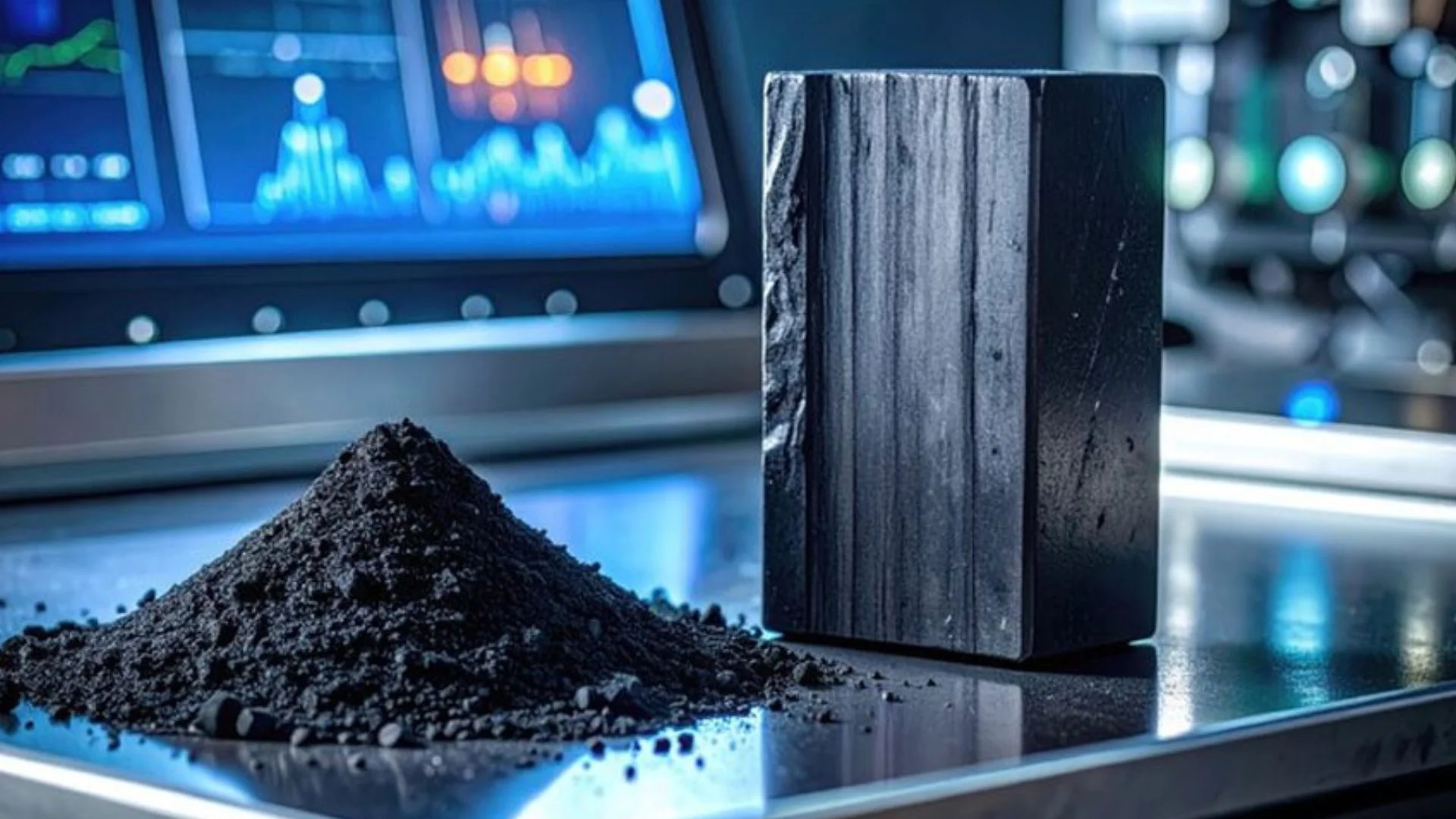
Graphite One has reached two important milestones in its effort to establish a domestic source of battery-grade graphite in the US.
The company recently signed an engineering contract for its planned Active Anode Materials (AAM) manufacturing facility in Conneaut, Ohio. It has also continued development work at the site where the future plant will be located.
The project forms a key part of Graphite One’s broader strategy to build an integrated American graphite supply chain. The company aims to connect graphite mining, processing, and battery material production within the US. This approach is designed to reduce dependence on imported graphite products.
Ohio Facility Moves Into Execution Phase
Graphite One announced that it has entered into an engineering agreement with a specialized firm experienced in the design of anode material production facilities.
The engineering work will support detailed planning and optimization of manufacturing systems at the Ohio facility. It also helps move the project from the planning stage into a more advanced execution phase.
READ ALSO: IAEA Unveils Global Nuclear Fuel Map Showing Where 448,000 Tonnes Are Stored
The selected engineering company has expertise in large industrial manufacturing systems and high-temperature processing operations. These capabilities are important because synthetic graphite production requires energy-intensive heating processes. The engineering work will focus on improving efficiency, production quality, and future expansion opportunities.
Company officials said the contract is expected to help reduce project risks before construction begins. It will also support equipment integration and improve readiness for future commissioning activities. The goal is to ensure the facility can produce battery-grade anode materials consistently at a commercial scale.
Strategic Conneaut Site Offers Key Infrastructure Advantages
Graphite One secured its Conneaut, Ohio, site in May 2026 through an agreement with a CN Railway subsidiary. The location provides direct rail access and connections to Great Lakes shipping routes. It also includes access to existing high-capacity electrical infrastructure.
These features are especially important for synthetic graphite production, which requires substantial electricity. Existing infrastructure can lower development costs and shorten construction timelines. The site also provides room for future expansion beyond the company’s initial plans.
The facility is located in Ashtabula County in northeastern Ohio. The region has a long industrial history and access to transportation networks that support large-scale manufacturing. These factors contributed to the site’s selection.
Graphite One has already completed geotechnical drilling at the location. This work helps engineers understand ground conditions before construction. Environmental studies and permitting activities are now underway.
READ ALSO: New Feathered Dinosaur Species Found in China Offers Clues to Bird Flight Evolution
The company expects environmental assessments and permitting work to be completed during the first quarter of 2027. These steps are required before full construction activities can move ahead. Regulatory approvals remain an important part of the project’s timeline.
Development Plan Targets 25,000 Tonnes by 2028
Graphite One plans to develop the facility in two stages. The phased approach is designed to bring products to market sooner while gradually expanding production capacity. It also allows the company to reduce risks associated with larger investments.
The first phase is expected to be completed during the fourth quarter of 2027. It will focus on finishing, coating, and blending operations for battery anode materials. Initial production capacity is expected to reach about 10,000 tonnes per year.
These materials will be used in applications such as electric vehicles, energy storage systems, and fast-charging batteries. Battery manufacturers often require customized anode materials to meet specific performance requirements. The facility will be designed to provide those tailored products.
The second phase is scheduled for completion during the fourth quarter of 2028. It will expand capacity to 25,000 tonnes per year of synthetic graphite and graphitization output. This stage includes installing high-temperature graphitization systems.
Graphitization is a process that converts carbon-based materials into graphite at high temperatures. The resulting graphite is a critical component in lithium-ion batteries. It helps store and release energy efficiently during battery operation.
Growing Demand Creates Market Opportunity
The project arrives at a time of rapidly increasing demand for battery materials across North America. According to S&P Global Mobility, graphite demand for battery applications in the region reached approximately 56,000 tonnes in 2023. Demand is projected to exceed 620,000 tonnes by 2030.
That increase represents roughly eleven times the growth within seven years. The rise is being driven by expanding electric vehicle production and growing energy storage deployments. Battery manufacturers are seeking reliable sources of key materials to support that growth.
Graphite plays a particularly important role in lithium-ion batteries. It accounts for about 95% of the anode material by weight. Every electric vehicle battery requires substantial amounts of graphite to function effectively.
WATCH ALSO: Poland and Portugal Gain New Space Capabilities After ICEYE Launch
Despite its importance, the US currently relies heavily on imported graphite and processed anode materials. Much of the world’s graphite processing capacity remains concentrated in China. This has raised concerns about supply chain security and long-term availability.
Building an Integrated US Supply Chain
Graphite One’s strategy extends beyond the Ohio manufacturing facility. The company is also advancing development of its Graphite Creek project in Alaska. The deposit is expected to provide natural graphite feedstock for future operations.
Under the company’s long-term plan, graphite mined in Alaska would be processed in Ohio into battery-ready materials. The facility is also expected to have the capability to produce both natural and synthetic graphite products. It will support customized blends based on customer requirements.
Graphite One is also evaluating future recycling opportunities. Battery material recycling could help recover graphite and other valuable materials from used batteries. Such efforts would further strengthen domestic supply chains.
The company says this vertically integrated model offers several advantages. It can improve supply chain transparency, reduce transportation costs, and enable customers to trace North American sourcing. These factors have become increasingly important as governments promote domestic critical mineral production.
The project is also expected to generate economic benefits for the region. Phase one is projected to create between 30 and 40 permanent jobs. Phase two could add another 100 to 120 positions as production expands.
Graphite One continues to provide sample materials to electric vehicle manufacturers and battery companies for testing programs. The company is also engaged in discussions regarding future supply agreements and commercial partnerships. At the same time, permitting work continues at its Graphite Creek project under the federal FAST-41 program, which aims to improve coordination for major infrastructure and resource projects.
As demand for electric vehicles and energy storage systems continues to grow, domestic supplies of battery materials are becoming increasingly important. Graphite One’s Ohio facility represents a significant effort to establish large-scale US graphite production capacity.