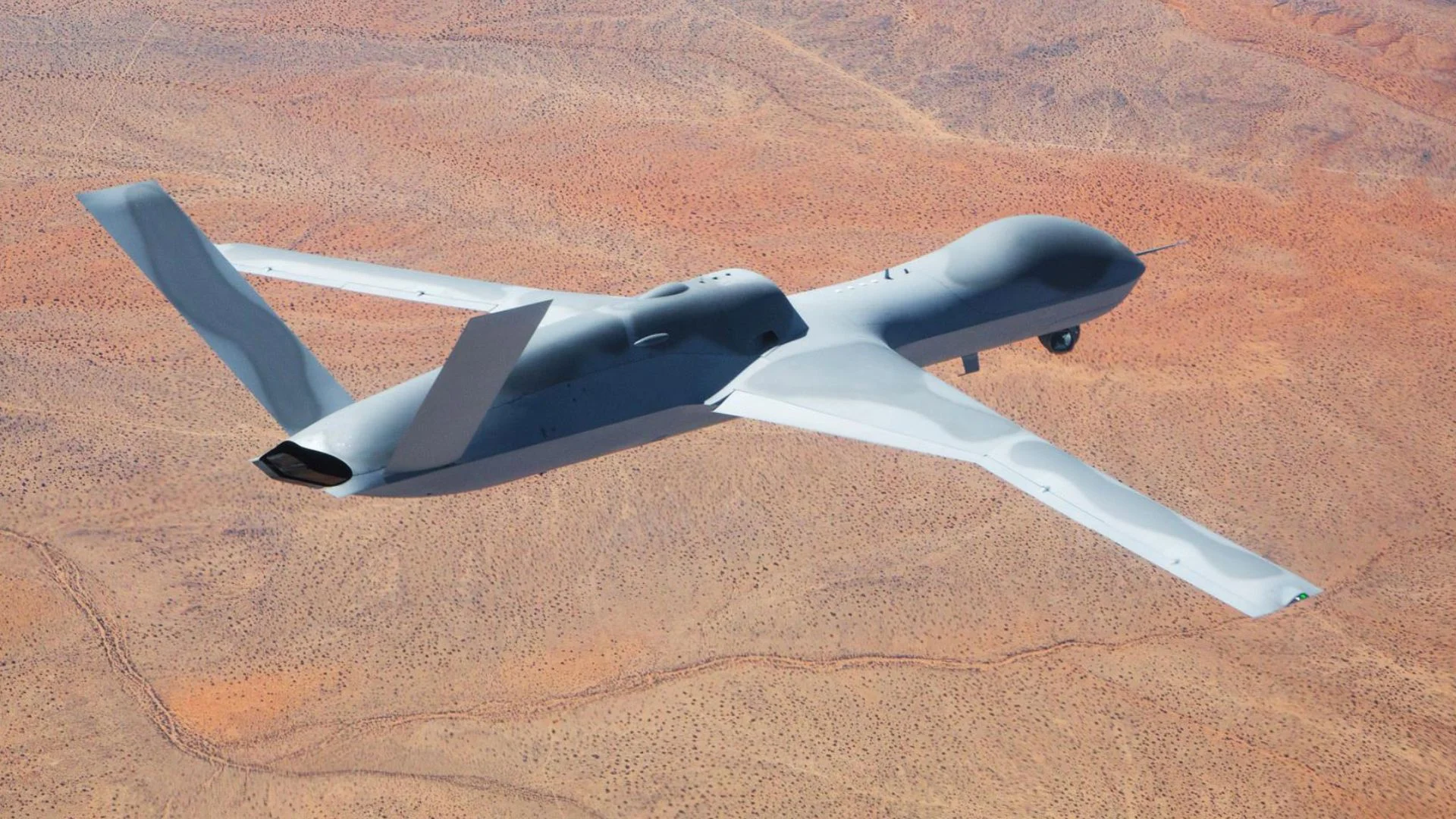
The US is moving closer to integrating autonomous drones with fighter jets after a new test linked the F-35 Lightning II with the MQ-20 Avenger drone.
The demonstration showed how pilots can control unmanned aircraft during missions using advanced communication systems and autonomous software.
The test supports the US Air Force’s Collaborative Combat Aircraft program, which aims to combine crewed fighters and autonomous drones in future combat operations.
F-35 Controls MQ-20 Drone
General Atomics Aeronautical Systems Inc. successfully tested coordination between the F-35 Lightning II fighter jet and the MQ-20 Avenger drone.
The test connected an airborne MQ-20 drone with an F-35 located on the ground. A pilot inside the fighter jet used a tablet-style interface to send commands to the drone. The system allowed the pilot to manage the unmanned aircraft in real time during the exercise.
The MQ-20 operated using General Atomics’ Tactical Autonomy Ecosystem software. The software follows the US government’s autonomy standards for military systems. It also supports secure communication between aircraft operating far beyond direct visual range.
The drone and fighter jet exchanged data via a tactical low-Earth-orbit satellite network. This communication system helped maintain stable communication between the two platforms during the test. It also allowed the drone to share live flight information back to the pilot.
During the exercise, the F-35 directed the MQ-20 to perform tactical flight maneuvers. The drone adjusted its route, speed, and position in response to the commands it received. It then returned autonomous responses and flight status updates to the pilot.
READ ALSO: US Navy Taps Raytheon to Expand Mark 58 CRAW Torpedo With Dual Propulsion Systems
The demonstration included support from Lockheed Martin and software company Autonodyne. Military engineering teams also participated in the project. The collaboration highlighted how different defense companies are working together on future air combat systems.
The US Air Force launched the CCA program to strengthen future combat operations with lower-cost autonomous aircraft. These drones are expected to support fighter pilots during reconnaissance, electronic warfare, strike missions, and decoy operations. Military planners believe this approach can improve combat flexibility while reducing risks to human pilots.
Unlike traditional drones that require continuous remote control, CCA drones are designed to make limited decisions autonomously. They can follow mission goals while adapting to changing battlefield conditions. This allows pilots to focus more on combat strategy rather than directly managing every drone’s movement.
The MQ-20 Avenger has already spent more than five years serving as a testing platform for autonomous combat systems. General Atomics is also developing the YFQ-42A Dark Merlin and XQ-67A aircraft for the same program. These aircraft are expected to support future US Air Force operations as autonomous systems become more common.
WATCH ALSO: SpaceX rocket sends 11,000 pounds of scientific investigations, cargo to space station
Michael Atwood, vice president of advanced programs at General Atomics, said the test showed progress toward operational readiness for collaborative combat aircraft.
He added that the company remains focused on advanced data links, mission autonomy, and unmanned combat operations. His comments reflect the growing importance of autonomous systems in modern air warfare.
The US Air Force plans to begin purchasing operational CCA drones in 2027. Military officials see autonomous aircraft as an important part of future air dominance strategies. As development continues, tests like this will shape how fighter pilots and drones operate together in future conflicts.