The US Navy is expanding development of its next-generation submarine-launched torpedo as it prepares for future underwater threats across the Indo-Pacific region.
Raytheon is now leading the second phase of the Mark 58 Compact Rapid Attack Weapon(CRAW) program after taking over parts of the effort from Penn State Applied Research Laboratory. The project is part of the Navy’s wider push to modernize undersea warfare systems.
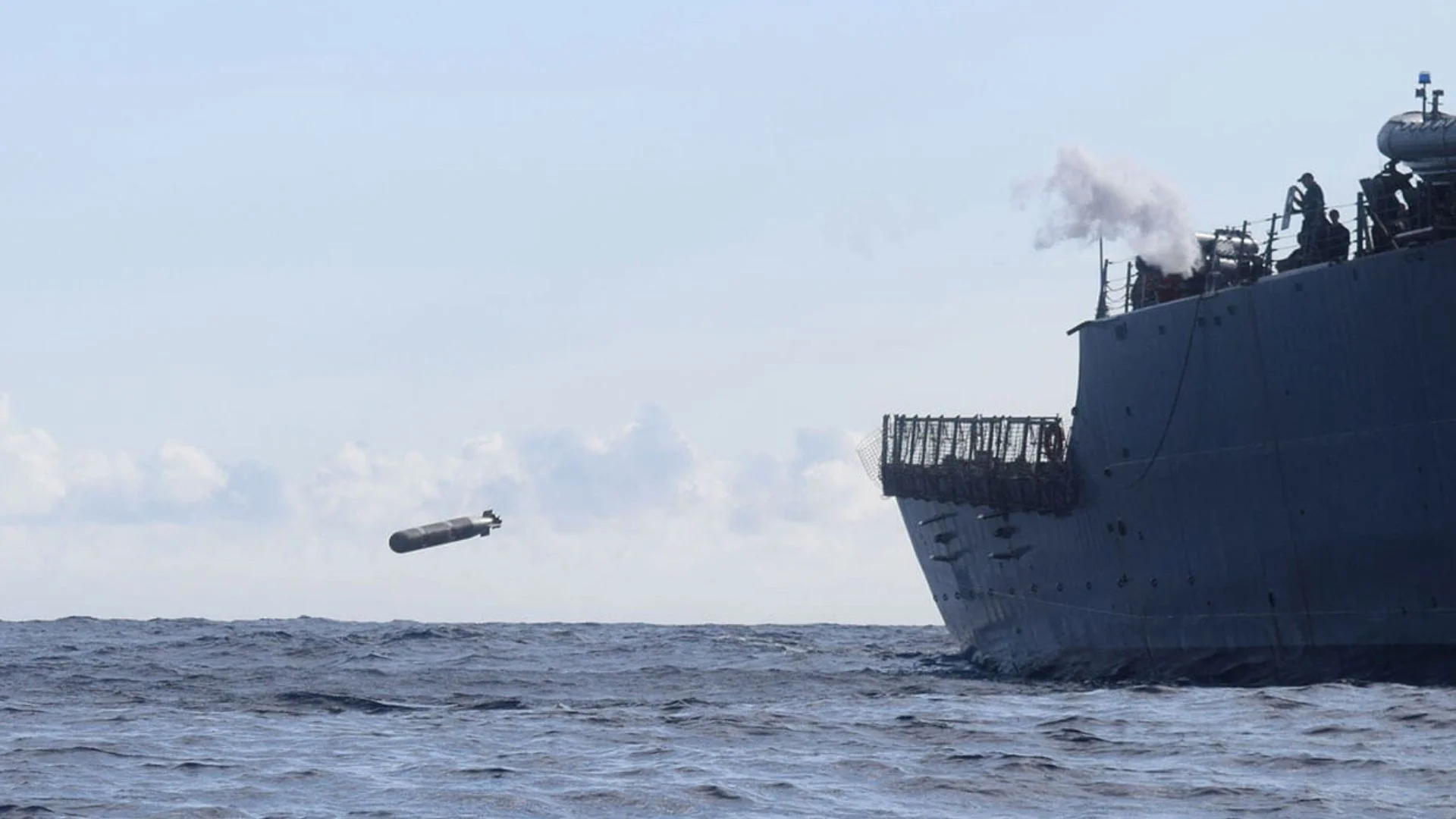
The Mark 58 CRAW is a compact torpedo designed for anti-submarine warfare and anti-torpedo defense missions. The weapon is intended to give Navy submarines a faster and more flexible response against enemy submarines and incoming torpedoes. Navy officials see the system as an important addition to future underwater combat operations.
Speaking during the Sea Air Space 2026 Symposium, Raytheon’s Director of Requirements for Naval Systems and Sustainment, Bill Guarini, shared new details about the program’s progress.
He said Penn State successfully completed the first development stage of the project. Raytheon is now responsible for turning the system into a fully operational military weapon.
The company’s work focuses on the torpedo’s producibility, manufacturability, and military hardening. Engineers are adapting the prototype into a durable system capable of operating in harsh combat conditions at sea. Raytheon is also refining the torpedo’s sensors, control systems, and onboard processing equipment.
READ ALSO: Lockheed Martin Delivers First Aegis ICS Baseline to US Navy for Faster Combat Updates
Guarini confirmed that the Navy plans to begin in-water testing later this year at a Navy testing range. These tests will focus on the torpedo’s forebody section, which contains many of the key sensors and electronic systems. The testing will help determine how effectively the weapon can locate and track underwater targets.
New Propulsion Systems and Navy Upgrades
The Navy is also changing parts of the CRAW program as development moves forward. According to Guarini, one of the biggest updates involves the torpedo’s propulsion system. The Navy recently expanded the design to include both electric and stored-chemical propulsion systems.
Electric propulsion enables quieter underwater movement, which is important for stealth operations. Stored chemical propulsion, which Guarini compared to a rocket engine, provides higher speed and additional power during combat situations. Using both systems could give submarines more flexibility depending on mission requirements.
At the same time, the Navy is developing several related CRAW projects in parallel. One of the most closely watched efforts is the Revolver Innovative Naval Prototype project. The project aims to allow submarines to carry and launch large numbers of compact torpedoes from existing 21-inch Virginia-class submarine torpedo tubes.
READ ALSO: Wisk Aero’s Autonomous Gen 6 eVTOL Takes First Flight, Pioneering U.S. Certification Path
The Revolver concept would allow submarines to pack dozens of smaller CRAW weapons into spaces normally used for larger torpedoes. This would significantly increase the number of defensive and offensive weapons available during long patrols. The idea supports the Navy’s growing focus on distributed firepower and layered defense systems.
Raytheon is not directly involved in the Revolver project at this stage. However, the company confirmed it is ready to support future Navy launcher programs if selected. Guarini explained that Raytheon’s current contract specifically covers launch systems tied to Virginia-class submarine external countermeasure launchers.
Raytheon CRAW Fleet Widens
The Mark 58 CRAW is also attracting interest beyond submarines. The Navy and defense companies are studying ways to launch the weapon from surface ships and military aircraft. Expanding the torpedo across multiple platforms would improve maritime defense capabilities throughout the fleet.
Defense company Ultra Maritime has already proposed a surface ship launcher for CRAW. The goal is to provide major US Navy warships with a hard-kill anti-torpedo defense system. Hard-kill systems physically destroy incoming threats rather than relying solely on electronic jamming or decoys.
Expanding CRAW across submarines, surface ships, and aircraft aligns with the Navy’s broader strategy for future naval warfare.
Modern naval combat depends on autonomous systems, networked weapons, and layered underwater defenses. Smaller, more adaptable weapons are becoming increasingly important as rival navies improve their submarine fleets.
The Indo-Pacific remains a major focus area for the US Navy as regional naval competition continues to grow. Countries across the region are investing heavily in advanced submarines and underwater drones. The Navy believes compact and rapidly deployable torpedoes like CRAW will help maintain operational advantages in contested waters.
WATCH ALSO: A robot was recently kicked and violently dragged to test its abilities
Guarini said the program has already reached a level of maturity not seen in earlier compact torpedo efforts. Raytheon expects to continue supporting the Navy as additional launcher systems and mission variants receive funding. Future versions of the weapon could eventually support missions across the Navy’s aviation, submarine, and surface fleets.
As testing moves forward later this year, the Mark 58 CRAW program is becoming a major part of the Navy’s next-generation undersea warfare strategy.
The weapon’s compact design, flexible launch options, and upgraded propulsion systems reflect the changing nature of modern naval combat. Its future development could shape submarine defense and underwater warfare operations for many years.