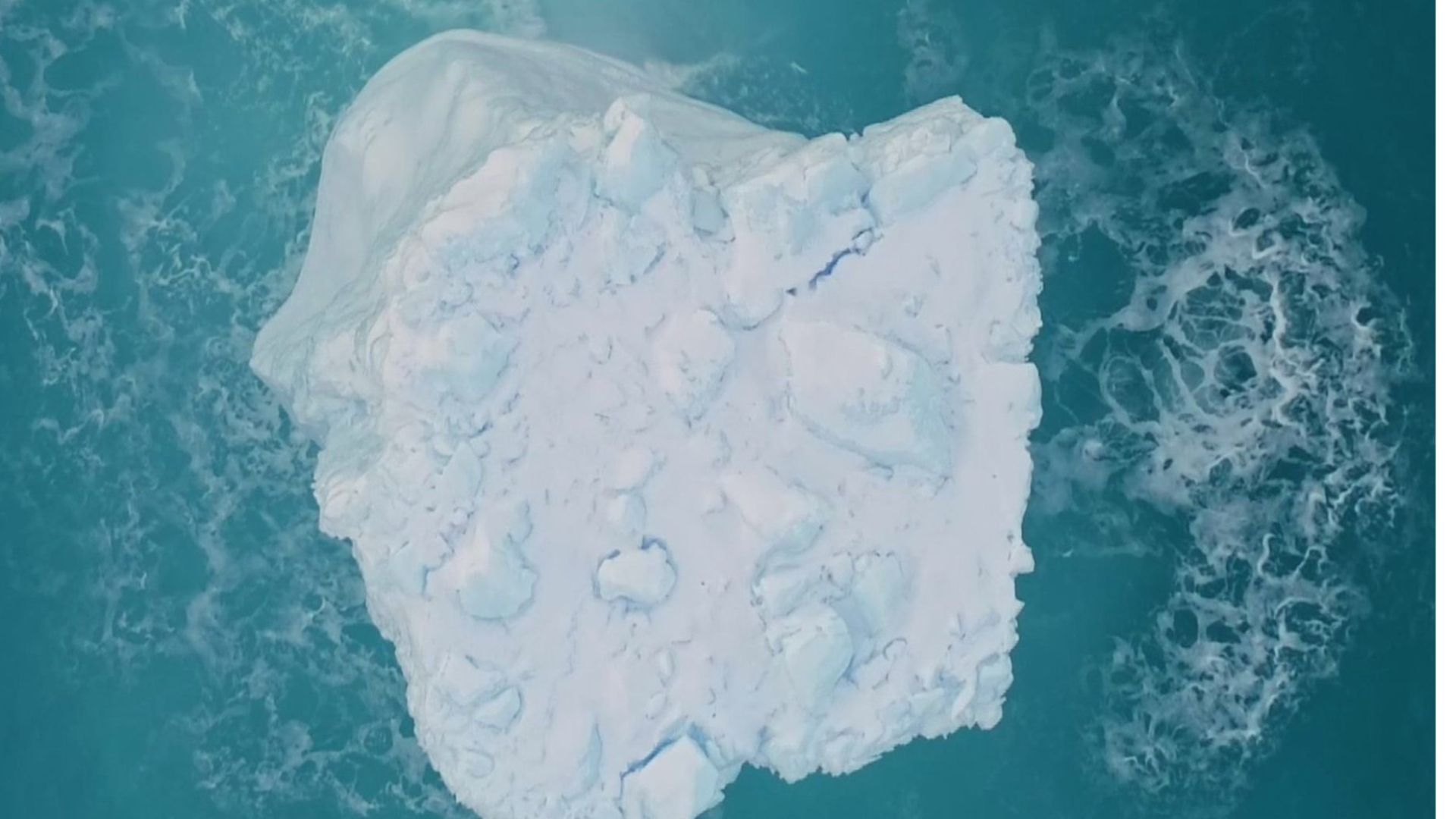
After decades of research, scientists have solved the mystery of a strange and powerful gravity anomaly beneath Antarctica, a region often described as Earth’s deepest ‘gravity hole.’
New research reveals that the frozen continent sits above the planet’s most pronounced gravity low, shaped by slow-moving rocks deep inside the Earth over tens of millions of years.
Gravity may feel constant and dependable, but in reality, it varies across the globe. Once scientists account for Earth’s rotation, the weakest gravitational pull on the planet appears beneath Antarctica.
This unusual dip has long intrigued geophysicists, raising questions about what lies far below the icy surface.
READ ALSO: https://modernmechanics24.com/post/crewless-ai-firefighting-robots/
A recent study published in Scientific Reports provides compelling answers. Researchers Alessandro Forte, Ph.D., University of Florida, and Petar Glišović, Ph.D., Paris Institute of Earth Physics, traced the origins of the Antarctic gravity anomaly back 70 million years.
What Behind Gravity Hole
The team discovered that the so-called Antarctic gravity hole formed due to extremely slow movements of dense and less-dense rocks deep within Earth’s mantle.
These subtle yet persistent shifts altered the planet’s internal mass distribution, ultimately reshaping surface gravity patterns.
Forte explained the significance of the work clearly. “If we can better understand how Earth’s interior shapes gravity and sea levels, we gain insight into factors that may matter for the growth and stability of large ice sheets,” he said.
The researchers found that the gravity hole intensified significantly between 50 million and 30 million years ago. It is a period that coincides with major climate transformations in Antarctica. During this time, the continent began its transition toward widespread glaciation, eventually forming the massive ice sheets that define it today.
WATCH ALSO: https://modernmechanics24.com/post/idaho-lab-receives-nuclear-reactor-fuel/
While the study does not confirm a direct cause-and-effect relationship, the timing raises intriguing possibilities. Scientists now want to determine whether changes deep within Earth may have influenced Antarctica’s climate evolution.
Although the gravity changes are subtle in absolute terms, they have measurable consequences. Variations in gravity stem from differences in rock density far below Earth’s crust. Where gravity is slightly stronger, ocean water is naturally drawn toward it. Where gravity is weaker, sea surface height sits slightly lower relative to Earth’s center.
This phenomenon produces a detectable dip in ocean levels around the continent.
Understanding these variations is important, especially in the era of climate change. Small gravitational differences can influence regional sea-level patterns and, over long timescales, potentially affect ice sheet stability.
A Planetary CT scan Using Earthquakes
To uncover the mystery, the researchers relied on a global scientific effort that combines earthquake data with physics-based computer models. Instead of X-rays, they used seismic waves generated by earthquakes to see inside the planet.
“Imagine doing a CT scan of the whole Earth,” Forte said. “We don’t have X-rays like in a medical office. We have earthquakes. Earthquake waves provide the light that illuminates the interior of the planet.”
By analyzing how seismic waves travel through different layers of rock, scientists reconstructed a three-dimensional model of Earth’s interior. They then calculated how these structures would affect gravity at the surface. The resulting map closely matched precise satellite gravity measurements. It confirms the reliability of their simulations.
READ ALSO: https://modernmechanics24.com/post/roboparty-open-sourcing-humanoid-robots/
Rewinding 70 Million Years
The most ambitious part of the study involved reversing the passage of geological time. Using advanced simulations, the team reconstructed how deep mantle flows evolved over tens of millions of years. Their findings show that the Antarctic gravity hole was far less pronounced in the distant past before intensifying during a key climatic transition.
Forte now plans to expand the research by integrating updated models that connect gravity, sea level, and continental elevation changes.
“How does our climate connect to what’s going on inside our planet?” Forte asked. This is the ultimate goal of his research.
Antarctica’s gravity hole may offer critical clues about the hidden forces shaping climate, oceans, and the stability of ice sheets, not just in the past, but potentially in the future as well.