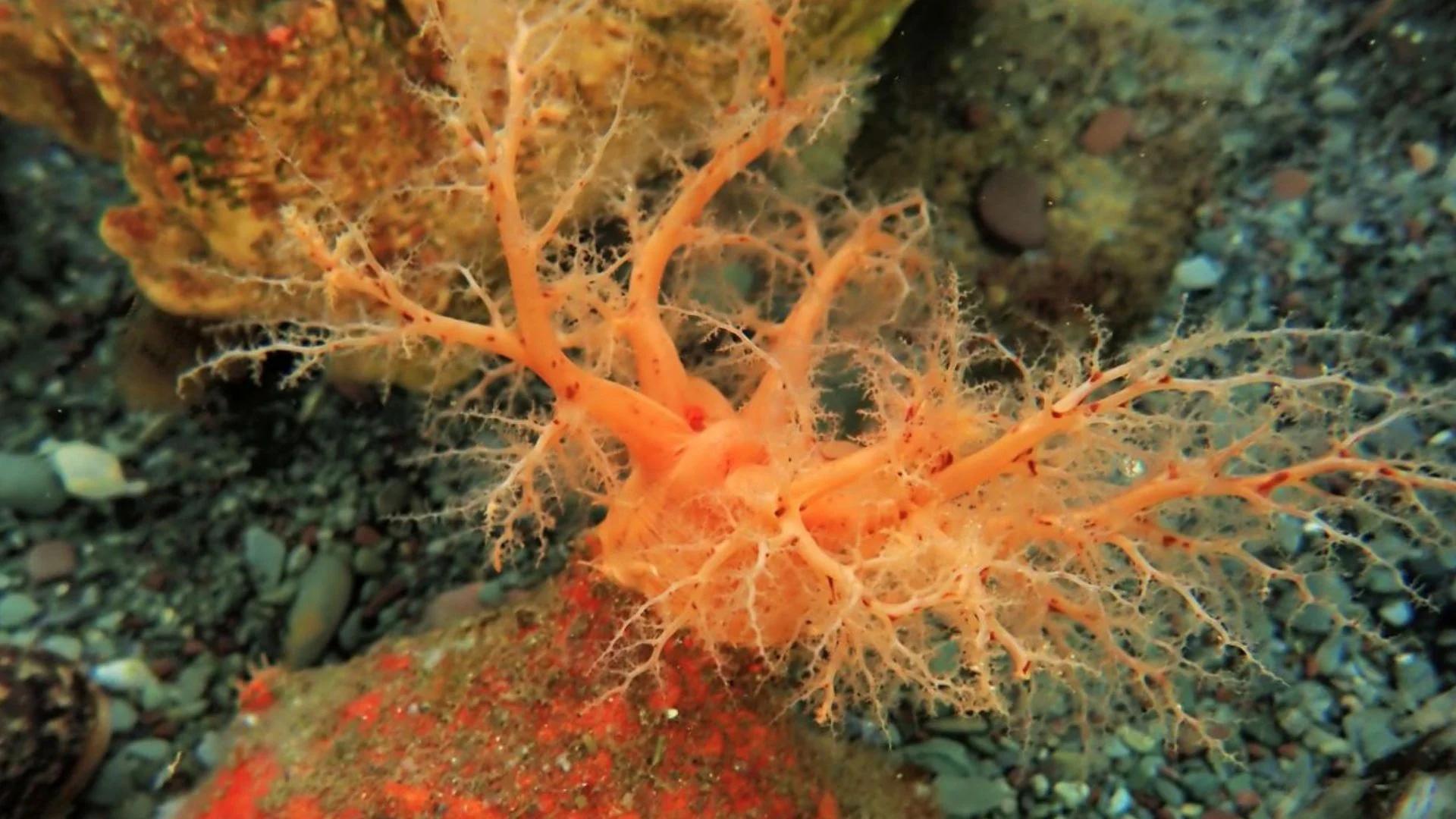
Researchers have discovered a strange form of survival in a North Atlantic sea cucumber that is changing how researchers think about life and regeneration.
Detached body parts from the animal continued to heal, move, and absorb nutrients for years without becoming a complete organism. The finding has opened new discussions about tissue survival, aging, and future medical research.
The study, published in Science Advances, focused on how separated tissues behave after detachment. Scientists said the tissues survived far longer than anyone expected.
The discovery was made by accident in a laboratory in Newfoundland and Labrador, Canada. Researchers noticed that small tube feet left attached to aquarium glass did not decay after being torn from the animals. Instead, the tissues remained active and even appeared to grow over time.
Lead researcher Sara Jobson from Memorial University said the team originally believed the detached tissue would quickly die. Sea cucumbers already have strong regenerative abilities, so researchers knew they could regrow lost body parts. However, nobody had closely studied what happened to the discarded tissue itself.
To better understand the phenomenon, scientists removed small tissue fragments from different parts of the sea cucumbers. They collected pieces from the body, tentacles, and tube feet for controlled laboratory testing. The tissues were then kept in untreated seawater under natural conditions.
READ ALSO: China Uses Electronic Warfare Against Dutch Warship in South China Sea Standoff
Sea Cucumber Immortality Signs
The detached tissues surprised researchers almost immediately. Instead of breaking down, they healed their wounds and stayed alive without a mouth or digestive system. Scientists also found that the tissues absorbed amino acids directly from seawater.
Researchers observed continued cell growth inside the tissue fragments over long periods. The tissue also showed signs of an active immune response while remaining structurally healthy. Even after several months, the detached parts reacted when touched or disturbed.
Jobson described the fragments as zombies because they existed somewhere between life and death. The tissues maintained basic biological functions but never developed into complete sea cucumbers. Scientists said the fragments behaved like independent living systems rather than dead tissue.
The most surprising detail was how long the tissues survived. Researchers monitored some fragments for more than three years without seeing signs of decay or tissue death. According to the team, the tissues remained stable throughout the observation period.
Scientists called the process tissue immortality because the cells appeared capable of surviving indefinitely under natural conditions. However, researchers said more testing is needed before confirming the tissues are truly immortal. Future studies will examine whether the cells age as they continue dividing.
The findings stand apart from normal animal regeneration. Many animals can regrow body parts after injury, including lizards that regrow tails after escaping predators. However, detached lizard tails do not continue surviving independently for years.
Sea cucumbers belong to a group called echinoderms, which also includes starfish and sea urchins. These animals are already known for their powerful regenerative abilities. Some sea cucumbers can even eject internal organs during attacks and later regrow them.
Researchers said this newly observed behavior is different from known regeneration. The detached tissues never formed new organisms through reproduction or cloning. Instead, they remained in a stable, self-maintaining condition for years.
WATCH ALSO: India recently tested carried out the successful launch of Intermediate Range Agni-Prime Missile
Medicine and Aging Impact
The discovery has attracted attention from scientists studying regeneration and aging. Experts believe the tissues may help researchers better understand how cells repair damage and survive over time. The findings may also improve research into wound healing and tissue maintenance.
Veronica Hinman from the University of Florida said most scientists view tissues as dependent on the body for survival. Normally, tissues require blood flow, nutrients, waste removal, and immune protection from the organism. Once separated, they usually deteriorate quickly.
The sea cucumber tissue appears to challenge those assumptions. Scientists believe the fragments contain enough internal organization to support themselves independently. This raises new questions about what is necessary for living tissue to survive.
Researchers also see potential laboratory applications for the tissue. Current medical research often relies on HeLa cells, an immortal human cell line first collected from cancer patient Henrietta Lacks in 1951. Those cells remain important for science but require sterile laboratory conditions.
Sea cucumber tissues survived in natural seawater containing bacteria and other microorganisms. Scientists said the tissues stayed healthy despite exposure to microbes and changing environmental conditions. Researchers hope to identify the biological mechanisms behind this resilience.
The findings may also support ocean health research. Scientists could use the tissues to study rising ocean temperatures, pollution, or disease without using whole animals. The tissues’ durability makes them useful for long-term environmental testing.
Researchers believe studying these tissues may uncover biological processes shared across many species, including humans. Scientists are especially interested in understanding how the cells avoid damage and maintain stability over time. Those answers could influence future studies on aging and regenerative medicine.
Living Tissue Mystery Continues
The next stage of research will focus on the DNA inside the tissue cells. Scientists want to determine whether cells continue to age while replicating. If they do not age normally, the tissues may represent a completely new biological process.
Researchers also want to learn why the tissue evolved this ability in the first place. Scientists do not yet understand the evolutionary advantage of maintaining detached living tissue without reproduction. The answer may reveal new details about survival strategies in marine animals.
READ ALSO: Chinese Academy of Sciences Fossil Discovery Uncovers Pangaea’s Ancient Animal Superhighway
Experts say the study also raises deeper biological questions. The tissues are not full organisms, but they are not dead either. Scientists now face new debates about how life itself should be defined.
Noé Wambreuse from the University of Southampton called the discovery entirely novel. He said scientists have long known that echinoderms possess powerful regenerative abilities. However, long-term survival of detached tissue without forming a new organism has never been documented before.
Researchers believe this discovery will encourage more studies into self-sustaining tissues and cellular organization. The work may eventually influence medical science, biotechnology, and environmental research.
Scientists now hope further testing will reveal whether these unusual sea cucumber tissues truly possess a form of biological immortality.