China has disclosed new details about its high-power microwave weapons, including systems capable of generating up to 100 gigawatts of power.
The information was published in a research paper by scientists from the National University of Defence Technology (NUDT) in the journal High Power Laser and Particle Beams. The publication provides one of the clearest public descriptions of China’s military work in this field.
The researchers said the country has rapidly expanded its pulsed-power technology to meet long-term national strategic needs. They stated that both the scale and quality of China’s research now rank among the world’s leading efforts. The paper was led by Zhang Jun from NUDT’s College of Advanced Interdisciplinary Studies.
According to the researchers, pulsed-power systems have progressed from experimental laboratory projects to practical military equipment. They said these systems have evolved from basic functional designs into high-performance and durable platforms. This shift reflects years of continuous development in electronic warfare technology.
Microwave Weapon Advanced Power
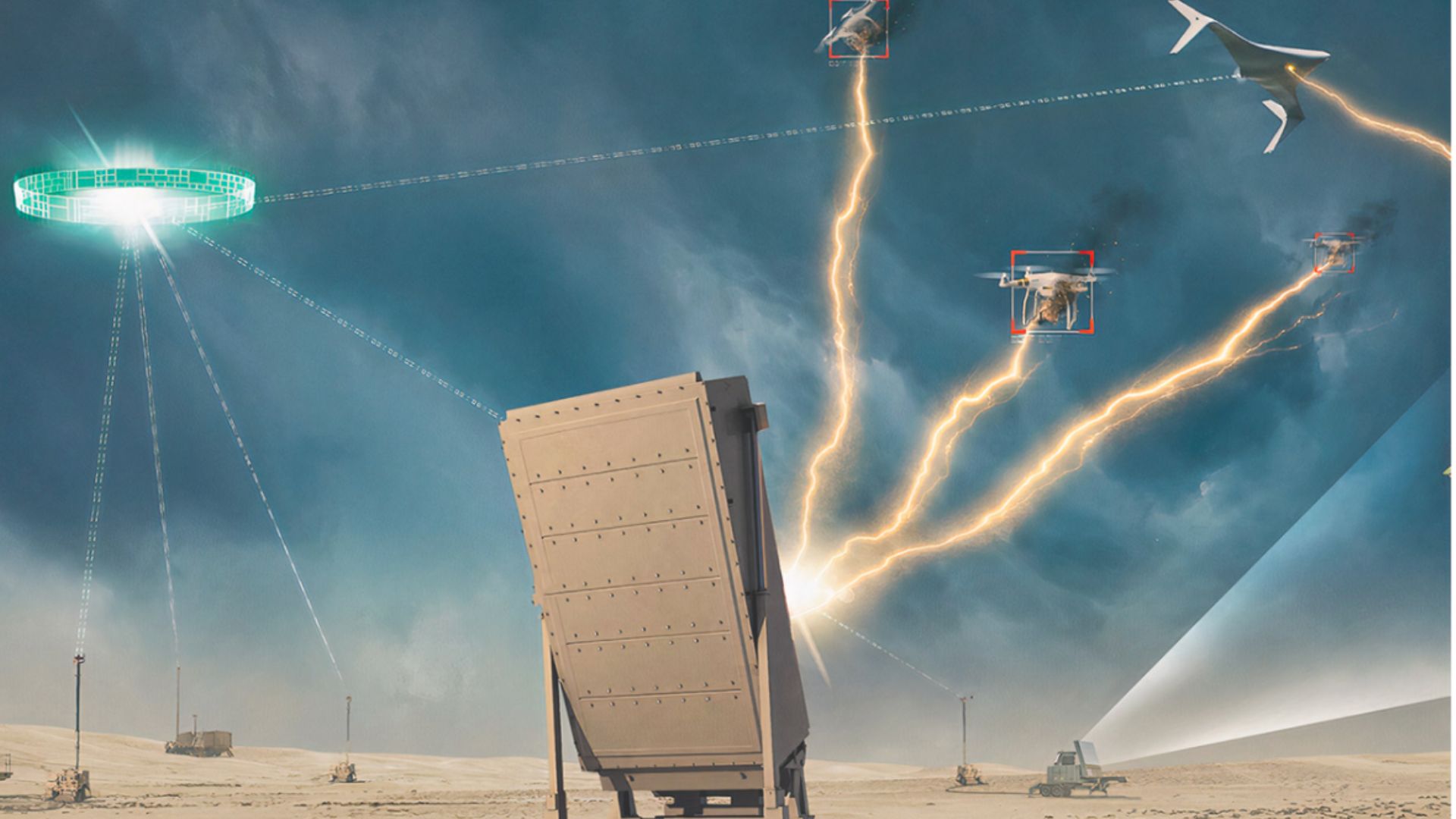
High-power microwave weapons release short bursts of intense electromagnetic energy instead of traditional explosives. These energy pulses can interfere with or damage sensitive electronic equipment without direct physical contact. Such systems are designed to target electronic devices, communication links and other digital infrastructure.
The paper states that Chinese research institutions have developed several gigawatt-class microwave systems. Some of these weapons have already been delivered to military users for operational purposes. The most advanced version combines multiple pulse generators to produce an output of around 100 gigawatts.
Instead of relying on a single large power source, the system links several compact pulsed-power modules. Each module operates at maximum efficiency while contributing to a much larger combined output. The researchers said this design improves the balance between power, weight and overall performance.
They added that producing extremely high microwave power within strict size and weight limits remains an important goal. Building a single, compact system capable of delivering such energy is difficult due to engineering challenges, including insulation limits. Using multiple synchronized modules offers a practical solution to overcome those obstacles.
READ ALSO: Chinese Brain Chip Runs Up to 478x Faster Than Nvidia A100 in Key Neural Tasks
Satellite Warfare Focus
The publication also highlights the military importance of these microwave systems against satellites operating in low Earth orbit. These satellites orbit much closer to Earth than traditional communication satellites and are widely used for internet, navigation and military communications. Large satellite constellations such as Starlink operate within this orbital region.
According to the paper, microwave pulses with power levels of around one gigawatt are generally considered capable of causing severe electronic interference or damaging satellite hardware. A much higher output would significantly increase the strength of the transmitted energy. The researchers noted that such systems may provide a lower-cost option for targeting satellites involved in military operations.
The study also serves as a useful reference for countries evaluating the security of large satellite networks. Governments are increasingly relying on constellations of hundreds or thousands of satellites for communication and surveillance. As these networks expand, protecting them from electronic attacks is becoming an important defence priority.
Future Research Goals
Beyond weapon systems, the paper describes supporting technologies that improve operational performance. One example is a lithium-ion capacitor hybrid power system that can activate almost instantly even at temperatures as low as minus 40 degrees Celsius. It can also deliver a stable supply of electrical power during harsh winter and polar conditions.
The researchers said these improvements would help electronic warfare units operate more effectively in extreme environments. Reliable power is especially important in cold weather, where battery performance is typically reduced. Better energy systems can therefore increase readiness during demanding military missions.
The paper also argues that China has strengthened its position in pulsed-power research through sustained investment and industrial development. It notes that other countries may face challenges because of lower research spending, industrial limitations and restricted access to critical materials such as rare earth elements. These factors play an important role in manufacturing advanced electronic systems.
Looking ahead, the researchers identified several priorities for future work. They aim to improve the precision of microwave energy delivery while making the systems smaller, lighter and less expensive to produce. As electronic warfare continues to evolve alongside satellite-based technologies, advances in high-power microwave systems are expected to remain an important area of global defence research.