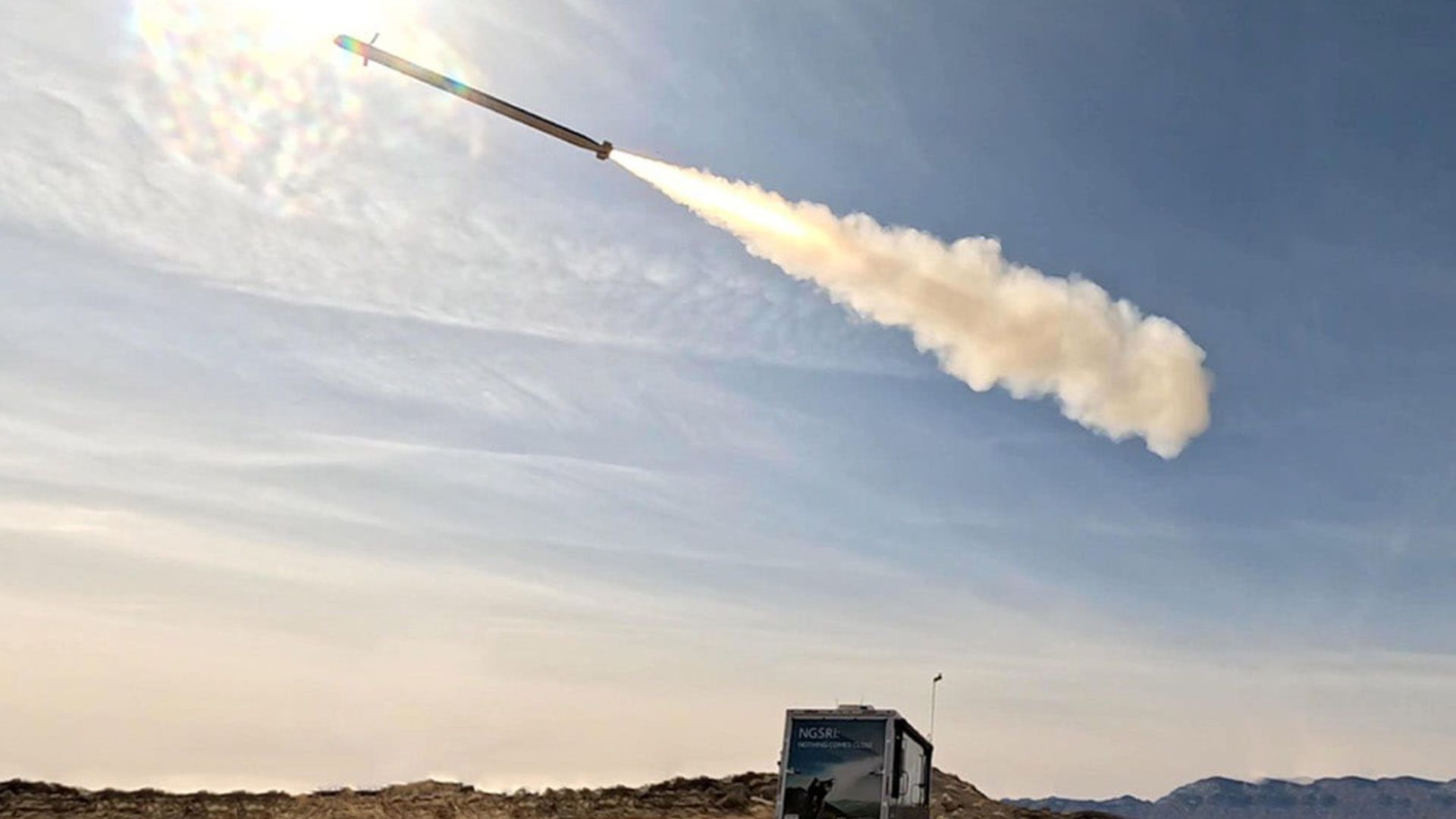
RTX’s Raytheon has successfully completed a key demonstration of its Next Generation Short Range Interceptor (NGSRI) for the US Army.
The test marks another step in the Army’s effort to replace the long-serving Stinger surface-to-air missile. The new interceptor is designed to improve short-range air defense against modern aerial threats.
During the demonstration, multiple guided missiles were launched using Raytheon’s soldier-portable Command Launch Assembly (CLA). The system detected, tracked, and intercepted simulated airborne targets with direct hits. The successful launches confirmed the weapon’s ability to engage threats accurately in realistic test conditions.
Improved Range Performance
Raytheon said the interceptor combines precision optics in both the launcher and the missile seeker with a new solid-rocket motor supplied by Northrop Grumman. The upgraded motor provides more energy, allowing the missile to engage targets at greater distances than the current Stinger system. The seeker helps the missile identify and follow targets more quickly after launch.
Tom Laliberty, president of Land and Air Defense Systems at Raytheon, said the NGSRI demonstrated longer range, faster target acquisition, and greater lethality than the Stinger missile.
He added that the company designed the system to simplify manufacturing and speed up production. Raytheon aims to deliver a weapon that is easier to build while improving battlefield performance.
READ ALSO: US Navy Awards Ursa Major $10M to Advance MK 104 Solid Rocket Motor Development
RTX Raytheon NGSRI Succeeds
Over the past year, Raytheon has carried out several company-funded tests to refine the interceptor’s performance. The company has also completed two incremental demonstrations under contract with the US Army. These efforts have helped validate the design before the program moves to future development stages.
The Army’s NGSRI program seeks to replace the Stinger with a missile that can be fired from both shoulder-mounted launchers and military vehicles. Raytheon is building the new system to remain compatible with existing Stinger launch platforms while supporting future equipment. This approach reduces the need for major changes to current military infrastructure.
Production Ready Design
Raytheon said its design draws on more than six decades of experience in air defense systems. The company is using a modular architecture and automated manufacturing methods to accelerate production and simplify assembly. These features are intended to help the US Army and Marine Corps receive new systems more quickly as demand for modern air defense continues to grow.
The latest demonstration strengthens Raytheon‘s position in the Army’s modernization effort and moves the NGSRI program closer to operational service. As aerial threats continue to evolve, the new interceptor is expected to play an important role in strengthening short-range air defense for US forces.