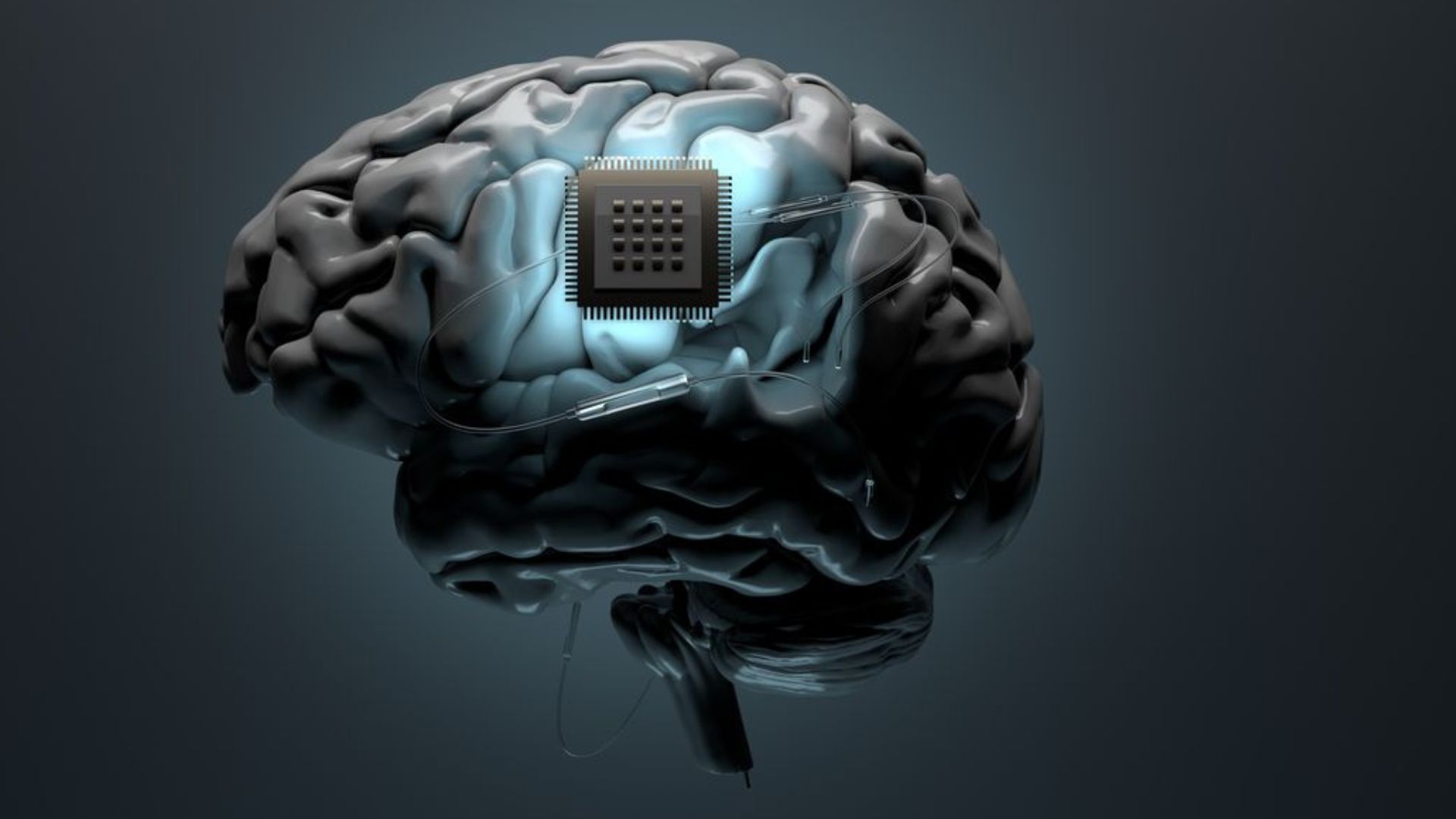
Chinese researchers have developed a brain chip that performs complex brain modeling in real time.
The team says the device completed specific neural reconstruction tasks between 50 and 478 times faster than Nvidia’s A100 graphics processing unit. The findings were published in the journal Science by researchers from Peking University and the Chinese Academy of Sciences.
The chip measures 40 nanometres and combines memory with an artificial neural network on a single platform. Unlike conventional computer systems, it stores and processes information in the same location. This design reduces the time and energy normally required to move data between separate memory and processing units.
Faster Brain Processing
According to the research team, the chip can reconstruct the folded surface of the human brain in less than half a second. These folds increase the brain’s surface area and allow billions of neurons to fit inside the skull. Accurately recreating these structures is important for medical imaging, surgical planning, and neurological research.
Lead researcher Yang Yuchao, a professor at Peking University’s School of Integrated Circuits and deputy dean of its School of Electronic and Computer Engineering, said the technology supports more accurate brain modeling.
He said the chip opens new opportunities for brain-computer interfaces and the diagnosis and treatment of neurological disorders. Yang also said the technology may eventually support personalised digital models of individual human brains.
Traditional computing systems rely on separate processors and memory chips. Every calculation requires information to move back and forth between these components. This process increases delays and consumes more electrical power, especially during large and complex calculations.
New Brain Chip Design
The research team addressed this challenge by using a computing-in-memory architecture. In this approach, data storage and processing happen within the same memory array instead of separate hardware. The result is faster performance with lower energy consumption.
The researchers also made use of phase-change memristors, a type of next-generation memory technology. These devices typically suffer from a phenomenon known as conductance drift, in which stored values gradually change over time. Instead of treating this behaviour as a limitation, the team designed the chip to use it as part of the computing process.
READ ALSO: MIT’s SceneSmith Uses AI Agents to Build 3D Robot Training Worlds Faster Than Ever Before
This approach allowed the chip to perform high-accuracy calculations with delays measured in milliseconds. Such speed is important when medical systems need immediate responses during procedures or imaging. It also helps process large amounts of information without relying on powerful external computing systems.
Medical Technology Impact
The researchers believe the chip could improve several areas of healthcare. It may support real-time neuronavigation systems that help surgeons identify precise brain regions during surgery. Faster brain modelling may also strengthen early screening methods for diseases such as Alzheimer’s.
The technology could also improve brain-computer interfaces that connect the human brain with external devices. These systems are being developed to help people with paralysis communicate or control assistive equipment. Faster processing allows these devices to respond more quickly and accurately.
Researchers also see value in creating personalised digital brain models. Such models may allow doctors to study changes in an individual’s brain over time and design treatments based on patient-specific information. Real-time processing makes these digital models more practical for future clinical use.
Wider Research Significance
In an accompanying analysis published in Science, researchers from Germany’s Juelich Research Centre described the chip’s design using a simple comparison. They said processing information directly where it is stored is similar to processing raw milk on a dairy farm instead of transporting it to a distant factory. The analogy highlights how reducing unnecessary data movement improves overall efficiency.
The independent researchers said the platform delivers high-quality calculations with extremely low latency. They noted that the technology creates a new hardware approach for preserving complex brain structures during computation. According to their analysis, this capability may support real-time brain surface tracking during neurosurgery and assist doctors in clinical decision-making.
The development also reflects growing global investment in specialised AI hardware designed for specific scientific and medical tasks. Instead of relying only on general-purpose graphics processors, researchers are creating dedicated chips that perform specialised workloads more efficiently.
As healthcare depends on advanced computing, technologies like this may play an important role in future medical diagnosis, surgical planning, and intelligent clinical systems.