

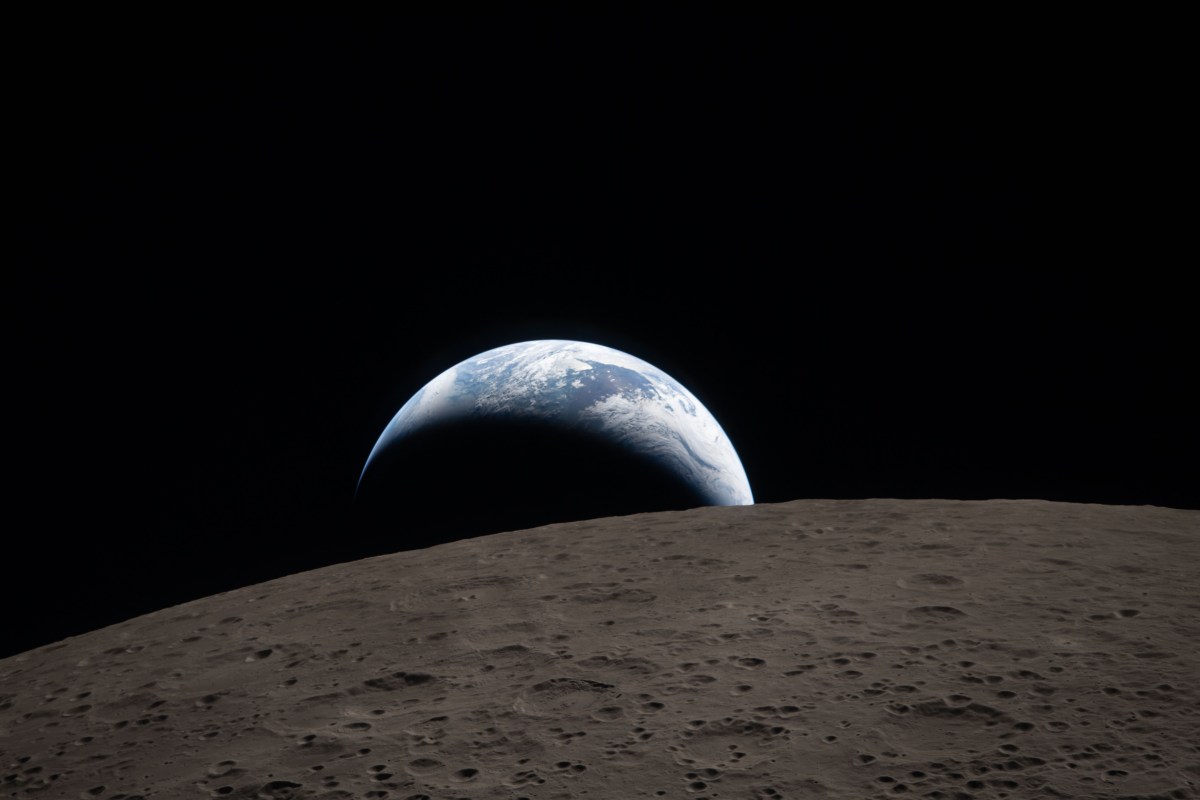
Chinese aerospace researchers have examined how military competition on Earth might extend into the space between Earth and the moon.
Their study models several forms of conflict, including spacecraft pursuit, interception, evasion and blockades. The research offers a framework for understanding how countries might compete for access to important routes in cislunar space.
Conflict Moves Beyond Earth
The study was led by Dang Zhaohui, an associate professor at Northwestern Polytechnical University’s School of Astronautics in Xi’an. It was published in the Chinese-language Journal of Command and Control in July. The researchers said cislunar conflict research remains at an early stage.
READ ALSO: https://modernmechanics24.com/post/figure-nscale-nvidia-gpus-humanoid-ai/
Cislunar space refers to the region between Earth and the moon where the gravity of both bodies affects spacecraft movement. This makes navigation more complicated than in many orbits closer to Earth. Spacecraft can follow unusual trajectories and use the gravitational environment to change how they move through space.
The researchers examined situations in which rival spacecraft attempt to locate, follow or avoid one another. Some spacecraft might remain in difficult-to-monitor areas before moving towards targets closer to Earth. Others might position themselves near routes that are important for reaching particular destinations.
Six Types Of Space Conflict
The study divides possible cislunar confrontations into six broad categories. These include pursuit and evasion, attack and defence, blockade and counter-blockade, as well as deception and identification. The scenarios cover both individual spacecraft encounters and competition involving larger areas of space.
A blockade would involve positioning a spacecraft near a strategic route and making it harder for another vehicle to use that path. An opponent might then have to select a longer or less fuel-efficient route. Such positioning might influence a mission even without direct physical contact.
Dang said the strategic value of cislunar competition goes beyond individual spacecraft or orbital paths. He argued that access to routes can affect whether a country can use space effectively and deter an adversary. The study therefore treats orbital access as a wider strategic issue.
WATCH ALSO: https://modernmechanics24.com/post/ariane-6-first-gto-mission/
Deception May Shape Encounters
The researchers also examined deception as part of possible space conflicts. A spacecraft might use a decoy, perform a misleading manoeuvre or provide information intended to confuse an opponent. Such actions might cause an adversary to spend fuel unnecessarily, reveal its intentions or miss an opportunity to respond.
These situations would become more difficult when information about an opponent is incomplete. The models used in the study often assume that spacecraft can be tracked reliably and that each side has a reasonable understanding of the other’s objectives. The researchers acknowledged that these assumptions may not match conditions in a large and difficult-to-monitor region such as cislunar space.
Future studies will need to consider delayed or missing information. Commanders may have to make decisions without knowing where another spacecraft is heading or what it is attempting to achieve. This would make uncertainty an important part of any potential confrontation.
Space Security Enters New Phase
Modern military systems already depend heavily on satellites for communications, navigation, surveillance and other functions. As countries expand their activities around the moon, competition may extend farther from Earth and involve more complex orbital environments.
The Chinese researchers said earlier studies generally focused on a limited number of locations and scenarios. Their work attempts to examine a wider range of interactions between spacecraft. It also points to the need for further research into decision-making when tracking and intelligence are incomplete.
READ ALSO: https://modernmechanics24.com/post/mit-neutrino-laser-impossible/
The study does not predict that a conflict in cislunar space will occur. Instead, it provides models for examining how rival spacecraft might behave if geopolitical tensions eventually reach the region between Earth and the moon.
Future research is likely to focus more closely on uncertainty, deception and the challenge of operating in an environment where conventional assumptions about tracking and control may not apply.








One Response