

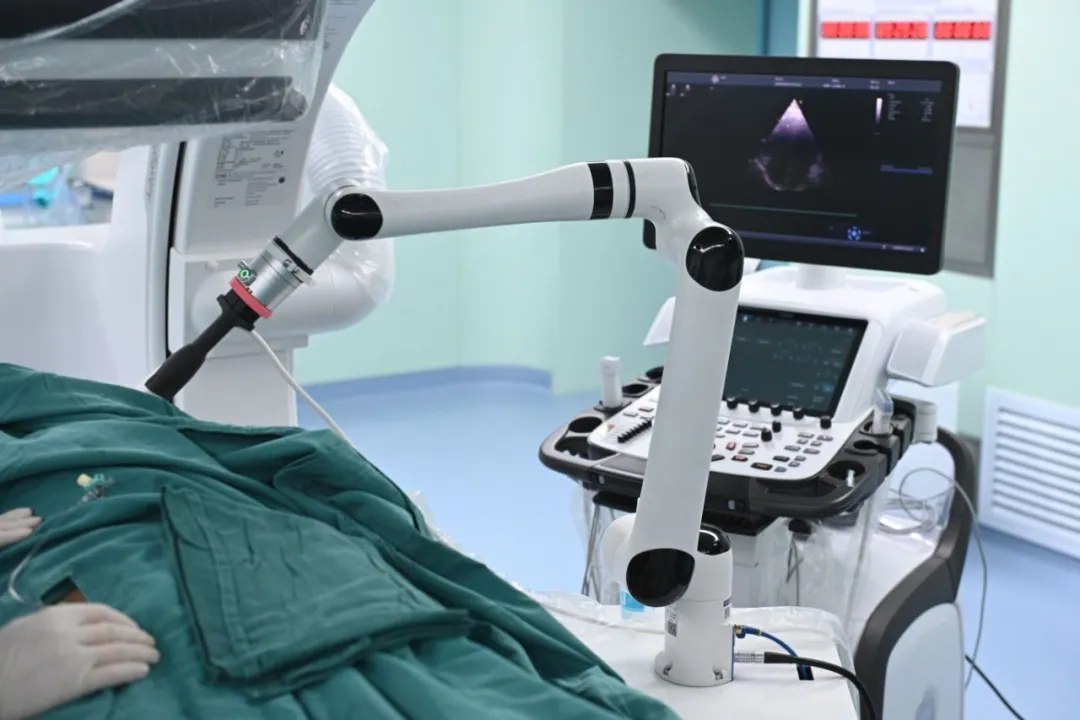
A Chinese medical team has performed a congenital heart procedure using an AI-powered ultrasound robot to guide the surgery.
The transcatheter procedure was carried out on a 48-year-old man on Saturday at the Sixth Medical Center of Chinese PLA General Hospital, also known as 301 Hospital. The procedure was described as the world’s first of its kind, based on a search by an authoritative institution.
Robot Guides Heart Procedure
The operation was led by the Senior Department of Cardiology at 301 Hospital. Doctors used the robotic system to guide a transcatheter closure procedure for congenital heart disease, which treats a heart defect without open-heart surgery.
The hospital said the procedure marked a new use of intelligent imaging technology in minimally invasive heart treatment.
READ ALSO: https://modernmechanics24.com/post/china-future-conflict-beyond-earth/
The system combines ultrasound imaging, artificial intelligence and robotic control. Unlike conventional interventional robots that mainly help doctors deliver medical devices, this system links image analysis with surgical movement.
During the procedure, the robot handled several imaging tasks on its own. It acquired ultrasound images, identified the heart lesion and provided real-time navigation to guide the medical team.
AI Helps Place Occluder
The system also helped doctors choose and position an occluder, a small device used to close an abnormal opening in the heart.
By linking imaging with device guidance, the technology helped the team carry out the procedure with greater positional accuracy. The hospital said this approach also reduced the scope for human error during complex interventions.
The system was designed to simplify the surgical process and reduce procedure time. It may also reduce the level of specialised ultrasound experience required from doctors when treating difficult structural heart conditions.
Wider Medical Applications
The technology has applications beyond congenital heart procedures. The hospital said similar systems may support cardiovascular interventions, where doctors need continuous imaging to guide instruments inside the body.
It may also have uses in emergency medicine and trauma care. Possible applications listed by the hospital include rapid assessment of battlefield and trauma injuries, remote robotic surgery and medical support for primary-level healthcare facilities.
WATCH ALSO: https://modernmechanics24.com/post/black-hawk-ai-hunter-killer-drone/
A New Surgical Model
The procedure adds AI-based imaging to robotic-assisted cardiovascular intervention. It points to a model in which machines can help collect medical images, identify targets and guide instruments during the same procedure.
For hospitals, such systems may help make complex minimally invasive treatment more consistent across different settings. Further development and clinical use will determine how widely this approach can be applied in cardiovascular care.







3 Responses