

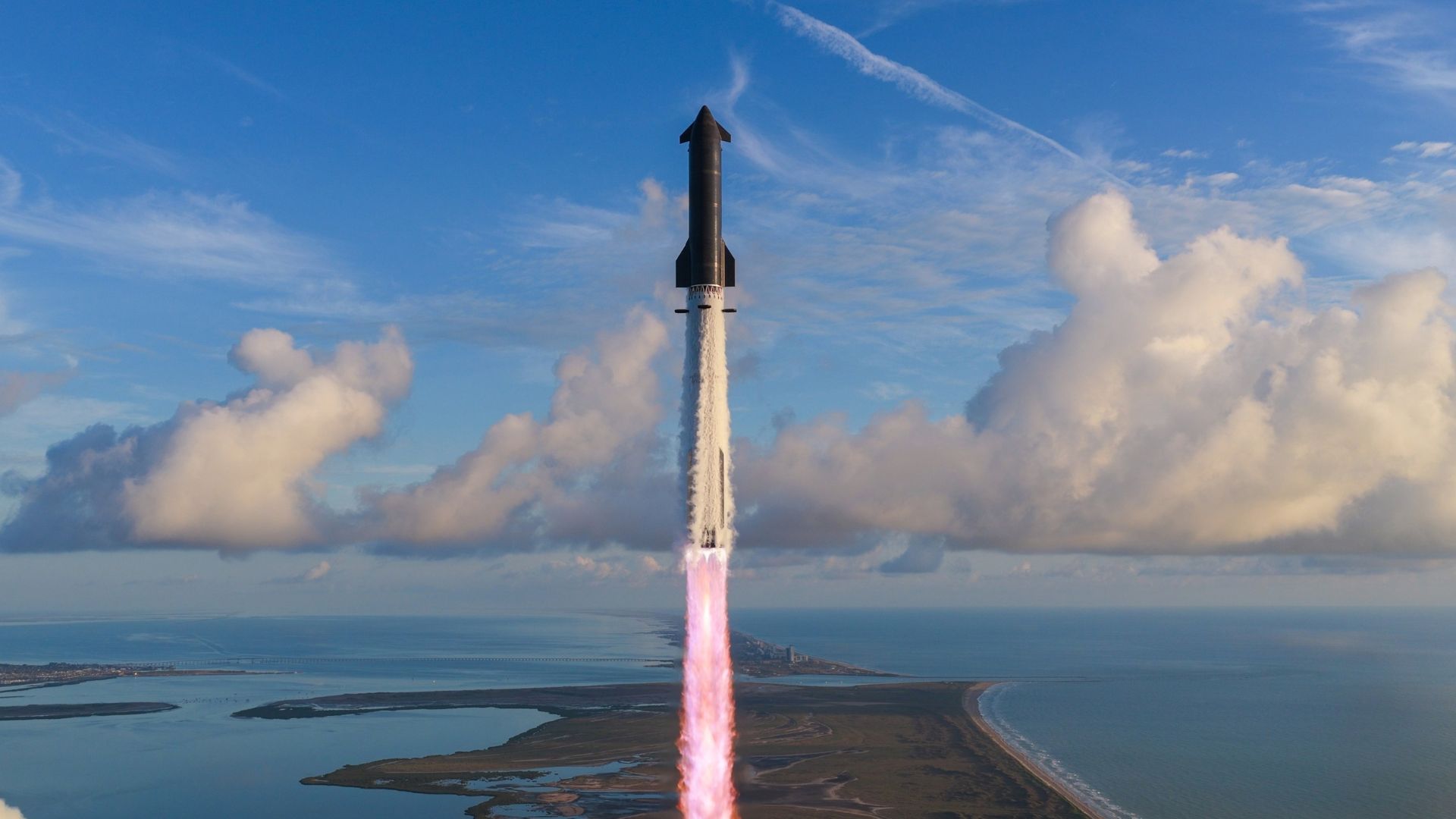
SpaceX’s Starship reached Earth orbit for the first time on September 28, completing the most significant flight in the rocket’s test program so far.
The uncrewed Flight 14 mission also deployed 26 next-generation Starlink V3 satellites before the spacecraft returned to Earth earlier than originally planned. Despite an engine failure during the flight, Starship completed its orbital insertion, satellite deployment and controlled reentry.
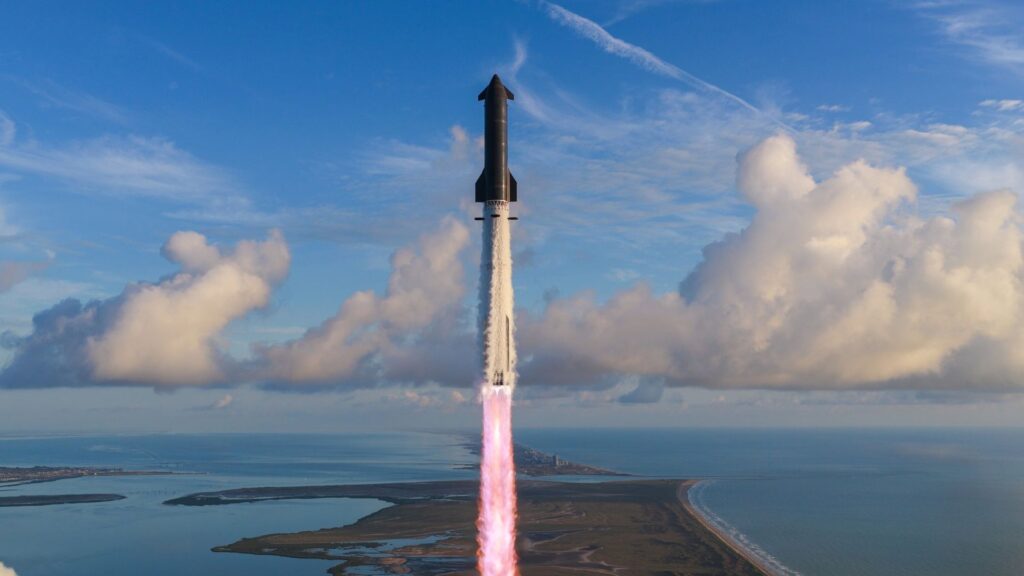
The 124-meter Starship lifted off from SpaceX’s Starbase facility in South Texas during the morning launch window.
The vehicle consists of the Super Heavy first stage and the Starship upper stage, known as Ship, which are designed to operate as a fully reusable launch system. The mission was the 14th full-scale Starship flight since testing began in 2023.
All 13 previous flights followed suborbital trajectories rather than completing an orbit around Earth. Flight 14 changed that profile by sending Ship to an altitude of roughly 275 kilometers and giving it enough speed to remain in orbit. The spacecraft reached an orbital velocity of about 28,000 kilometers per hour, a requirement for sustained flight around Earth.
The mission faced a problem soon after Ship separated from Super Heavy. One of the spacecraft’s three engines shut down earlier than planned, initially raising the possibility that SpaceX would abandon the attempt to reach orbit. Engineers later determined that the remaining engines could perform the required orbital maneuver, allowing mission controllers to proceed.
SpaceX then carried out the burn needed to place Starship into orbit. Mission control confirmed the successful orbital insertion, prompting cheers from the company’s launch team. The achievement established that Starship had moved beyond its previous suborbital test profile and successfully operated as an orbital spacecraft.
READ ALSO: https://modernmechanics24.com/post/china-ai-robot-perform-heart-surgery/
New Starlink Satellites Deployed
Once in orbit, Starship released 26 Starlink V3 satellites. The deployment marked the first orbital mission for the new-generation satellites and gave SpaceX a chance to test both the spacecraft and an operational payload in the same flight.
The V3 satellites are designed to provide substantially greater data capacity than the earlier Starlink V2 Mini spacecraft. SpaceX plans to use the larger Starship vehicle to deploy these satellites in much larger groups once the rocket enters regular service. The company has also said the V3 spacecraft will help expand the capacity of its growing low Earth orbit internet network.
The satellites were released individually from the Starship payload section. After deployment, they were expected to unfold their solar arrays and antennas, then use onboard propulsion to adjust their orbital positions. SpaceX said all 26 satellites were deployed and operating normally.
Three of the satellites also carried cameras intended to observe Starship’s heat shield during the flight. Those observations are important because the heat shield must withstand the intense heating generated when the spacecraft enters Earth’s atmosphere at orbital speed. Mission data will help engineers evaluate the system before future flights place greater demands on Starship.
Mission Ends Earlier Than Planned
SpaceX originally planned a flight lasting almost 10 hours, with Starship completing six orbits before returning to Earth. The company later shortened the mission after the engine problem, choosing to bring the spacecraft home several hours earlier. The decision allowed engineers to complete the main objectives while limiting additional exposure after the in-flight anomaly.
Starship performed its planned deorbit sequence before beginning its atmospheric descent. The spacecraft then carried out a controlled reentry over the Pacific Ocean and headed toward its designated splashdown area. It returned to Earth roughly three hours after launch rather than completing the originally planned six-orbit mission.
The spacecraft splashed down in the North Pacific, north of Hawaii, during the night after its launch. Starship used its aerodynamic body and onboard control systems to manage the final stage of descent before reaching the ocean. The vehicle was not intended to be recovered after this flight, so the landing was focused on testing controlled atmospheric return rather than post-flight reuse.
The Super Heavy booster followed a separate flight path after stage separation. It descended toward the Gulf of Mexico and performed a controlled splashdown rather than attempting to return to the launch tower for a mechanical catch. Some booster engines also experienced problems during descent, providing additional data for engineers working on future recovery attempts.
What Comes Next For Starship
The successful orbital flight gives SpaceX data from a mission that combined launch, orbital insertion, satellite deployment and atmospheric reentry.
It also gives engineers information on how Starship responds when an engine becomes unavailable during a mission. The early return means several planned objectives, including a longer orbital endurance test, remain for future flights.
SpaceX is developing Starship as a reusable system to transport large payloads into orbit and eventually carry people beyond Earth. The company intends to recover both the Super Heavy booster and the Ship spacecraft during routine operations. The launch tower’s mechanical arms have already caught Super Heavy during earlier tests, while Starship itself has yet to demonstrate a successful tower catch.
Another major requirement is in-space refueling. Missions to the Moon and Mars will require Starship to receive additional propellant from tanker versions of the spacecraft after reaching orbit. SpaceX has not yet demonstrated large-scale propellant transfer between Starships in space, making that technology one of the program’s next major tests.
READ ALSO: https://modernmechanics24.com/post/ai-six-legged-robot-stick-insect-walk/
NASA is also relying on a modified Starship for its Artemis lunar program. The vehicle is intended to serve as the lunar lander for future crewed missions, requiring additional systems for life support, crew operations, lunar landing and ascent.
Before astronauts fly aboard the system, SpaceX must complete more uncrewed testing and demonstrate the technologies needed for safe deep-space operations.
Starship’s orbital debut also has implications for commercial spaceflight because the vehicle is designed to carry much larger payloads than SpaceX’s Falcon 9.
Its ability to deploy dozens of high-capacity Starlink satellites in one mission is closely tied to SpaceX’s plans to expand its internet constellation. A reliable, reusable Starship system would also give the company a larger platform for launching spacecraft, scientific instruments, and other heavy payloads.
The latest flight does not mark the end of Starship’s development program. Instead, it gives SpaceX flight data from the first successful orbital mission while leaving engine reliability, spacecraft recovery, in-space refueling, and crew systems to be demonstrated in later tests.
The next phase of Starship development will determine how quickly the vehicle can move from experimental flights toward regular orbital, lunar and other deep-space missions.










One Response