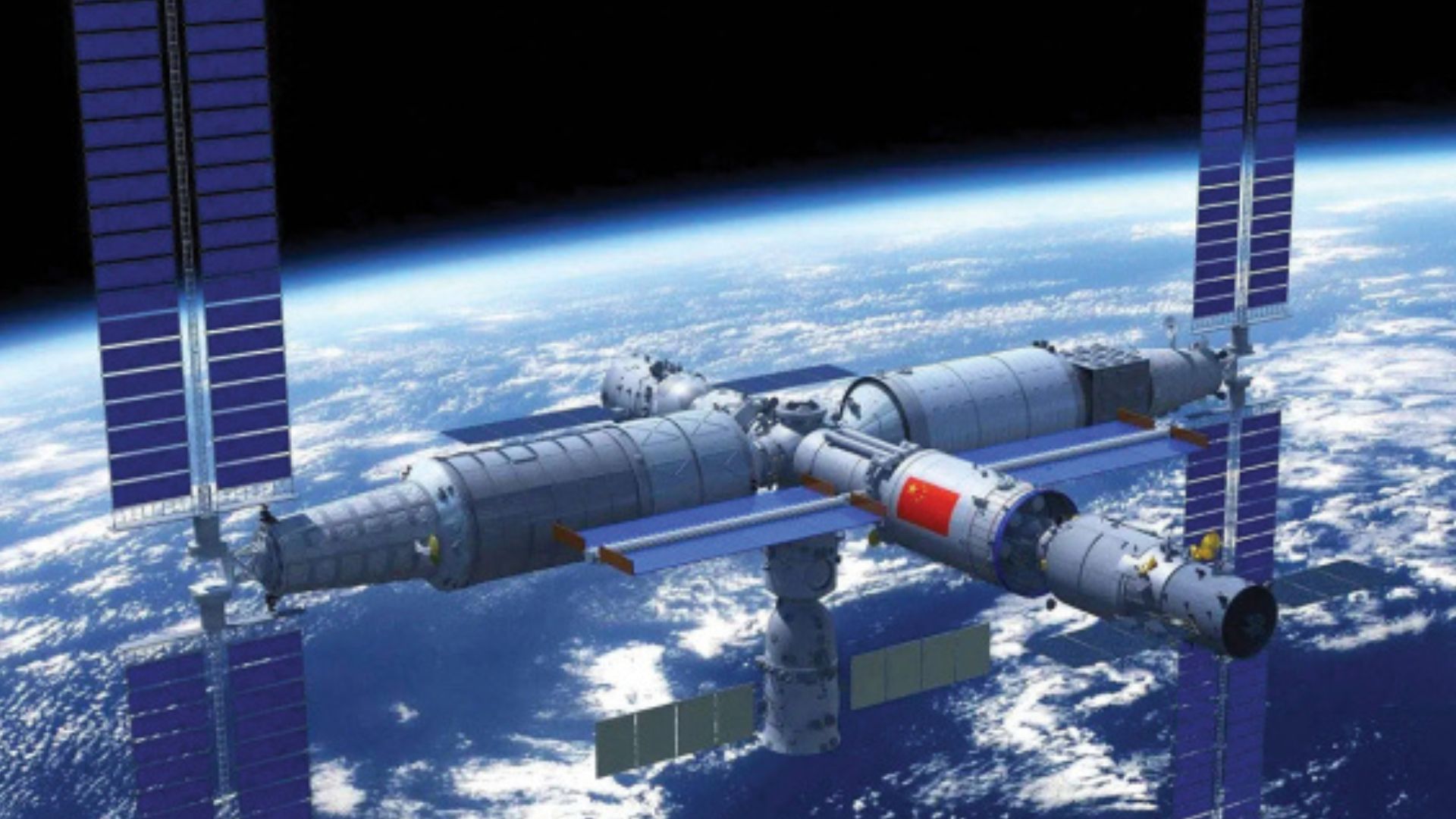
China has returned a new batch of scientific samples from its space station, marking another major step in the country’s growing space research program.
The samples arrived on Earth aboard the Shenzhou-22 spacecraft on Friday. They include materials from 23 different experiments conducted in orbit.
According to the Chinese Academy of Sciences (CAS), the returned cargo weighs about 41.14 kilograms. The samples cover research in life sciences, materials science, and combustion studies. This is the tenth time experimental materials have been transported back from China’s orbiting space laboratory.
Space Station Human Biology
Several biological samples were sent to the Technology and Engineering Center for Space Utilization in Beijing on Saturday.
These include artificial embryos and brain organoids, which are laboratory-grown structures that mimic some functions of real organs. Researchers first carried out status checks before preparing the samples for further scientific analysis.
Scientists are particularly interested in understanding how living systems respond to the space environment. The artificial embryo experiments aim to reveal how life develops and adapts in microgravity. The findings could help improve astronaut health during future long-duration missions and support plans for deep-space exploration.
READ ALSO: ARB and Xgrid Campers Bring Bombproof Australian Earth Camper to US Market
New Materials Studied in Microgravity
The returned materials include advanced titanium alloys, high-strength steels, and special ferroelectric crystals. These materials were produced or studied in space, where gravity is greatly reduced. Researchers will examine their structure, composition, and performance in detail.
Scientists want to understand how microgravity influences material growth and defect formation. Space conditions often allow materials to develop differently than they do on Earth. The results could help improve manufacturing processes for aerospace systems, precision sensors, medical imaging equipment, and other high-tech industries.
Space Combustion Research Offers Practical Benefits
The returned combustion experiment equipment includes burners, soot collection plates, and collection lids. Researchers will study semiconductor nanomaterials produced by flame synthesis, as well as soot particles formed during combustion. These experiments provide valuable information about how fire behaves in space.
Understanding combustion in microgravity is important for astronaut safety and future space habitats. The research could support the development of cleaner energy technologies, advanced carbon-based materials, and improved fire prevention systems for spacecraft. It also provides insights into manufacturing techniques that may one day be used beyond Earth.
WATCH ALSO: United States is considering to conduct air strikes against drug cartels in Venezuela
China’s space station has become an important platform for long-term scientific research since it entered full operation. Each return mission provides scientists with unique data that cannot be collected under normal Earth conditions. As more experiments are completed in orbit, the findings are expected to contribute to future space exploration and drive advances in science and technology on Earth.