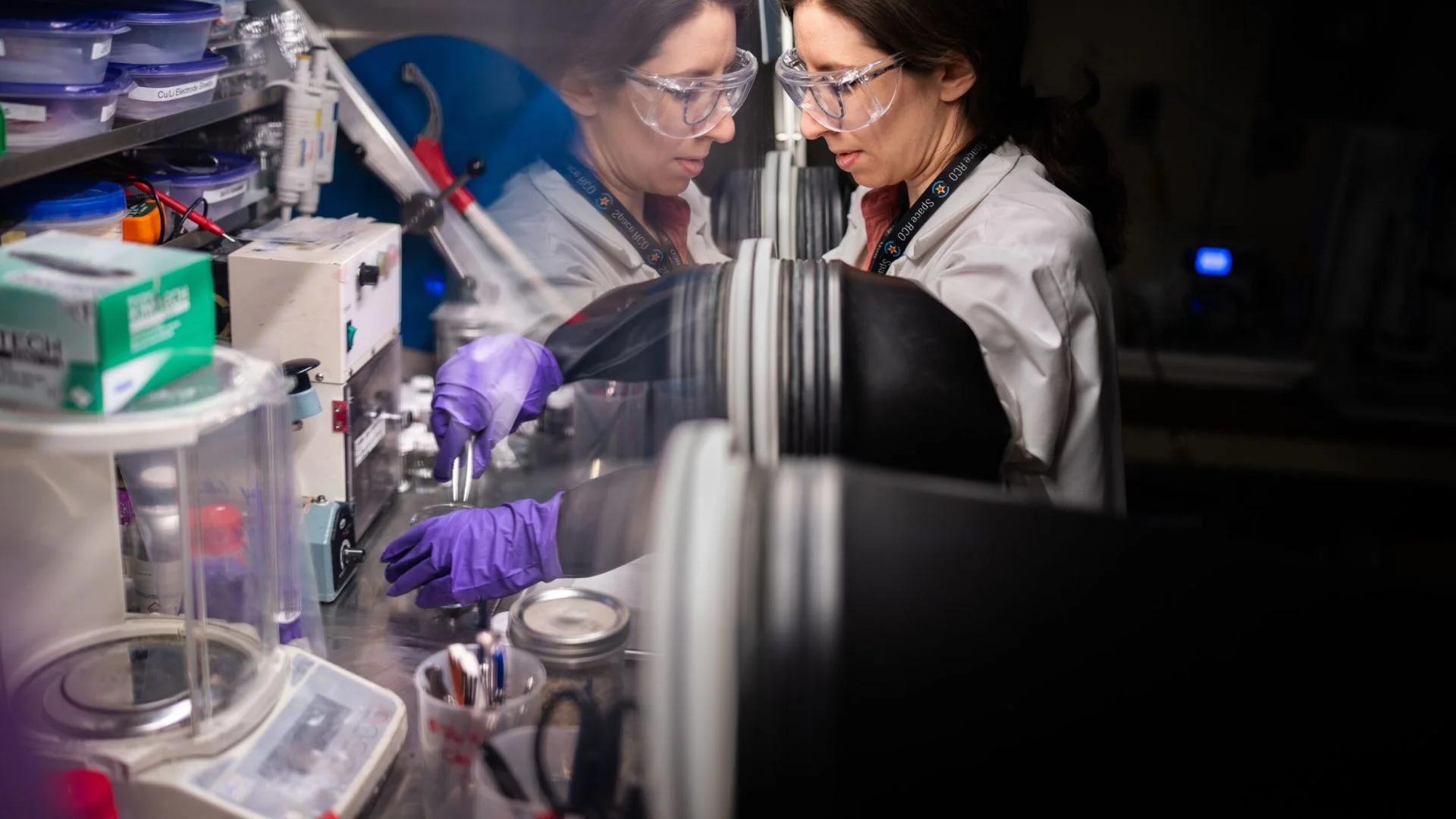
Researchers at Sandia National Laboratories have developed a new method for recycling lithium-ion battery cathodes using microwave technology.
The process not only recovers materials from old batteries but also upgrades them into forms that better match current battery industry requirements. The technique aims to reduce waste, lower energy use, and improve access to critical battery materials.
Lithium-ion batteries power electric vehicles, smartphones, laptops, wireless earbuds, and large energy storage systems. Their cathodes are among the most expensive components of batteries because they contain valuable materials such as lithium and cobalt. Securing a stable supply of these materials has become a growing concern worldwide.
Cobalt is especially important for many consumer electronics and battery technologies. A large share of the global cobalt supply comes from the Democratic Republic of the Congo, which accounts for about 70% of worldwide production. This concentration creates supply chain risks for manufacturers and governments.
Sandia researchers see retired electric vehicle batteries as a future source of these valuable materials. Millions of EV batteries are expected to reach the end of their useful lives in the coming years. Recovering materials from them can reduce dependence on newly mined resources and limit battery waste.
Microwave Tech Cuts Processing Time
The new process focuses on the cathode, the positive side of a battery, where lithium ions interact with electrons. Researchers use a specialized microwave reactor that is similar in size and power consumption to a household microwave oven. However, the system provides greater control over heating conditions.
The team combines microwave energy with a large positively charged ion. Researchers compare this ion to the active ingredient found in hair conditioner. Together, these elements help separate cathode material into extremely thin layers known as nanosheets.
READ ALSO: Lightweight X-Ray Telescope Designed to Map the Moon’s Chemical Composition From Orbit
Microwave heating plays a key role in the process. Water absorbs microwave energy efficiently, allowing rapid heating throughout the material. The uneven heating that often frustrates people when warming food actually helps break apart the battery cathodes.
The researchers tested the process on lithium cobalt oxide, one of the most common cathode materials used in lithium-ion batteries. Traditional methods required about seven days to convert the material into nanosheets. The microwave process completed the same task in just two hours.
The efficiency improvements extended beyond speed. Earlier approaches converted around 60% of the material into nanosheets. The new microwave-based technique achieved conversion rates of approximately 95%.
Before the process can begin, batteries must first be safely disassembled. Researchers noted that extracting usable cathode powder from old batteries was more difficult than expected. Sandia’s Battery Abuse Testing Laboratory contributed expertise to address these challenges.
Battery Cathodes Get Upgraded
Creating nanosheets offers important advantages beyond material recovery. Their thin structure allows scientists to access and modify the material more easily. This flexibility helps adapt old battery components to modern battery designs.
Battery technology has changed significantly over the past decade. A cathode manufactured 10 to 15 years ago may no longer match today’s industry standards. By converting old cathodes into nanosheets, researchers can adjust their composition to meet current performance requirements.
One important example involves replacing some cobalt with nickel. Battery manufacturers use nickel because it is less expensive and can improve battery performance. The nanosheet structure allows researchers to exchange metal ions more effectively.
WATCH ALSO: World’s most powerful fighter jet F-35 is expected to get a new system soon
Scientists involved in the project conducted computer simulations before beginning laboratory work. The calculations showed that replacing cobalt with nickel would not occur naturally but remained technically achievable. These findings guided later experimental work.
Researchers from Arizona State University then performed proof-of-concept tests. Their experiments successfully replaced about one-ninth of the cobalt content with nickel. The results demonstrated that the ion-exchange concept works in practice.
The process offers another major advantage. Converting cathodes into nanosheets automatically repairs tiny defects that develop after years of battery use. It also removes impurities that accumulate over time.
Traditional recycling methods often require several additional steps to fix these issues. The Sandia approach addresses them during the upcycling process itself. This creates a cleaner and potentially higher-performing battery material.
The cobalt removed during ion exchange is not wasted. Researchers developed a separate method to capture and recover the extracted cobalt. That recovered metal can then be used to produce another cathode material.
As a result, a single used cathode can help generate material for multiple new cathodes. This increases resource efficiency and improves the economic value of battery recycling. It also reduces the need for newly mined raw materials.
Industry Interest and Future Applications
The research team has continued moving the technology toward commercial use. In 2025, key members participated in the US Department of Energy’s Energy I-Corps program. The initiative helps researchers evaluate the commercial potential of new technologies.
As part of the program, the team interviewed around 80 leaders from the battery recycling industry. These discussions provided insights into market needs, technical challenges, and economic considerations. The information is helping guide further development efforts.
Researchers are also conducting detailed economic studies. Early analysis using a modeling tool developed by Argonne National Laboratory suggests the process could increase cathode recycling profits by at least 30% compared with leading recycling methods currently in use. Lower energy requirements contribute significantly to that advantage.
WATCH ALSO: SpaceX is gearing up to conduct 11th flight test of Starship on October 13
Unlike many conventional approaches, the Sandia method avoids the use of high-temperature furnaces. Traditional cathode manufacturing and recycling often require extensive heating in large industrial ovens. The microwave process operates at lower temperatures, reducing energy consumption and potentially lowering costs.
The technology has already attracted recognition. The team submitted the innovation for the R&D 100 Awards and filed two patents related to the process. Researchers are also seeking industry partners for licensing and commercialization.
The approach is not limited to lithium-ion batteries. Researchers believe the same principles can be applied to other battery technologies, including sodium-ion and zinc-ion batteries. Any battery using layered cathode materials could potentially benefit from the method.
Sandia’s microwave-based upcycling process offers a path to recover valuable resources, reduce waste, and create battery materials better suited to future technologies. Continued development and industry adoption could help transform retired batteries into a major source of critical materials for the next generation of energy storage.