Scientists have proposed a new method to search for alien life by studying how biological molecules are organized rather than simply detecting their presence.
The research suggests that patterns in molecules such as amino acids and fatty acids may reveal whether they were produced by living organisms or natural chemical reactions.
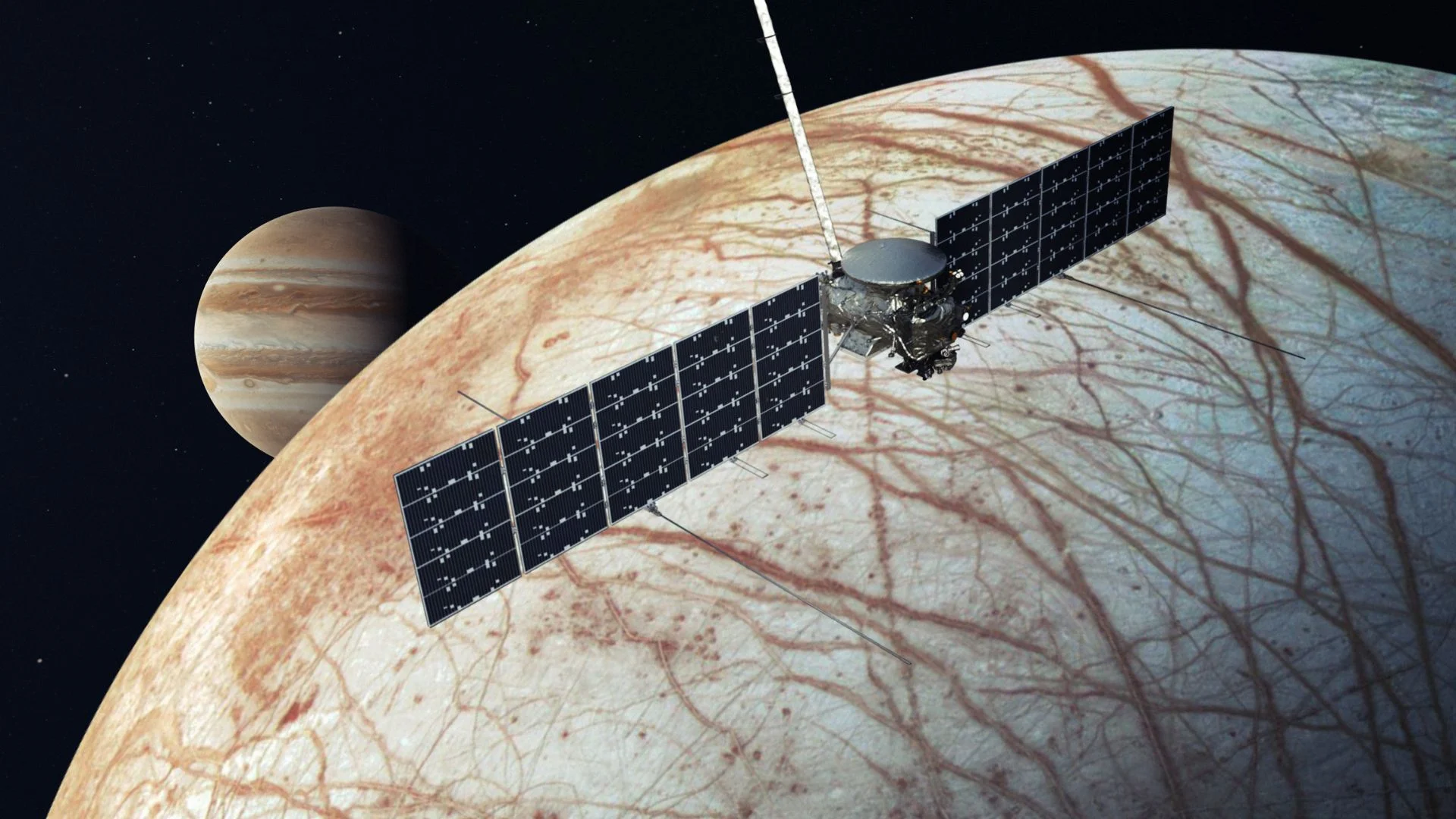
The idea may soon be tested by NASA’s Europa Clipper mission as it studies Jupiter’s icy moon Europa.
NASA scientists and astrobiologists have spent decades searching for biosignatures across the solar system and beyond. These biosignatures include molecules linked to life, such as amino acids, methane, and fatty acids. However, many of these compounds can also form through non-living chemical processes.
READ ALSO: US Golden Dome Missile Shield Price Reaches $1.2 Trillion as Space Plans Expand
That challenge has made it difficult for researchers to confidently identify signs of extraterrestrial life. Methane on Mars, phosphine on Venus, and dimethyl sulfide in the atmosphere of exoplanet K2-18b have all triggered debate in recent years. Scientists still cannot confirm whether those molecules came from biology or geology.
Mapping Alien Molecules
A new study published in Nature Astronomy on May 11 offers a different approach to the problem. Instead of searching only for specific molecules, researchers examined how those molecules are distributed and organized. The team believes this pattern may provide a stronger clue about the presence of life.
The study was led by Gideon Yoffe of the Weizmann Institute in Israel. Fabian Klenner from the University of California, Riverside, also worked on the project. The researchers borrowed ideas from ecology, where scientists measure life by studying diversity and distribution inside ecosystems.
The team focused on amino acids and fatty acids because they are central to life on Earth. Amino acids combine to form proteins, which help cells function and survive. Fatty acids are key building blocks in cell membranes.
Researchers analyzed nearly 100 different datasets for the project. These included samples from meteorites, asteroids, fossils, microbes, soils, and laboratory-created materials. The wide range of samples allowed the scientists to compare biological chemistry with non-biological chemistry.
The study found clear differences between the two sources. Amino acids produced by living organisms were more diverse and more evenly distributed than those created by abiotic processes. Fatty acids showed the opposite pattern, becoming less diverse when linked to biological activity.
WATCH ALSO: Blue dogs spotted in Chernobyl nuclear disaster site spark concern
The researchers say these organizational patterns may act as an additional tool in the search for life. A sample showing life-like molecular organization may deserve closer examination. Samples without those patterns may become lower-priority targets for future missions.
Klenner explained that the method is not designed to serve as final proof of life. Instead, it helps scientists better interpret complex chemical data. Multiple lines of evidence would still be needed before researchers could confirm alien biology.
Europa Clipper Mission Gains New Importance
The research may become especially useful within our own solar system. Scientists already have detailed chemical datasets for places like Mars and Europa. That makes it easier to compare molecular diversity and distribution patterns.
NASA’s Europa Clipper mission may provide one of the first opportunities to apply this technique in space. The spacecraft launched in 2024 and is expected to reach Jupiter in 2031. Its main goal is to study Europa, one of the most promising places to search for extraterrestrial life.
Europa hides a massive ocean beneath a thick layer of ice. Scientists believe this ocean contains more water than all of Earth’s oceans combined. Many researchers think the moon may have the chemical ingredients needed to support microbial life.
Europa Clipper will not drill through the ice shell. Instead, it will study material blasted into space from Europa’s surface. Some scientists believe cracks in the ice allow ocean water to rise as icy plumes.
One instrument aboard the spacecraft may become particularly important for the new research. The Surface Dust Analyzer will study tiny ice grains and organic molecules in the vicinity of Europa. Scientists hope the instrument can measure the abundance of different molecular families.
READ ALSO: Navantia BAM-IS Reaches Construction Milestone as 597-Ton Macrostructure Enters Dry Dock
If the spacecraft detects groups of amino acids or fatty acids, researchers can apply the new diversity-based analysis. They would then examine whether the molecular organization resembles biology or abiotic chemistry. That may help NASA identify the most promising locations for future missions.
Ancient Mars Samples Also Hold Clues
The researchers believe the method may also help scientists studying ancient Mars. Evidence suggests Mars once had rivers, lakes, and a warmer climate billions of years ago. Scientists continue searching for traces of past microbial life on the Red Planet.
One important finding from the study involves degraded biological material. The researchers discovered that molecular organization patterns can survive long after living organisms disappear. Fossilized dinosaur eggs still preserved useful chemical distribution patterns in the datasets analyzed by the team.
That discovery matters because ancient Martian material would have been degraded by now. Traditional biosignatures may have weakened over time due to radiation and harsh environmental conditions. However, molecular organization patterns might still remain detectable.
The researchers also acknowledged the limits of their approach. So far, the method has only been tested with amino acids and fatty acids. Scientists still need to determine whether other types of molecules follow similar biological patterns.
The method also requires a broad set of chemical datasets to work properly. That means it cannot yet be applied to distant exoplanets with limited atmospheric data. Researchers would need a much larger inventory of molecules before they could analyze biological organization on worlds like K2-18b.
WATCH ALSO: China sends 3 astronauts, 4 mice to space station for mammal study in orbit
Even with those limits, the study may reshape how future missions search for life beyond Earth. Space agencies rely on advanced chemistry tools to study planets, moons, and asteroids. The new approach adds another layer to that growing scientific toolkit.
The search for alien life remains one of science’s biggest unanswered questions. This new research suggests the answer may depend not only on which molecules scientists find, but also on how those molecules are arranged.
Future missions to Europa, Mars, and other worlds may soon test whether those hidden patterns point toward life elsewhere in the universe.