The US is moving forward with plans for Golden Dome, a massive new missile defense network designed to protect the country from ballistic, hypersonic, cruise missile, and drone attacks.
A new report from the Congressional Budget Office estimates the project may cost nearly $1.2 trillion over the next 20 years, making it one of the most expensive defense programs ever proposed.
The planned shield would combine thousands of space-based interceptors, advanced radar systems, ground missile defenses, and regional protection networks to create a layered homeland defense architecture across the US, including Alaska and Hawaii.
Golden Dome Boosts US Defense
The report estimates total program costs at about $1.191 trillion over two decades. Around $1.025 trillion would go toward acquisition and deployment, while yearly operating costs would average about $8.3 billion.
READ ALSO: Robotic Hand Achieves 91% Success Grasping Fragile Objects on First Attempt
The estimate is far higher than earlier Pentagon figures because the system would defend the entire country instead of a limited number of military sites or cities.
Golden Dome would create several layers of protection against incoming attacks. The architecture includes Ground-Based Interceptors, Next-Generation Interceptors, THAAD batteries, Patriot PAC-3 MSE systems, Aegis Ashore sites, and space-based sensors. The system would also rely heavily on advanced command networks and tracking satellites.
The concept reflects a major change in US homeland defense policy. For decades, American missile defense has mainly focused on stopping smaller ballistic missile attacks from regional adversaries.
Golden Dome moves beyond that approach by seeking broader national protection against several categories of missiles and aerial threats.
The proposal also responds to rapid advances in missile technology. Russia and China continue to expand their inventories of hypersonic weapons, maneuverable warheads, and long-range cruise missiles. US defense planners believe older missile defense systems may not be enough to handle future threats.
WATCH ALSO: This robotic system to pick strawberries automates tough tasks
Space-Based Interceptors Drive Most of the Cost
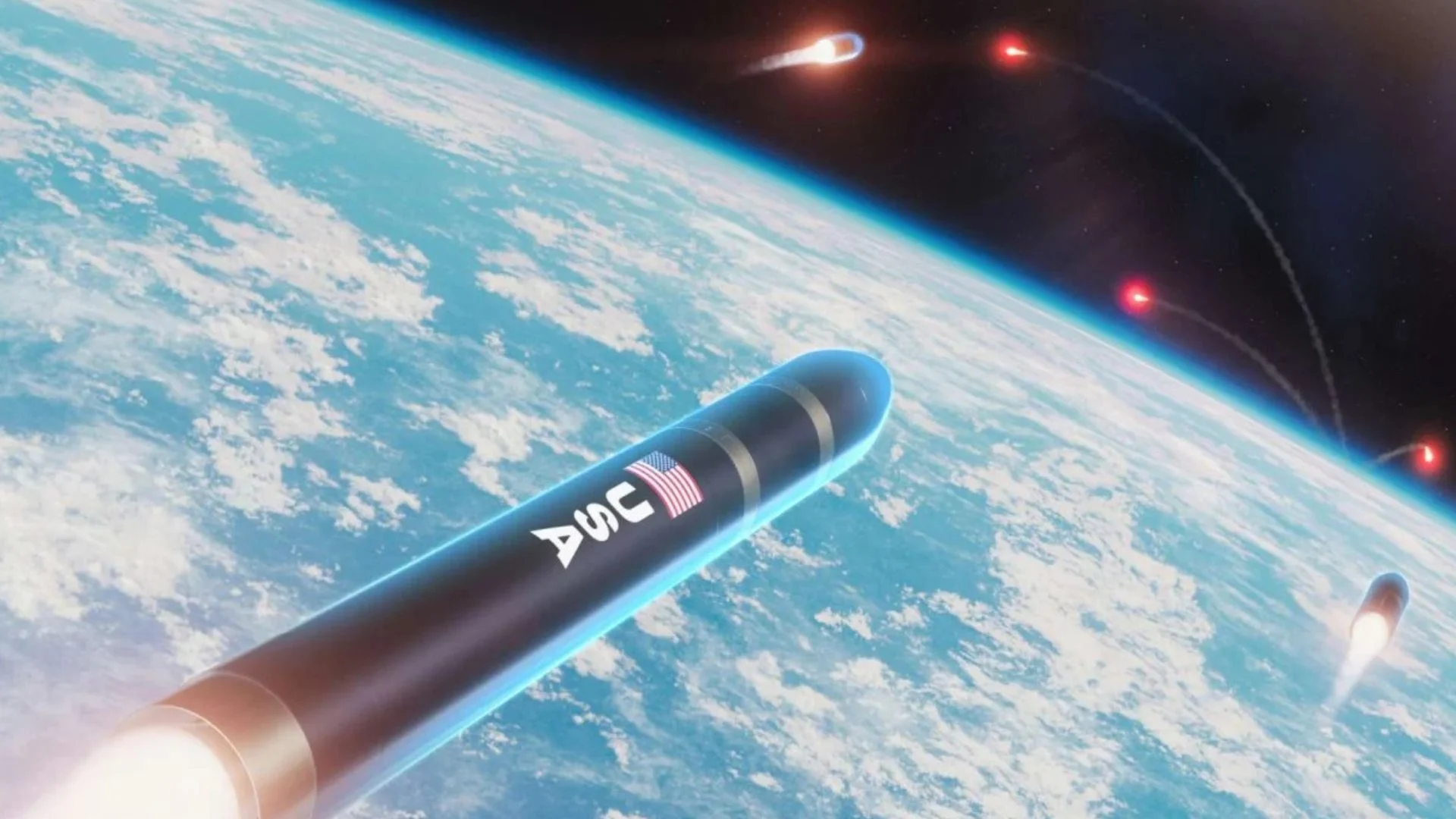
The most expensive part of the Golden Dome is the planned space-based interceptor layer. According to the CBO, the architecture would require about 7,800 interceptor satellites operating in low Earth orbit.
These satellites would attempt to destroy ballistic missiles during the boost phase, which happens shortly after launch while the rocket engines are still burning.
Boost-phase interception offers a major military advantage. Destroying a missile early prevents it from releasing decoys, multiple warheads, or maneuvering payloads later in flight. That makes the target easier to defeat before it becomes more complex in space.
The challenge is that satellites in low Earth orbit constantly move around the planet. They cannot remain fixed in one launch area, as with ground radars or land-based interceptors. Thousands of satellites are therefore needed to ensure enough interceptors are always in position to respond quickly.
The satellites would operate at altitudes of roughly 300 to 500 kilometers above Earth. At those altitudes, atmospheric drag slowly reduces orbital life and forces regular replacement launches.
The CBO estimates the US may need nearly 30,000 interceptor satellites over 20 years to maintain a steady force of 7,800 active satellites in orbit.
The scale of the project would rival or exceed some of the largest space programs in history. It would require constant manufacturing of satellites, launch vehicles, sensors, and interceptor systems. The long-term replacement cycle also means spending would continue well beyond initial deployment.
The plan also includes a major space-based missile-tracking network. The CBO estimates about $90 billion for a constellation of 108 satellites in low Earth orbit and 27 in medium Earth orbit. These satellites would track missile launches and provide targeting data to defense systems nationwide.
READ ALSO: Binder Fuses Materials Mid-Print for Seamless 3D Parts in Industrial Use
Tracking hypersonic weapons is especially difficult. Unlike traditional ballistic missiles, hypersonic glide vehicles can maneuver at very high speeds and change direction during flight. Persistent satellite tracking gives defenders more time to react and improves the chances of interception.
Ground Defenses and Regional Missile Shield
Golden Dome would also expand ground-based strategic missile defense systems. The proposal includes existing interceptor facilities at Fort Greely in Alaska, along with two additional missile defense sites.
Each new location would contain 60 Next-Generation Interceptors, large radar systems, command centers, and local defenses against drones and cruise missiles.
The report notes that missile defense sites are also targets during a conflict. Enemy forces could attempt to disable radars, communications systems, or launch facilities before a larger missile attack begins. That is why the architecture includes THAAD batteries and Patriot systems to protect key defense locations.
Another important layer involves four Aegis Ashore missile defense sites across the United States. Each site would use SPY-6 radars and Mark 41 launch systems armed with SM-3 Block IIA interceptors. These interceptors are designed to destroy ballistic missiles outside the atmosphere during the midcourse phase of flight.
The CBO estimates each Aegis Ashore site would cost nearly $4 billion to build. Annual operating expenses for each location would add another $170 million. Additional radar systems and counter-drone defenses would also support these sites because Aegis systems alone cannot stop low-flying cruise missiles or unmanned aircraft.
Golden Dome also includes 35 regional defense sectors spread across the country. Each sector would contain multiple radar systems, command facilities, Glide-Phase Interceptors, SM-6 missiles, THAAD interceptors, and Patriot PAC-3 MSE missiles. Together, these layers would form a broader homeland air and missile defense grid.
Each weapon system serves a different role. Glide-Phase Interceptors would target hypersonic glide vehicles during flight, while THAAD systems would focus on high-altitude ballistic missile defense. Patriot PAC-3 MSE systems would handle lower-altitude threats and selected cruise missile targets.
The regional layer alone would cost an estimated $187 billion over 20 years. That makes it the second-largest spending category after the orbital interceptor network. The combination of systems is designed to improve interception opportunities by creating multiple defensive layers against incoming attacks.
WATCH ALSO: United States is considering to conduct air strikes against drug cartels in Venezuela
Industry Pressure and Strategic Impact
Golden Dome would place enormous pressure on the U.S. defense industrial base. Major contractors such as Lockheed Martin, Northrop Grumman, RTX, Boeing, and SpaceX are expected to compete for major contracts.
The US Space Force has already awarded up to $3.2 billion in contracts to 12 companies working on space-based missile defense concepts.
Production demands would extend far beyond interceptor missiles. The program would require huge numbers of radar systems, satellite buses, rocket motors, hardened communications systems, command software, and launch services. Maintaining the supply chain over two decades would become a major national industrial effort.
The report also raises questions about long-term strategic effectiveness. The CBO states that Golden Dome would likely perform best against limited missile attacks from smaller regional adversaries. A massive strike from a major nuclear power such as Russia or China could still overwhelm the system through large salvos, decoys, cyberattacks, and anti-satellite operations.
Missile defense experts often describe this challenge as the offense-defense competition. As defenses improve, adversaries usually respond by building more missiles or developing new penetration methods. Golden Dome may therefore prompt rival nations to invest further in advanced offensive weapons and anti-satellite systems.
Even with those limitations, US officials see strategic value in the project. A stronger homeland defense network may reduce the effectiveness of limited missile strikes and lower the coercive power of smaller nuclear arsenals. It will also give US leaders more options for responding during future crises.
Golden Dome now represents one of the most ambitious military defense proposals in modern American history. Its success will depend not only on technology, but also on industrial capacity, long-term funding, and political support over many years.
The project is likely to shape the future of missile defense, military space operations, and global strategic competition for decades.