

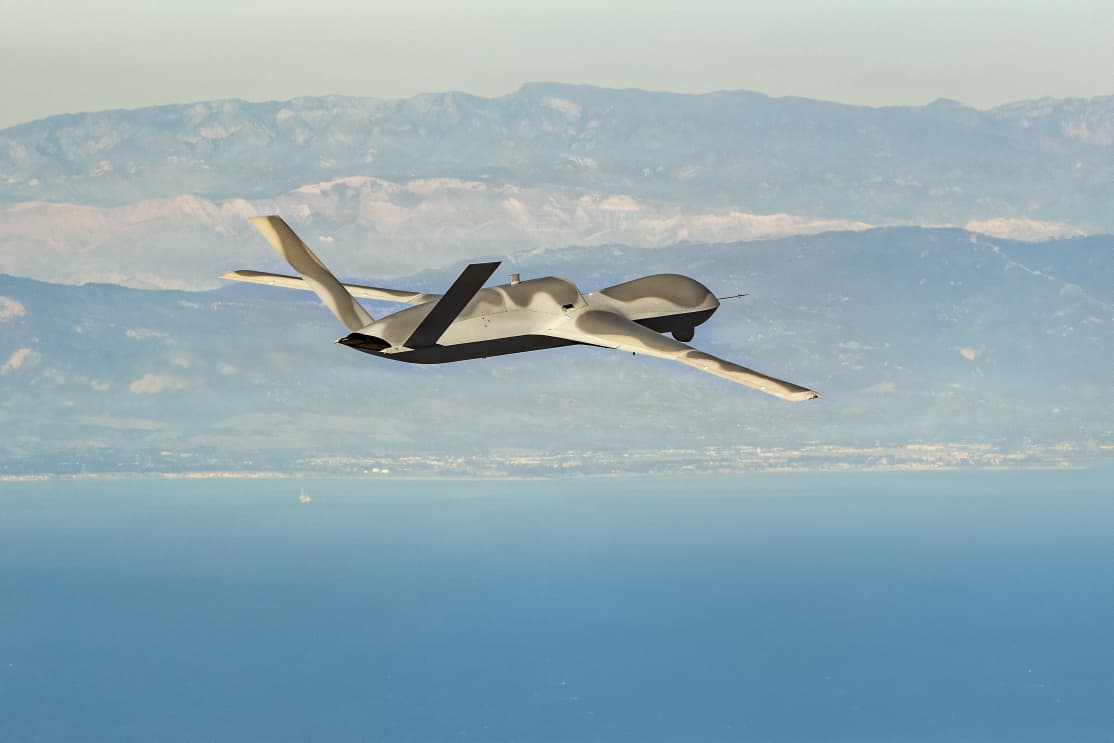
The US Navy has demonstrated how an unmanned aircraft can receive a human-designed mission and carry it out with limited direct operator control.
During Gray Flag 2026 at the Point Mugu Sea Range in California, an MQ-20 Avenger used Collaborative Autonomy Mission Planning (CAMP) to turn a broader mission plan into instructions that the aircraft could execute.
The test focused on a central requirement for future autonomous combat aviation: connecting human mission planning with machine-led flight execution.
The demonstration involved the US Navy’s Strike Planning & Execution Systems PMX-281 team.
The team developed the mission, transmitted it to the MQ-20, and reviewed the results after the flight. This tested the complete chain from human planning to autonomous execution rather than focusing only on whether an aircraft could fly without a pilot.
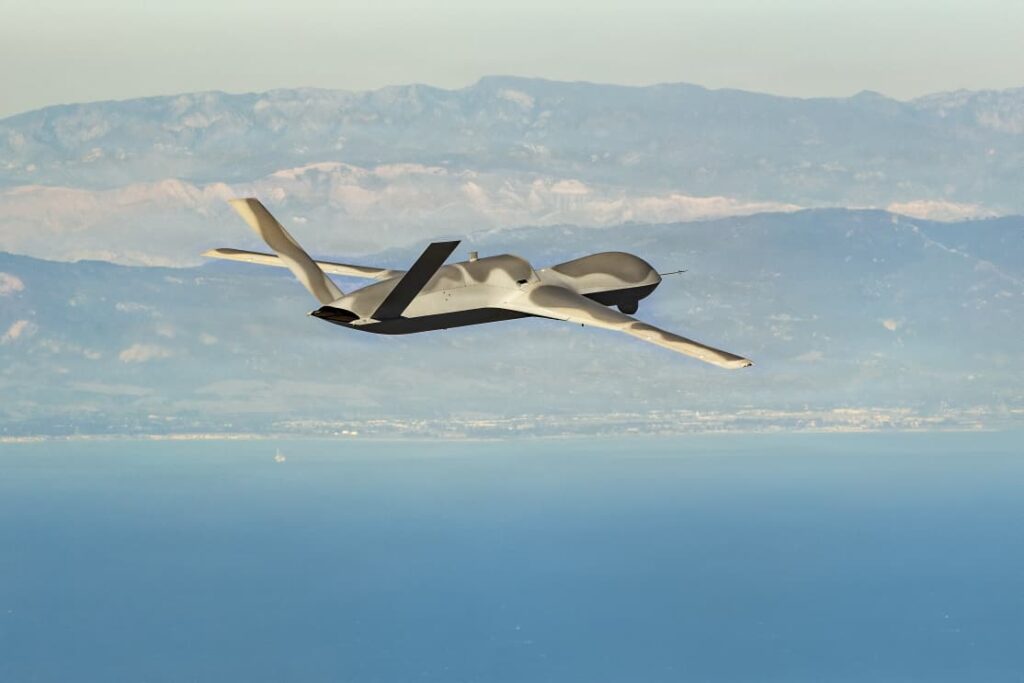
The MQ-20 Avenger is a jet-powered unmanned combat aerial vehicle developed by General Atomics Aeronautical Systems.
The aircraft has been used by the US Navy as a test platform for autonomy, communications, mission planning, and other technologies linked to future Collaborative Combat Aircraft. It is not the US Navy’s selected operational Collaborative Combat Aircraft, and its current role is mainly as a surrogate for testing systems that may later move to purpose-built aircraft.
READ ALSO: https://modernmechanics24.com/post/china-giant-crane-hualong-one-reactors/
The Avenger can reach about 400 knots and operate at altitudes of around 50,000 feet. It has an endurance of roughly 20 hours, depending on the mission and configuration. These characteristics give the Navy a high-performance unmanned platform for testing systems in conditions that are closer to future combat aircraft than those offered by simpler target drones.
General Atomics has said that the MQ-20 has served as a Collaborative Combat Aircraft surrogate for more than five years. The aircraft has continued in this role even as newer demonstrators designed specifically for future autonomous combat missions have entered development. This allows engineers and military teams to test new software and control concepts without waiting for every future aircraft design to reach maturity.
The Gray Flag test addressed a problem that is different from basic autonomous flight. An aircraft that can maintain a route without continuous pilot input is only one part of a larger autonomous combat system. Military planners also need a way to give that aircraft a meaningful task, define its limits, and connect its actions to the wider mission.
CAMP is designed for that purpose. It takes information from the Collaborative Mission Planning Continuum and converts a broader force-level plan into tasks that an autonomous aircraft can understand. The information can include the aircraft’s role, timing, authorities, restrictions, and other conditions that define how it should perform the assigned mission.
That process is different from simply uploading a list of waypoints. Waypoints tell an aircraft where to fly, while a mission-level plan can provide information about what the aircraft is expected to accomplish and the boundaries within which it should operate. The distinction becomes important when autonomous aircraft are expected to perform useful military tasks rather than simply follow predetermined flight paths.
From Plans To Execution
The US Navy’s approach is aimed at reducing the amount of detailed control required from human operators. Instead of directing every movement, a commander or mission planner can establish the intended task and the conditions under which the autonomous system is allowed to act. The aircraft then handles more of the detailed execution within those human-defined limits.
This model is relevant to the US Navy’s plans for Collaborative Combat Aircraft. Future unmanned aircraft are expected to operate alongside crewed aircraft and other networked systems. If each unmanned aircraft required a dedicated person to continuously control it, adding more aircraft would also require more operators, control stations, communications links, and supporting infrastructure.
Autonomy changes that equation by moving some decisions from the operator to the aircraft. Human personnel can remain responsible for mission objectives and authorities while onboard systems manage parts of the flight and task execution. The exact division of responsibility will depend on the aircraft, mission, software, communications environment, and rules established by the military.
The test also has implications for operations where communications are unreliable. Naval forces may face environments in which tactical data links, satellite communications, or other networks are disrupted or degraded.
An aircraft that already holds its mission information and operating restrictions may be able to continue assigned activities during periods when continuous remote control is unavailable.
This does not mean that an autonomous aircraft becomes independent of human command. The purpose of the CAMP architecture is to place autonomous action inside a framework established by human planners. The system therefore focuses on giving machines enough information to perform assigned tasks while retaining defined authorities and limits.
The approach also addresses the problem of scale. A future naval force may use larger numbers of autonomous aircraft for sensing, communications, electronic warfare, reconnaissance, or other supporting roles. A common planning system could allow those platforms to receive tasks through the same broader operational process instead of requiring a completely separate control method for every aircraft.
WATCH ALSO: https://modernmechanics24.com/post/airbus-a350f-test-ahead-first-flight/
Building Future Combat Networks
The MQ-20 has already been used by the Navy to test another part of this architecture. On November 5, 2024, US Navy air vehicle pilots at Naval Air Station Patuxent River in Maryland controlled an MQ-20 flying from General Atomics’ California test facility. The aircraft was controlled through the Unmanned Carrier Aviation Mission Control Station using a proliferated low-Earth-orbit satellite connection.
NAVAIR described the MQ-20 in that test as a Collaborative Combat Aircraft technology demonstration surrogate.
The demonstration examined whether the control architecture could operate an unmanned aircraft beyond the MQ-25 Stingray. That earlier work focused heavily on long-range command and control, while the Gray Flag 2026 event examined how a mission itself can move from human planning into autonomous execution.
Together, the two demonstrations address different parts of the same problem. One deals with how operators can maintain command and control over an aircraft at long range, while the other examines how a mission can be translated into instructions that an autonomous platform can execute. Both areas will matter if future unmanned aircraft are expected to operate over long distances as part of larger naval formations.
The Navy’s longer-term concept extends beyond aircraft. CAMP is intended to connect force-level planning with individual mission participants, which may include autonomous aircraft, weapons, sensors, and other networked effectors. A common digital planning process can give different systems information about their assigned roles while keeping those roles connected to a larger operation.
This approach is especially relevant to distributed naval operations. Ships and aircraft may operate across large areas while sharing information through several communication networks. Mission planning systems therefore need to move information between different platforms without requiring operators to manually translate every task for every individual system.
For future Collaborative Combat Aircraft, the same concept may support several types of missions. An autonomous aircraft might receive a reconnaissance task, provide sensing support, relay communications, conduct electronic warfare activities, or support another aircraft during a larger operation. The important point is that these tasks would be assigned as part of a wider mission rather than treated as isolated flights.
The MQ-20 provides a practical platform for developing these functions. Its jet-powered design and long endurance allow the Navy and industry to test autonomy systems under conditions that are closer to those expected from future combat aircraft. Engineers can therefore examine software, communications, mission planning, and aircraft behavior before relying on newer operational platforms for the same development work.
READ ALSO: https://modernmechanics24.com/post/ukraine-zorelit-v5-ai-drone-interceptor/
Avenger Expands Test Role
General Atomics has also used the MQ-20 for increasingly advanced autonomy trials. In January 2026, the company reported that an Avenger fitted with government reference autonomy software conducted a live autonomous aerial intercept against a crewed aggressor aircraft. The aircraft used onboard sensors and autonomy software to make mission decisions during the test.
That work adds another layer to the US Navy’s current development effort. Earlier autonomy demonstrations have focused on whether an aircraft can perform specific tasks with less direct human control. The Gray Flag exercise instead examined how such an aircraft can be connected to a larger planning process before the mission begins.
The distinction is important because operational autonomy involves more than aircraft control. A useful autonomous combat system must receive a mission, understand its assigned role, operate within defined restrictions, and exchange information with other systems. It also needs a command structure that allows human personnel to set objectives and authorities without manually directing every action.
CAMP is intended to provide part of that structure. It creates a link between the information produced during mission planning and the instructions required by an autonomy-enabled platform. The approach is designed to make the transition from a force-level plan to an individual aircraft task more consistent.
The system also points toward greater interoperability between different autonomous platforms. If future aircraft and other effectors use common planning concepts, military planners may be able to assign tasks without building a separate planning process for every system. This can simplify how different unmanned platforms are included in a wider operation.
The demonstration did not establish a complete operational Collaborative Combat Aircraft formation. It also did not show multiple autonomous aircraft being controlled simultaneously in a complex combat scenario, and the test did not involve an F-35C. Its value lies in demonstrating one specific part of the architecture required for those future capabilities.
The Navy showed that a human-developed mission could move through an operational planning workflow and reach an autonomous MQ-20 for execution.
That provides a practical test of how mission intent can be converted into machine-readable instructions while retaining defined authorities and constraints. Further testing will be needed to establish how the architecture performs with multiple aircraft, changing missions, communications disruptions, and more complex combat conditions.
The MQ-20 will continue to provide a testbed for that work. Its role gives the US Navy and industry a platform on which new autonomy software, communications methods, and planning tools can be evaluated before future Collaborative Combat Aircraft enter operational service.
The Gray Flag 2026 demonstration therefore adds another piece to a wider effort to connect autonomous aircraft with the same mission-planning systems used by human commanders.
Future tests are likely to focus on how this architecture performs as the number of autonomous systems increases. The Navy will also need to examine how aircraft respond when missions change, communications are degraded, or several systems must coordinate their actions.
However, mission-level autonomy and common planning tools will form an important part of how the service integrates autonomous aircraft into future naval air operations.






One Response