

Lockheed Martin has unveiled the AGM-158 FLEX, a modular airframe designed to expand the launch and payload options of its JASSM and LRASM missile family.
The company has invested more than $35 million in the project. FLEX is designed for air, ground, surface and subsurface launch configurations.
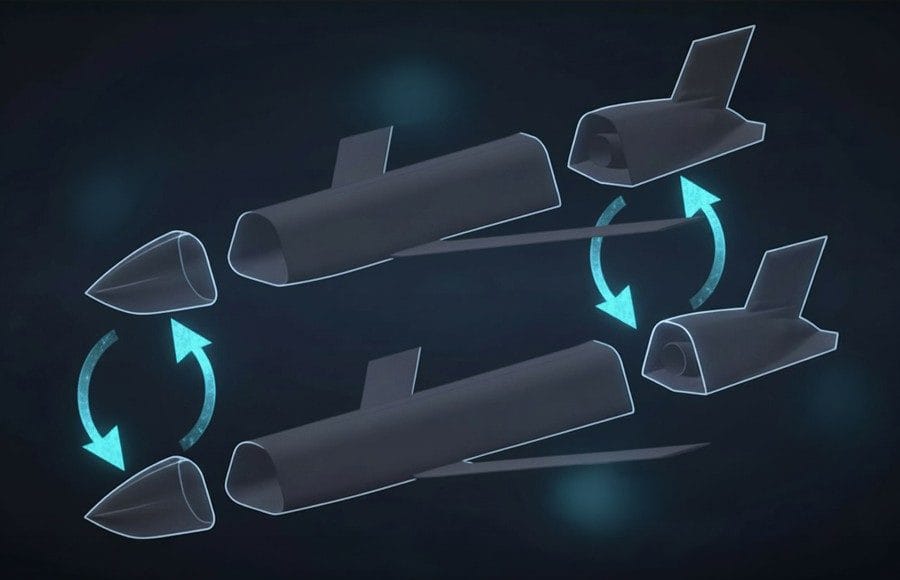
FLEX combines proven JASSM components with interchangeable sections for different missions. A removable nose section can carry sensor systems used by the Joint Air-to-Surface Standoff Missile (JASSM), and the Long Range Anti-Ship Missile (LRASM). This design allows selected components to be changed without redesigning the entire weapon.
The airframe also features an interchangeable boat tail. It supports ground, surface and subsurface launch options alongside the existing air-launched configuration. This gives the AGM-158 family a common structure that can be adapted to different platforms.
READ ALSO: https://modernmechanics24.com/post/spice-1000-f35-adir-integration-israel/
Lockheed Martin is designing the air-launched FLEX version to remain compatible with current and future JASSM and LRASM aircraft. The company says this will reduce separate integration work for new configurations. It also allows the new architecture to build on existing aircraft and weapon systems.
Two Sizes Support Range
FLEX will be available in two airframe lengths. The 206-inch version is intended for JASSM-XR, while the 168-inch configuration matches the dimensions of JASSM-ER. The two sizes are designed to meet different range and mission requirements.
JASSM-XR will be the first weapon based on the FLEX architecture. Lockheed Martin said it is intended to provide the US military and allied forces with greater standoff strike range. Standoff weapons allow launch platforms to engage targets from longer distances.
The modular structure is also designed to simplify future upgrades. Individual sections can be replaced or updated without rebuilding the complete weapon. Lockheed Martin expects this approach to help manage costs, reduce the effects of component obsolescence and speed the introduction of new capabilities.
WATCH ALSO: https://modernmechanics24.com/post/us-army-46m-autonomous-cargo-drone/
Existing Production Base
Engineers from Lockheed Martin’s Missiles and Fire Control business and Skunk Works are working on FLEX. The $35 million-plus investment covers airframe design, testing, prototype production, concept development and supplier preparations. The work includes both weapon development and production planning.
FLEX will use the existing JASSM and LRASM production line and supply chain. It will also use established mission-planning systems and software infrastructure. This reduces the need for separate manufacturing and support systems for each configuration.
Lockheed Martin has expanded its AGM-158 manufacturing capacity in recent years. In 2022, it opened a 225,000-square-foot production facility with automated manufacturing systems and a robotic paint line. The facility is designed to support higher production rates and new AGM-158 variants.
Expanding AGM-158 Family
JASSM is an air-launched cruise missile designed for long-range strikes against land targets. LRASM uses related technology for long-range anti-ship missions. FLEX extends this common technology base to additional launch configurations.
The modular design also has implications for international operators. Customers using compatible aircraft and existing JASSM or LRASM infrastructure may have a simpler path to future configurations. Final capabilities will depend on the weapon design and requirements of each customer.
READ ALSO: https://modernmechanics24.com/post/ai-3d-printer-defect-detection/
JASSM-XR is set to become the first FLEX-based weapon. The new architecture provides Lockheed Martin with a common framework for developing future AGM-158 variants. Its progress will determine how widely the modular approach is applied across the missile family.




One Response