

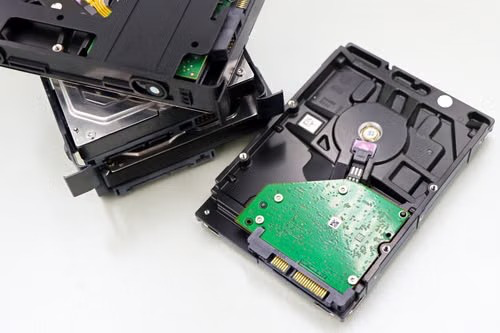
Texas engineers and TSMC have tested a new magnetic memory technology that could make AI devices faster and more energy efficient. The team says SOT-MRAM could be useful for running AI directly on small devices with limited power and memory.
Researchers from the University of Texas at Austin worked with Taiwan Semiconductor Manufacturing Company to fabricate and test SOT-MRAM chips. Their results were published in Science Advances.
SOT-MRAM is a type of memory that uses magnetic properties to store data. Unlike some conventional memory, it can keep information even when the power is turned off.
READ ALSO: https://modernmechanics24.com/post/f35a-live-weapons-combat-hammer-test/
The researchers focused on a challenge with using SOT-MRAM for AI. The memory stores data in just two states, 0 and 1, but the team designed its AI system to work with this binary format while maintaining useful accuracy.
The chips were tested on several AI tasks. These included neural network inference, training of binary neural networks, and probabilistic graph modeling.
One major result was the speed of the memory. The researchers reported write operations taking just 2 nanoseconds and using about 2 picojoules of energy per write. The team says some other memory technologies can take much longer and use significantly more energy.
The technology could be especially useful for edge AI. Edge AI means processing information directly on devices such as sensors, robots, and other small machines instead of sending every task to a cloud data center.
Jean Anne Incorvia, associate professor at the University of Texas at Austin and the project’s faculty leader, said SOT-MRAM AI accelerators could eventually replace some CPU-based AI accelerators in edge devices. A robotic hand, for example, could process sensor data locally and react quickly without sending every signal to a remote server.
The technology still needs more development before it can be widely used. The researchers are working to improve the characteristics that give SOT-MRAM its speed and low energy use while reducing differences between individual memory devices, which can affect AI accuracy.
WATCH ALSO: https://modernmechanics24.com/post/lockheed-martin-grizzlymissile-launcher/
The research matters as AI increases demand for computing power and electricity. More efficient memory could help reduce the energy needed by AI devices, while local processing could also reduce how much work needs to be sent to large data centers.












One Response