

Researchers from the University of Science and Technology of China (USTC) and Shanghai Jiao Tong University have experimentally shown that vacuum fluctuations can strengthen superconductivity. The team increased the critical temperature of a thin niobium diselenide (NbSe₂) device by up to 5.4% using a specially designed terahertz cavity.
The study was led by Profs. ZENG Changgan and CHENG Guanghui of USTC, along with Prof. JIANG Qingdong of Shanghai Jiao Tong University, Prof. Frank Wilczek of MIT, and other researchers. The findings were published in Nature on August 19.
The research focuses on a basic feature of quantum physics: vacuum is not completely empty. Even when no ordinary matter is present, quantum fields have small, unavoidable fluctuations. These effects are normally too weak to noticeably change the behavior of large materials.
READ ALSO: https://modernmechanics24.com/post/llnl-3d-print-ceramic-laser-high-power/
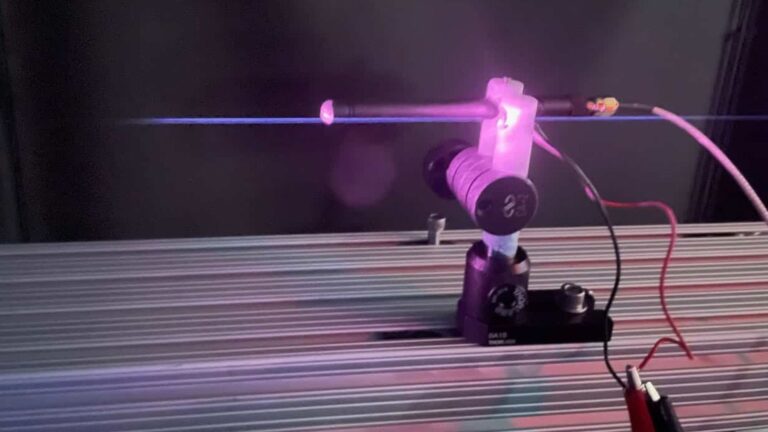
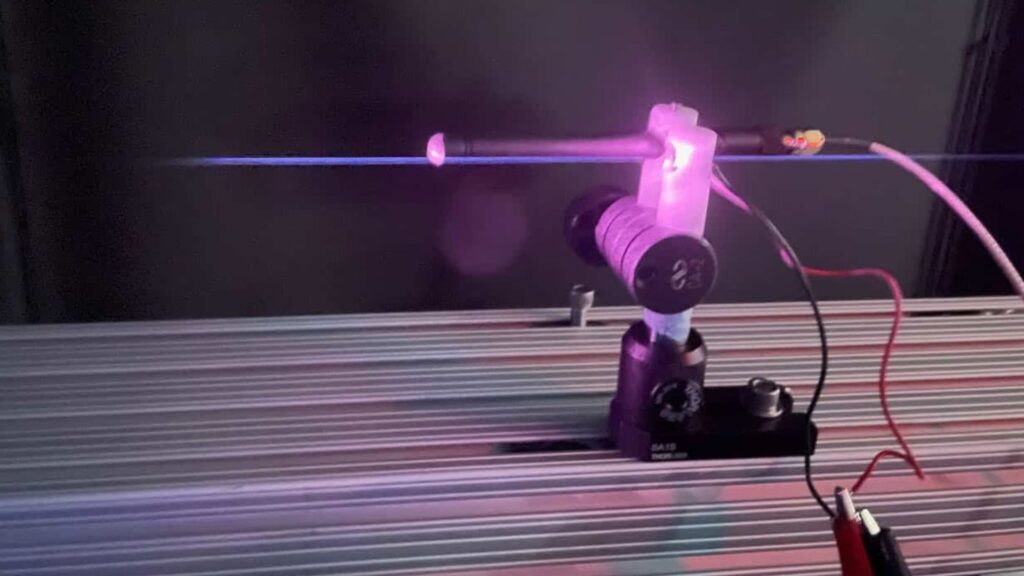
To make these fluctuations stronger, the researchers placed NbSe₂ inside a terahertz split-ring resonator, also called a dark cavity. The structure changes the surrounding electromagnetic environment and increases the effect of vacuum fluctuations around the superconductor.
The team then compared the NbSe₂ device inside and outside the cavity. They found that the superconducting critical temperature increased by up to 5.4% in a six-layer device. The critical current and critical magnetic field also became stronger near the superconducting transition.
The researchers ran additional tests by changing the cavity design, frequency, material thickness, dielectric materials and metal structures. These tests helped rule out other possible causes, including strain, material damage and unevenness in the material. The improvement also showed a clear peak at certain cavity frequencies, suggesting that the effect is linked to the cavity’s electromagnetic modes.
The researchers believe the enhancement happens because the superconducting state interacts with virtual photons inside the cavity. Their theoretical model suggests that this interaction can lower the energy of the superconducting state, making superconductivity stronger.
WATCH ALSO: https://modernmechanics24.com/post/hyundai-atlas-humanoid-robot-wins-honor/
The work is still at an experimental stage, and the improvement is relatively modest. However, it shows that engineered quantum environments could provide a new way to control superconducting materials without directly driving them with an external signal. The team plans to explore different cavity designs and materials to see whether the effect can become stronger and more widely useful.











3 Responses