Researchers at CERN’s n_TOF Collaboration have made the first experimental measurement of how niobium-94 captures neutrons. The result helps explain why ancient stardust contains more molybdenum-94 than older models of dying stars could predict.
The study was published in Physical Review Letters. The work involved researchers from CERN, IFW Dresden, the Institut Laue-Langevin and the Paul Scherrer Institute.
Niobium-94 is an isotope with 41 protons and 53 neutrons. Inside dying stars, it reaches an important point in the process that creates heavy elements. It can either decay into molybdenum-94 or capture a neutron and become niobium-95.
READ ALSO: https://modernmechanics24.com/post/china-superconductivity-quantum-effects/
This is important because scientists have found unusually high amounts of molybdenum-94 in presolar grains. These tiny pieces of ancient stardust existed before the Sun formed and were later preserved inside primitive meteorites found on Earth.
Researchers use these grains as a record of the nuclear processes that happened in ancient stars. However, older models could not fully explain the amount of molybdenum-94 found in them.
Until now, scientists had never directly measured how likely niobium-94 was to capture a neutron. They had to depend mainly on theoretical estimates, leaving uncertainty about which nuclear process was responsible for the extra molybdenum-94.
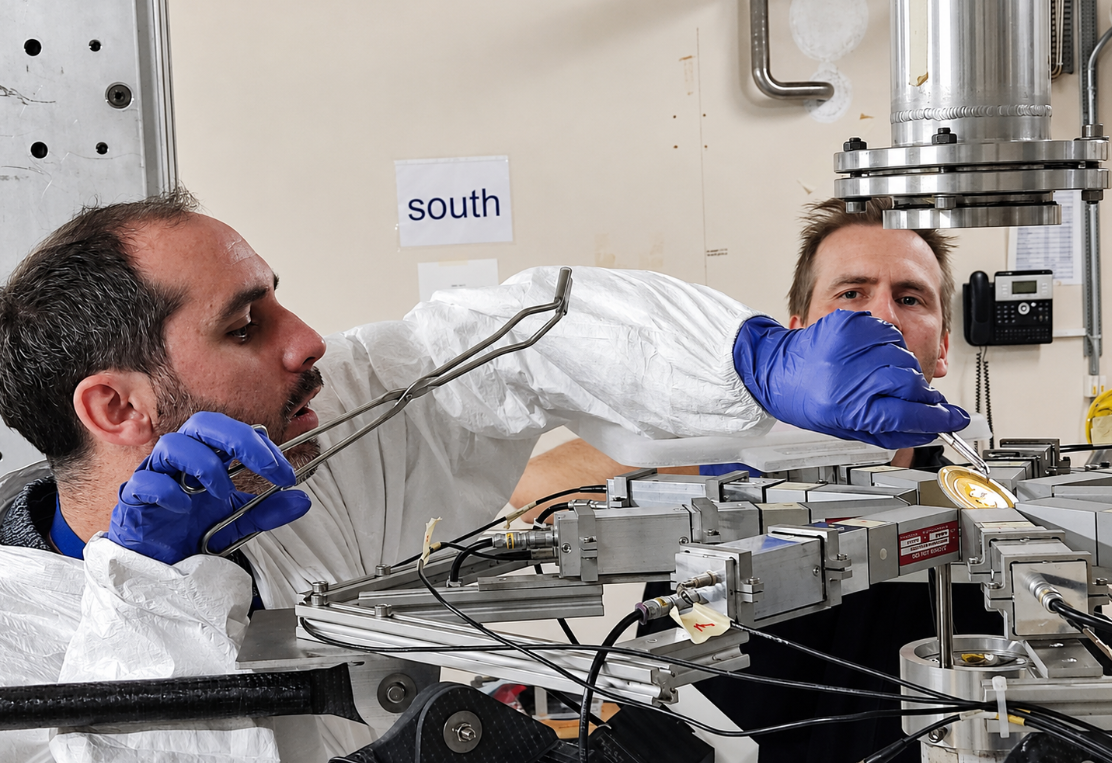
To make the measurement, researchers first had to produce a suitable niobium-94 sample. IFW Dresden prepared pure niobium-93, which was converted into niobium-94 at the Institut Laue-Langevin. The sample was then carefully checked at the Paul Scherrer Institute.
The sample was later taken to CERN’s n_TOF facility and exposed to an intense neutron beam at the EAR2 experimental station. The powerful neutron source helped researchers detect the very weak signal produced when niobium-94 captured a neutron.
The measurement was close to several earlier theoretical predictions. Alberto Mengoni, Spokesperson of the n_TOF Collaboration, said this suggests that the neutron-capture estimates were not the main reason for the mismatch between older stellar models and stardust observations.
WATCH ALSO: https://modernmechanics24.com/post/iss-crew-new-year-2026-wishes/
When the new result was added to more advanced stellar models, they were able to reproduce the observed levels of molybdenum-94 in presolar grains with much less uncertainty. The finding therefore solves an important part of the long-standing mystery surrounding these ancient grains.
There is still one major question. Scientists do not yet have a precise experimental measurement for the other possible path of niobium-94: beta decay. Future experiments could measure this process and help researchers build a more complete picture of how dying stars create heavy elements.