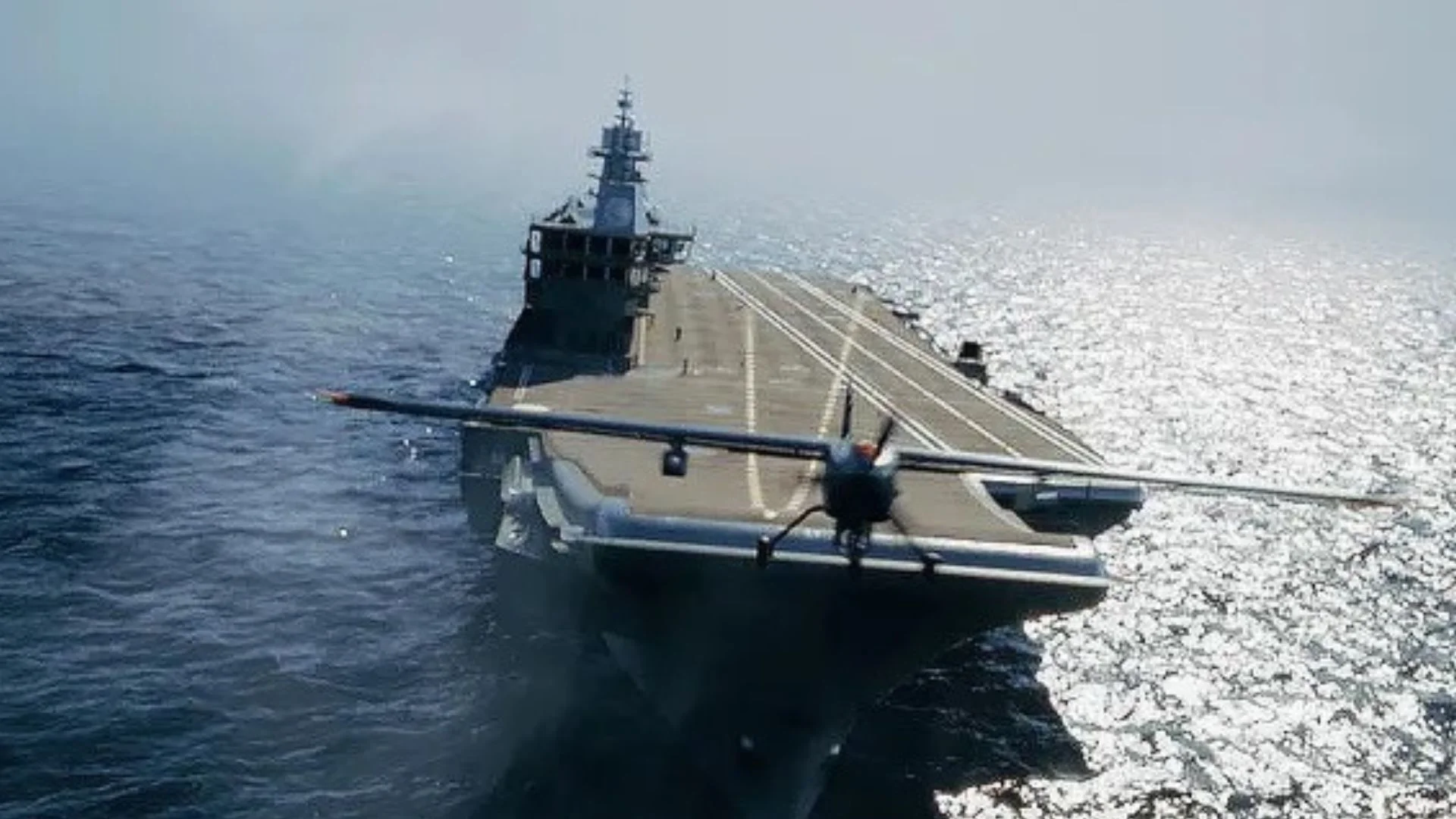
Elbit Systems has unveiled a concept that transforms standard merchant ships into operational hubs for fixed-wing drones.
The package is designed to support 9 to 12 Hermes 650 Spark uncrewed aircraft from a converted commercial vessel. By using existing ships, the company aims to provide navies with an alternative to building or acquiring dedicated aircraft carriers.
The concept arrives as military forces integrate uncrewed aircraft into naval operations. Modern missions require drones to conduct surveillance, reconnaissance, and strike tasks over large maritime areas. Supporting these aircraft at sea has become an important logistical challenge for many countries.
Large maritime regions are often difficult to monitor using patrol ships alone. A ship’s radar and visual range are limited, while helicopters can only remain airborne for a limited time. Smaller vertical takeoff drones help extend surveillance but generally carry lighter payloads and have shorter endurance.
Inspired By History
The idea follows a model first seen during the Second World War. Allied forces converted more than 130 cargo ships and tankers into escort carriers to protect supply convoys from submarine attacks across the Atlantic, Pacific, and North Sea. Those converted ships provided air support without waiting years for purpose-built aircraft carriers.
READ ALSO: Rolls-Royce Awards £100M Bristol Facility Contract to Strengthen Future Combat Air Programs
Elbit applies the same principle to modern unmanned aviation. Instead of carrying manned fighter aircraft, the converted ships would operate long-endurance drones equipped for multiple missions. This approach combines existing commercial vessels with current drone technology to expand naval reach.
Unlike wartime escort carriers, the proposed ships do not require extensive onboard aviation infrastructure. The focus is on supporting unmanned aircraft rather than accommodating large flight crews or complex command centers. This simplifies ship conversion while reducing operational demands.
Designed For Flexibility
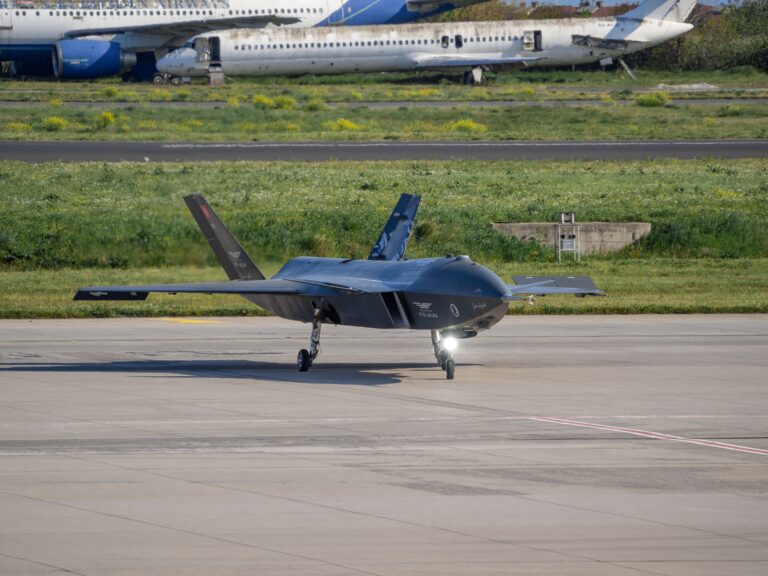
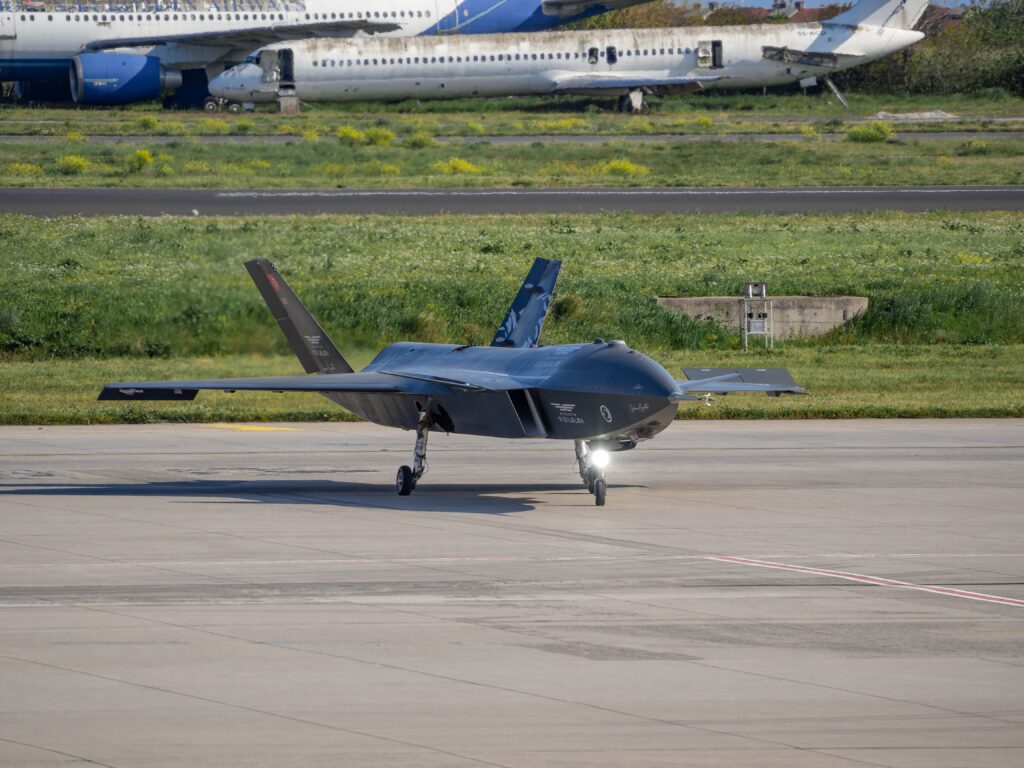
At the center of the concept is the Hermes 650 Spark unmanned aircraft. The drone has a maximum takeoff weight of 650 kilograms and features a front-mounted engine instead of the rear-mounted layout used on many unmanned aircraft. The design provides greater power, a wider operating speed range, and improved performance during demanding missions.
The aircraft also features short takeoff and landing(STOL) capability. This allows it to operate from much shorter runways than conventional aircraft require. As a result, the Hermes 650 Spark can safely launch from and return to the deck of a converted merchant ship.
The drone includes two large payload bays that can carry different mission equipment. Depending on operational needs, these payloads may support surveillance, reconnaissance, or other military tasks. Advanced onboard diagnostic systems also help crews monitor aircraft performance and maintenance requirements.
Another important feature is satellite communications. Instead of relying entirely on operators aboard the ship, the aircraft can be controlled from a land-based ground control station. This reduces the need for a large command-and-control center onboard while simplifying ship operations.
Elbit Reimagines Naval Aviation
The Hermes 650 Spark is also compatible with the existing ground control infrastructure used for the Hermes 900 uncrewed aircraft. Operators already using the Hermes 900 can integrate the new platform without building an entirely separate control system. This reduces training requirements and allows both aircraft types to operate within the same operational network.
Under Elbit’s concept, the ship mainly serves as a launch-and-recovery platform. Mission control remains distributed between onboard systems and land-based control stations connected through satellite links. This arrangement helps reduce manpower while making efficient use of available ship space.
READ ALSO: Natura Resources Clears Major DOE Hurdle for First US Liquid-Fueled Molten Salt Reactor
The concept also addresses a challenge faced by countries responsible for large maritime territories. Nations with extensive coastlines, island chains, or remote economic zones often require persistent aerial surveillance far from shore. Examples include countries such as Japan, Denmark, and Germany, where large maritime areas demand continuous monitoring.
Compared with helicopters, the Hermes 650 Spark offers longer endurance and lower crew requirements. Compared with smaller shipborne drones, it provides greater range and larger payload capacity. This places the aircraft between traditional naval helicopters and compact vertical takeoff drones in terms of operational capability.
As navies continue expanding the use of unmanned systems, practical launch platforms are becoming increasingly important. Converting existing merchant ships provides a faster way to deploy long-range drones without investing in large aircraft carriers.
However, Elbit‘s concept may shape a new approach to maritime air operations by combining commercial vessels with advanced uncrewed aircraft for extended missions at sea.