The US Navy has diverted five commercial vessels and disabled another during an intensified maritime interdiction operation linked to Iran near the approaches to the Strait of Hormuz.
US Central Command (CENTCOM) announced the operation, highlighting a stronger focus on monitoring and controlling maritime traffic in one of the world’s most strategically important waterways.
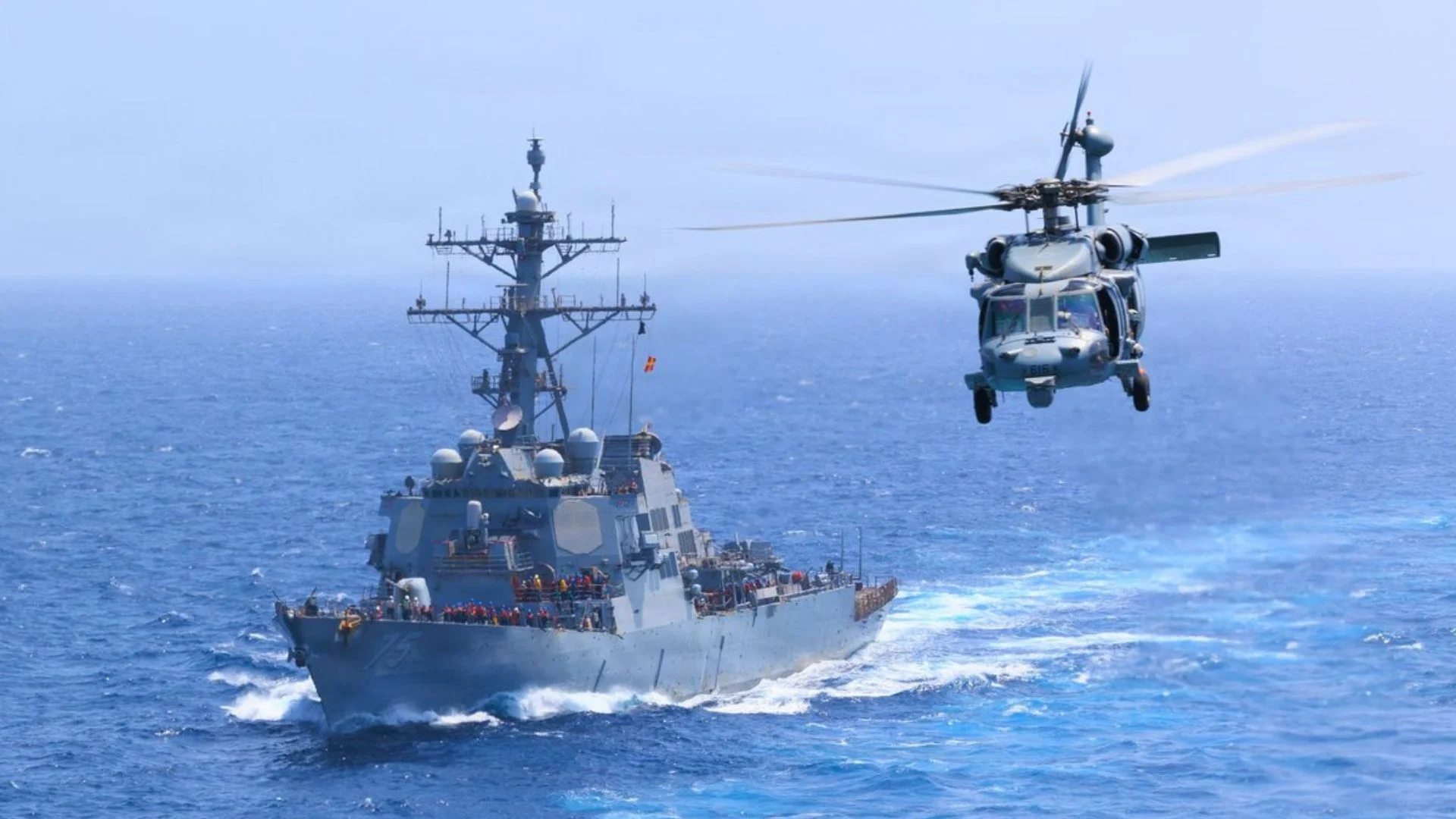
The mission also featured the guided-missile destroyer USS Donald Cook (DDG 75) operating alongside an MH-60S Seahawk helicopter, demonstrating the mix of naval and aviation assets supporting the effort.
The latest operation reflects an increase in US maritime security activities across the northern Arabian Sea. CENTCOM confirmed that five commercial vessels were redirected while one vessel was disabled during the mission. The command did not identify the ships, their cargo, or their nationalities.
Officials also did not explain why the individual vessels were intercepted. They have not stated whether any of the ships carried weapons, sanctioned goods, or other restricted cargo. Even so, the operation marks one of the more visible maritime interdiction efforts announced by the command in recent months.
Maritime Security Mission
Maritime interdiction operations are designed to monitor and inspect vessels that raise security concerns. Naval forces identify ships based on intelligence and operational indicators instead of conducting random inspections. This approach helps focus resources on vessels that require closer examination.
These operations normally include tracking, challenging, and, when necessary, boarding a ship. Boarding teams inspect documents, cargo, and other information to determine whether the vessel complies with international law. Authorities can also stop a ship from continuing its voyage if they decide that further action is necessary.
CENTCOM confirmed that one vessel was disabled during the latest mission. The command did not explain how the action was carried out or what specific circumstances led to the decision. Additional operational details remain undisclosed.
READ ALSO: Molten Salt Reactor Test Runs 2,300 Hours and Reveals a Key Step for Safer Nuclear Pumps
The mission took place near the Strait of Hormuz, a narrow waterway connecting the Persian Gulf with the Gulf of Oman and the Arabian Sea. Around one-fifth of the world’s traded oil passes through this route every day. Any disruption in the area can quickly affect energy markets, shipping schedules, and insurance costs worldwide.
Because of its importance, the region remains under constant observation by several naval forces. The US has maintained a regular presence there for years to support freedom of navigation and regional maritime security. The latest operation fits within those broader security efforts.
US Navy Near Hormuz
The USS Donald Cook served as one of the primary naval platforms supporting the mission. The Arleigh Burke-class guided-missile destroyer is equipped with advanced radar, communication systems, and weapons designed for several types of military operations. Although built mainly for combat missions, the ship also plays an important role in maritime security operations.
Modern destroyers can monitor hundreds of vessels at the same time through powerful sensors and communication networks. This allows commanders to build a detailed picture of maritime traffic across large areas. Such awareness helps identify ships that require closer attention.
The destroyer also carried an MH-60S Seahawk helicopter during the operation. The aircraft extends the ship’s reach by flying far beyond the vessel’s radar horizon. It can quickly identify ships, observe crew activity, and transport boarding teams when required.
The helicopter also provides aerial support while inspections take place. Its presence improves safety for boarding teams and gives commanders a better understanding of events at sea. Together, the ship and helicopter create a flexible system that can respond faster than surface vessels alone.
The Navy often uses this combination during maritime security missions because it allows rapid reactions over wide areas. Helicopters can reach ships much faster than boats launched from a destroyer. That speed becomes important when vessels change course or attempt to leave the area.
Intelligence Drives Operations
Modern maritime interdiction depends heavily on intelligence gathered from multiple sources. Naval ships, aircraft, satellites, and surveillance systems work together to track commercial shipping across busy sea lanes. Analysts then compare movement patterns with other information before recommending an interception.
This intelligence-led process reduces unnecessary inspections of legitimate commercial traffic. Instead of stopping every vessel, commanders concentrate on ships that display unusual routes, ownership records, or communication patterns. The approach improves both efficiency and legal justification.
Before boarding any merchant vessel, naval commanders verify its identity and legal status. This process becomes important because many commercial ships operate under complex ownership arrangements. A vessel may sail under one country’s flag while being managed and crewed by people from several others.
Boarding operations also follow carefully controlled rules of engagement. Military personnel seek to complete inspections safely while minimizing risks to civilian crews and commercial shipping. Protecting innocent mariners remains an important part of every mission.
During such operations, warships also provide protection against potential threats. These may include unmanned aircraft, anti-ship missiles, fast attack boats, or other hostile actions. Maintaining security allows boarding teams to focus on inspections without facing additional dangers.
READ ALSO: China’s PHL-191 MLRS Airburst Demo Reveals New Battlefield Strategy Behind Long-Range Rocket Fires
Regional Impact Ahead
Although CENTCOM has not revealed the purpose of the intercepted vessels, maritime interdiction remains an important security tool. Such missions help disrupt illegal activities at sea and prevent prohibited goods from moving through international shipping routes. They also reinforce international efforts to maintain secure maritime trade.
Unlike routine naval patrols, interdiction missions involve direct operational action when commanders determine that intervention is required. Diverting vessels and disabling one ship demonstrate a more active enforcement posture. The operation also highlights the Navy’s ability to control maritime traffic when necessary.
The strategic importance of the Strait of Hormuz gives every operation in the region wider significance. A large share of global oil exports moves through this narrow passage each day. Any security incident there attracts close attention from governments, shipping companies, and energy markets.
The Arleigh Burke-class destroyer remains one of the US Navy’s most versatile warships for missions like these. Along with supporting maritime security operations, it can defend against missile threats, track submarines, engage hostile surface vessels, and conduct precision strike missions. This flexibility allows commanders to adapt quickly if regional conditions change.
The latest operation also highlights the growing role of intelligence, surveillance, and naval aviation working together. Real-time information, persistent monitoring, and rapid helicopter support enable forces to respond more effectively while limiting disruption to normal commercial shipping. These capabilities continue to shape modern maritime security operations.
As regional tensions between the US and Iran continue, maritime operations are likely to remain an important part of security efforts in the Gulf region. Future missions will focus on protecting major shipping lanes while monitoring activities that may threaten stability. The outcome of these operations will continue to influence commercial confidence, regional security, and the safe movement of global energy supplies.