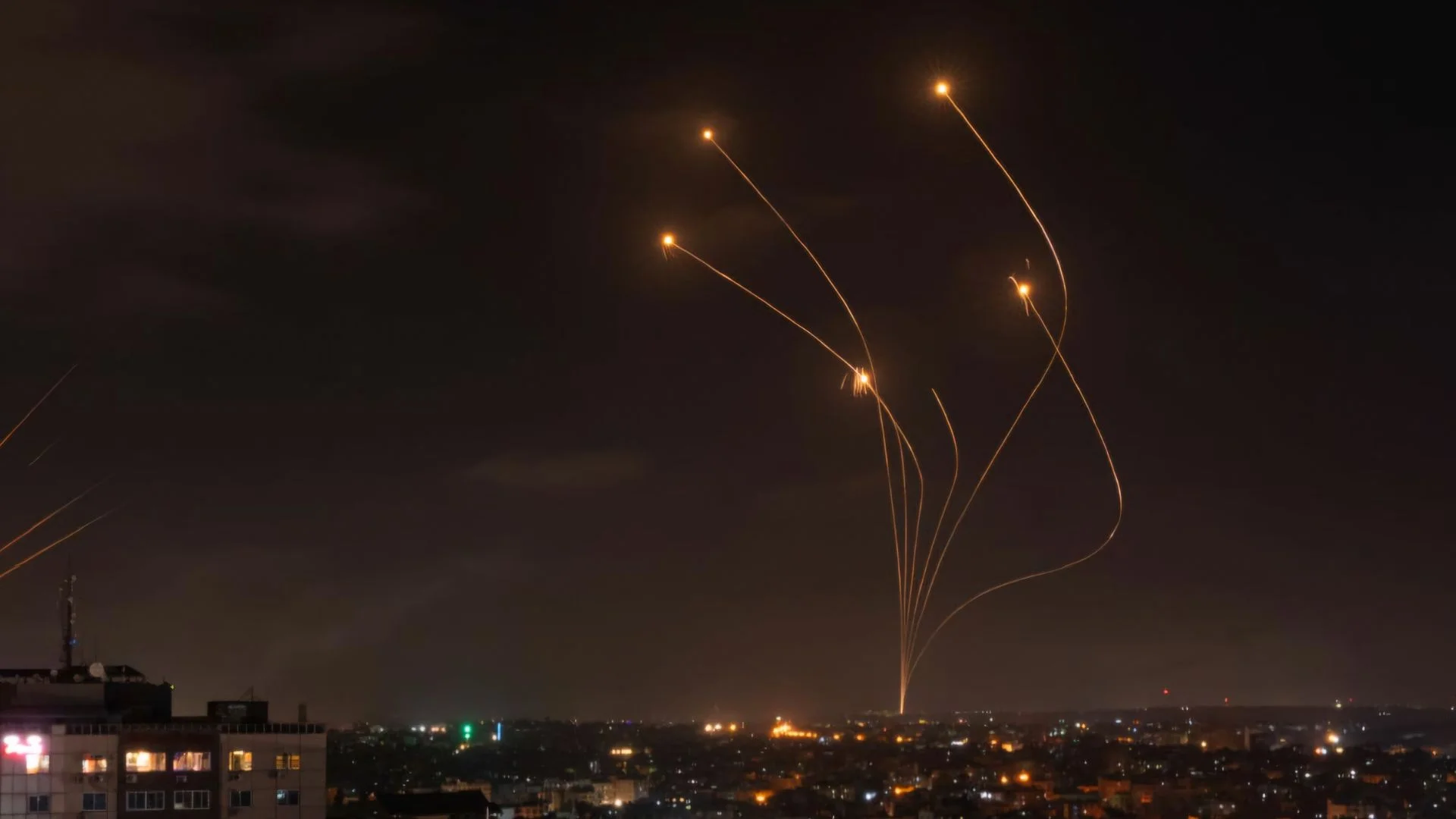
Israel has completed a new series of tests involving its upgraded Iron Dome air defense system and the Iron Beam laser weapon.
The tests confirmed that both systems can operate together via a single command-and-control network. This allows military operators to select either missile interceptors or laser weapons depending on the threat.
The Israeli Ministry of Defense announced the successful trials on Tuesday. Officials said the upgrades improve the system’s ability to handle large waves of incoming rockets and drones. The ministry did not disclose technical details of the changes to the system.
A major goal of the testing was to prove the operational integration of the Iron Beam laser. During the exercises, both systems worked together under realistic combat conditions. The operations were managed directly from the Iron Dome’s battle management center.
The new capability allows commanders to switch between missile and laser interceptions in real time. The choice depends on the type of incoming target, available resources, and operational priorities. This creates a more efficient defense system during high-intensity attacks.
The announcement comes shortly after a ceasefire between the US and Iran. Despite that diplomatic development, Israel continues to face security concerns along its northern border with Lebanon. Drone attacks launched by Hezbollah remain an ongoing challenge for Israeli air defenses.
READ ALSO: China’s Reusable Rocket Engine Clears Major Test as Private Space Launch Plans Accelerate
Iron Dome Defeats Aerial Threats
Iron Dome is one of the world’s most well-known short-range air defense systems. It became operational in 2011 and recorded its first successful interception of a rocket launched from Gaza during the same year. Since then, it has intercepted thousands of rockets, artillery shells, and other aerial threats.
The system was developed primarily by Israeli defense company Rafael. It was designed to defend populated areas and critical infrastructure from short-range attacks. Over the years, Iron Dome has become the backbone of Israel’s multi-layered air defense network.
Each Iron Dome battery consists of three main parts. These include an advanced radar, a battle management and command center, and several launchers carrying Tamir interceptor missiles. Together, these components detect, track, and destroy incoming threats before they reach their targets.
The radar continuously scans the sky for rockets, drones, and other projectiles. Once a threat is detected, the command center quickly calculates its flight path. If the object is expected to strike a populated area or important facility, the system launches a Tamir interceptor to destroy it in the air.
Iron Dome is designed to intercept targets at distances ranging from about 4 kilometers to 70 kilometers. Newer versions have expanded capabilities against drones, cruise missiles, and other complex threats. The system also avoids wasting interceptors by ignoring rockets predicted to land in open areas.
Its ability to make rapid decisions has made Iron Dome highly effective during repeated rocket attacks. The automated process reduces reaction time and improves interception accuracy. This helps protect civilians while limiting damage to infrastructure.
Iron Beam Cuts Defense Costs
Iron Beam represents the next step in Israel’s air defense strategy. It is also being developed by Rafael and is designed to complement, rather than replace, Iron Dome. The laser system focuses on intercepting nearby threats at a much lower cost.
Unlike traditional missiles, Iron Beam uses a high-energy laser to destroy targets. After locking onto a target, the laser can neutralize it within four to five seconds. It is designed to engage threats at distances of up to 10 kilometers.
One of Iron Beam’s biggest advantages is its operating cost. A single laser shot costs only a few dollars because it uses electricity instead of expensive interceptor missiles. By comparison, each Tamir interceptor fired by Iron Dome costs around $50,000.
Using lasers against suitable targets allows interceptor missiles to be saved for more difficult threats. This becomes especially important during saturation attacks involving large numbers of rockets or drones. Combining both technologies creates a more balanced and sustainable defense system.
WATCH ALSO: Microsoft delivers first large scale production cluster with more than 4,600 NVIDIA GB300 NVL72
The integrated command center enables operators to select the best interception method for every situation. Fast-moving or long-range threats can be engaged with missiles, while nearby drones or rockets can be handled by the laser. This flexible approach improves efficiency and reduces operational costs.
The successful integration of Iron Dome and Iron Beam marks an important milestone for Israel’s evolving air defense network.
However, combining missile interceptors with directed-energy weapons offers greater flexibility and stronger protection. Future operational deployments of this combined system are expected to strengthen Israel’s ability to defend its airspace while reducing the cost of countering repeated attacks.