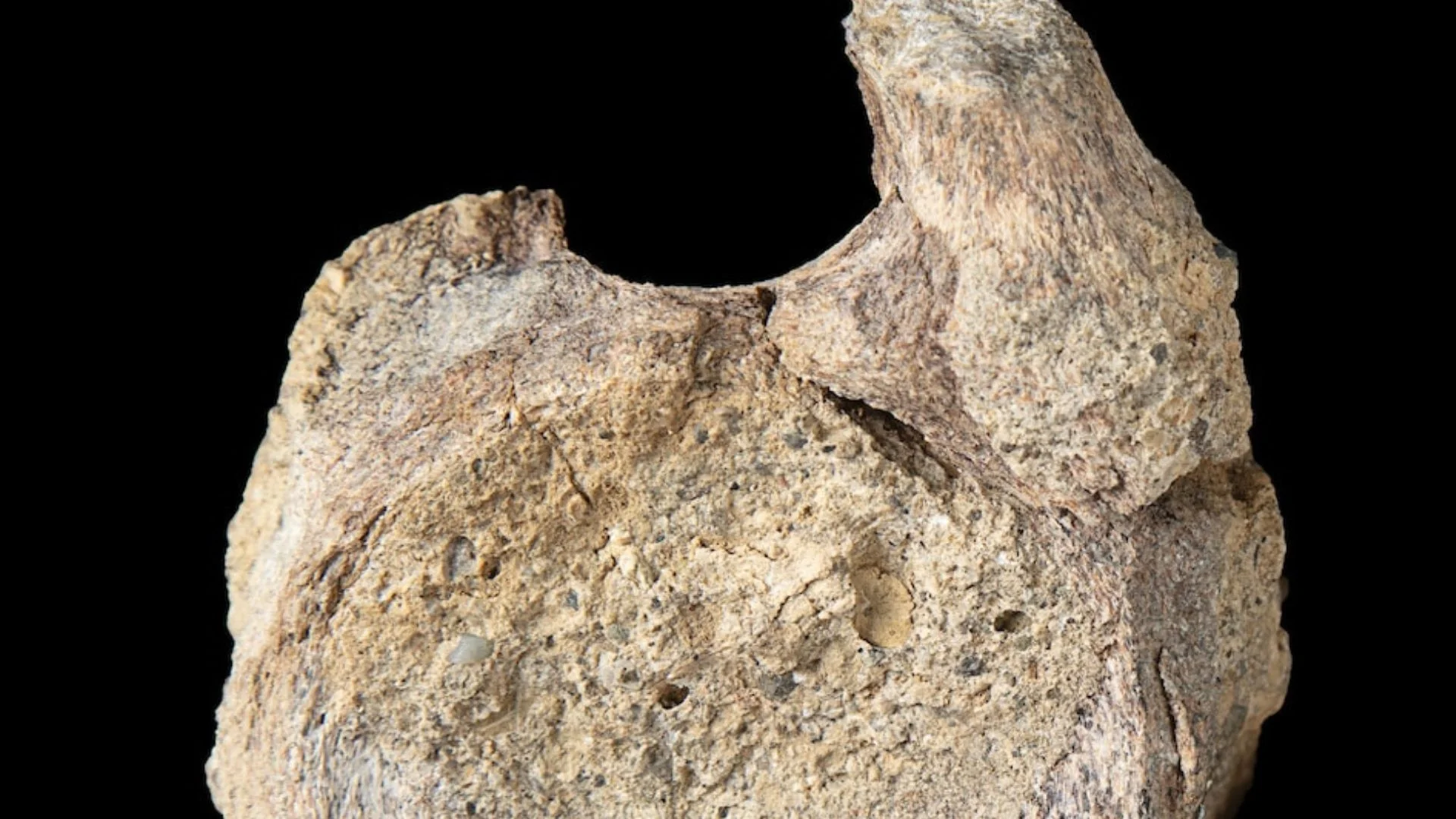
Scientists have identified a rare dinosaur fossil from Antarctica that remained unnoticed in a museum drawer for almost four decades.
The fossil is a tail bone from a long-necked, plant-eating titanosaur. Researchers have not yet determined the exact species to which it belongs.
The bone was discovered in 1985 on James Ross Island during a geological expedition led by geologist Mike Thomson. At the time, Thomson worked with the British Antarctic Survey to map rock layers and collect marine reptile fossils for dating the region’s geology. He recorded the specimen as belonging to a large reptile because its true identity was not clear.
Years later, paleontologist Mark Evans noticed the fossil while examining the British Antarctic Survey’s collections. Its unusual shape led him to suspect it belonged to a dinosaur instead of a marine reptile. Detailed analysis confirmed it was part of a titanosaur’s tail.
Scientists Confirm Titanosaur Identity
Researchers compared the fossil with more complete dinosaur skeletons from around the world. They also studied the bone’s structure to confirm its position within the titanosaur group. Their findings were published in the journal Acta Palaeontologica Polonica.
READ ALSO: NASA’s New Space Refueling Test Brings Moon and Mars Missions One Step Closer to Reality
Titanosaurs were among the last giant plant-eating dinosaurs that lived before the mass extinction about 66 million years ago. While some members of this group reached lengths of more than 30 meters, this Antarctic animal measured around 7 meters, or about 23 feet. Scientists believe it was still young when it died.
The research also offers clues about how the fossil was preserved. Experts believe the dinosaur died near the coast before its body drifted into the sea. Over millions of years, sediments buried the remains and slowly turned the bones into fossils.
Why this Discovery Matters
Finding dinosaur fossils in Antarctica remains extremely rare because thick ice covers much of the continent. During the age of dinosaurs, however, Antarctica had a much warmer climate with forests and abundant plant life that supported large animals. This discovery adds to growing evidence that the continent was once a rich and diverse ecosystem.
Modern technology also played an important role in solving the mystery. Advanced imaging and detailed bone analysis now allow scientists to study fossils more accurately than was possible in the 1980s. These tools helped researchers recognize features that earlier examinations had missed.
READ ALSO: Slower Heating Lets Atoms Self-Organize Into Architectures That Boost Alloys Strength
Mike Thomson passed away in 2020 before the fossil’s true identity was confirmed. Mark Evans said Thomson would have been delighted to learn that the specimen he collected was a dinosaur. The discovery also highlights the scientific value of museum collections, where overlooked specimens can still reveal important pieces of Earth’s ancient history.
As researchers continue to re-examine archived fossils with modern techniques, more hidden discoveries from Antarctica and other regions could reshape our understanding of prehistoric life and the evolution of dinosaurs.