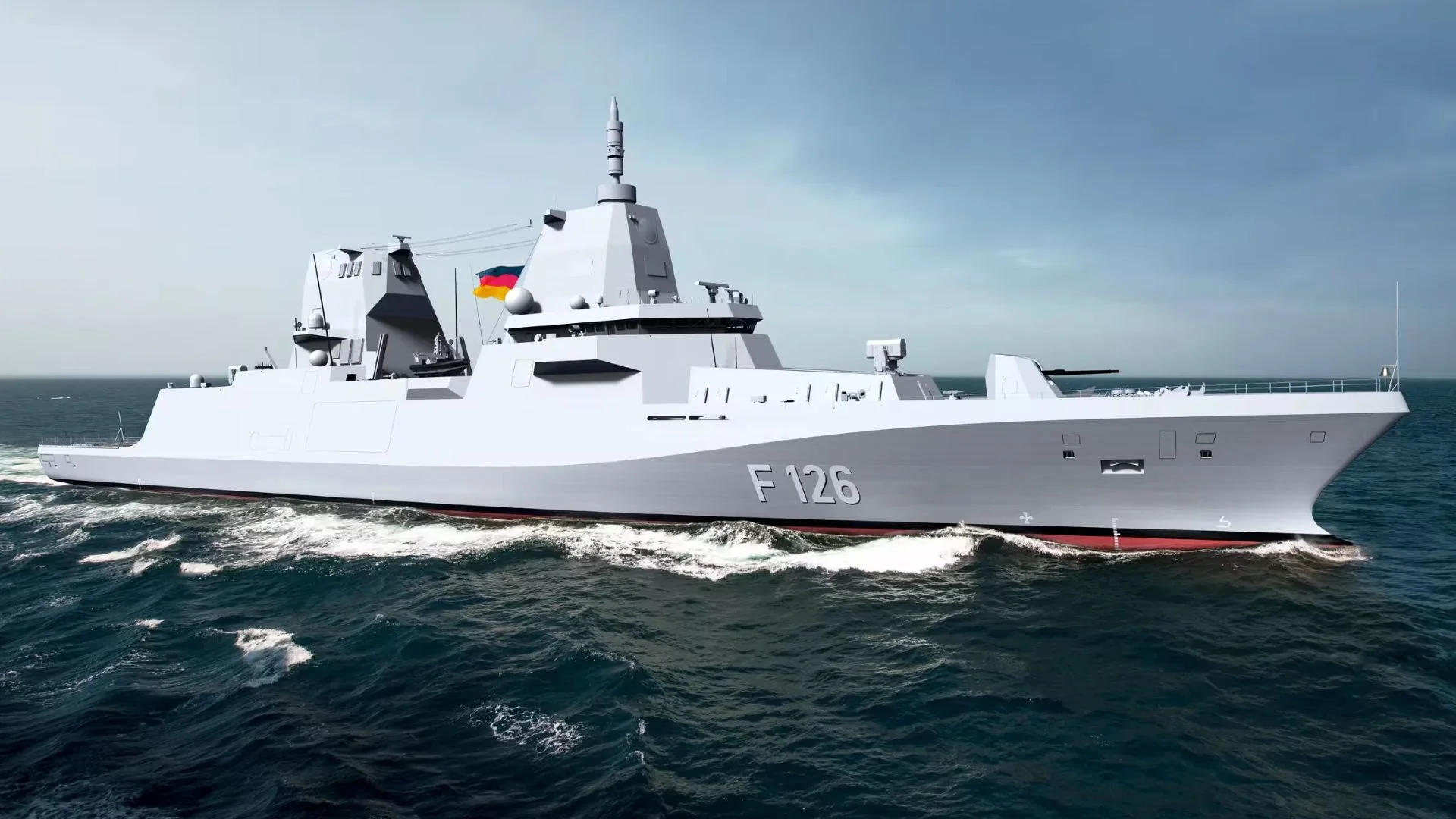
Germany’s Defense Ministry announced that it has terminated the F126 frigate project, which was originally designed to strengthen the German Navy’s anti-submarine warfare capabilities.
The program was expected to deliver six large frigates built by Dutch shipbuilder Damen Schelde Naval Shipbuilding. Those vessels were intended to become a key part of Germany’s future naval force.
The F126 contract was awarded to Damen in 2020 and carried an estimated value of about €10 billion, or roughly $11.3 billion. The ships were planned to displace around 10,550 tons and perform a range of maritime security missions. Anti-submarine operations were among their most important tasks.
According to the ministry, the project faced serious challenges over time. Damen informed German authorities that the ships could not be delivered within the agreed schedule or budget. That notification forced Berlin to reassess the program’s future.
German officials spent months exploring options to keep the project alive. One proposal involved transferring the role of prime contractor to Naval Vessels Lürssen, a shipbuilding group that is now owned by Rheinmetall. Discussions on that possibility continued throughout 2025.
However, the financial outlook became increasingly difficult. Estimates showed that a Lürssen-led continuation of the F126 project would cost around €15.2 billion for six ships. When previous spending and support contracts were included, the total requirement would have exceeded €18 billion.
READ ALSO: France Expands A400M Role With New ISR and Airborne Command Capabilities
The ministry also highlighted legal concerns surrounding the transition. Officials said a contractor change would require Germany to give up potential damage claims against Damen. Berlin decided that condition was unacceptable and confirmed that legal reviews remain underway.
Why Germany Selected MEKO A-200 Frigates
Germany has now chosen the MEKO A-200 DEU frigate as the replacement solution. The warship is produced by ThyssenKrupp Marine Systems (TKMS), one of Germany’s leading naval shipbuilders. The decision aims to maintain critical naval capabilities while avoiding further delays.
The MEKO A-200 is a multi-role frigate designed for several missions at sea. These include anti-submarine warfare, surface combat operations, and maritime security tasks. The design is well known internationally and has been selected by several navies worldwide.
Plans for the switch were already emerging earlier this year. Reports in March revealed that Germany was considering four MEKO frigates as a temporary solution to meet upcoming NATO commitments. At that stage, officials had not ruled out continuing the F126 program.
That position has now changed. Germany’s naval leadership has formally approved the MEKO A-200 DEU as capable of fulfilling the country’s core submarine-hunting requirements. The Defense Ministry said the vessel can also help Germany meet important alliance obligations.
The first batch of four frigates is expected to cost approximately €6.3 billion, or around $7.15 billion. Germany also plans to secure an option for four additional ships. If exercised before the end of 2026, those ships would add roughly €5.3 billion to the program.
The combined value of all eight frigates is estimated at €11.6 billion, or about $13.2 billion. While higher than some earlier projections, the ministry said most of the increase reflects the transition from preliminary industry estimates to a formal contract offer from TKMS. Additional requirements requested by the Navy account for only a small share of the overall cost.
READ ALSO: Cornell Students Build Community Bridges Through Engineering Course That Delivers Real Impact
F126 Cancellation Reshapes Strategy
The decision comes at a time when European countries are increasing investments in naval defense. Submarine activity in several regions has reinforced the importance of modern anti-submarine capabilities. NATO members are also under pressure to strengthen readiness and meet alliance targets.
Germany considers the frigate fleet a key part of its maritime defense strategy. These ships help protect sea lanes, support allied operations, and monitor underwater threats. Reliable delivery schedules have therefore become a major priority.
The cancellation of the F126 project also highlights the growing challenges facing large defense procurement programs. Rising costs, industrial capacity issues, and schedule delays have affected military projects across Europe and beyond. Governments are increasingly focused on balancing capability requirements with financial realities.
For Germany’s shipbuilding industry, the MEKO decision provides a significant opportunity. The contract strengthens the role of domestic naval manufacturers and supports long-term industrial activity. It also reinforces TKMS as a central player in Germany’s future naval modernization efforts.
WATCH ALSO: Drum-shaped antenna reflector on NASA-ISRO NISAR satellite deployed
The Defense Ministry plans to submit the required documentation to the Bundestag’s budget committee as quickly as possible. Approval from lawmakers is required before the procurement can proceed. Officials remain focused on keeping the project aligned with NATO capability deadlines.
Germany’s shift from the F126 program to the MEKO A-200 fleet represents a major change in naval planning. The outcome will shape the German Navy’s operational strength for decades and influence how future European defense programs are managed.