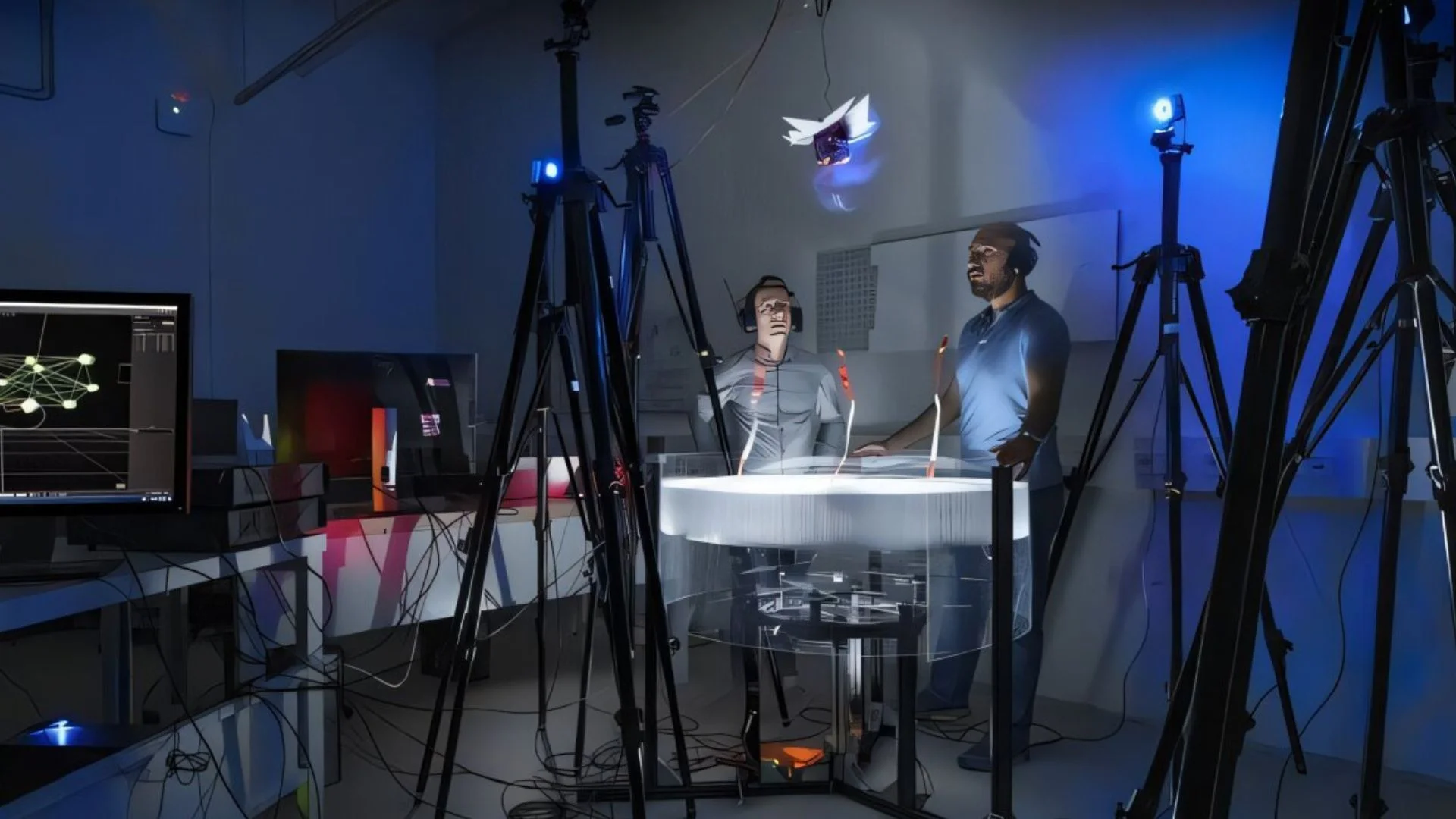
Researchers from the Max Planck Institute for Intelligent Systems and the University of Stuttgart have created a unique flying robot called Floaty.
The robot remains stable in the air without relying on propellers or continuous motor-driven thrust. The study describing the technology was published in the journal npj Robotics.
Modern flying machines often face a trade-off between efficiency and maneuverability. Drones can hover and move in different directions with ease. However, they consume significant amounts of energy because their propellers must constantly spin.
Airplanes solve the energy problem in a different way. Their fixed wings enable efficient long-distance flight. However, they cannot remain suspended in one position like many birds can.
Floaty was designed to combine some of the advantages of both systems. The robot uses air currents to stay aloft while maintaining balance and control. This allows it to remain airborne without the high energy demand of traditional drones.
Bird-Inspired Design Uses Wind Instead of Propellers
The research team drew inspiration from nature. Birds such as kestrels can stay in one area by taking advantage of rising air currents and adjusting the shape of their wings. Floaty follows a similar principle.
READ ALSO: MIT Develops Flexible Cryogenic Cables to Solve Quantum Computer Wiring Challenges
The robot features four movable flaps positioned on its upper surface. These flaps can rotate and change how air flows around the robot. By adjusting the airflow, Floaty alters its aerodynamic forces and maintains stability.
During testing, researchers placed the robot inside a wind tunnel. The tunnel generated airflow speeds of up to 10 meters per second. Floaty used the upward-moving air to remain suspended without any propeller-driven lift.
The robot continuously adjusts its flaps to respond to changing wind conditions. When gusts push it to one side, the system reacts and restores balance. This allows the robot to remain in position even when the surrounding air becomes unstable.
Researchers also trained Floaty using data collected from many wind tunnel experiments. The robot relies on a learned aerodynamic model that predicts how airflow affects its movement. This enables precise control while using very little energy.
The tests showed that Floaty can recover after physical disturbances. Researchers pushed the robot and exposed it to changing wind conditions. In both situations, the robot successfully regained stability and returned to its hovering position.
Ghadeer Elmkaiel, a Ph.D. student at the Max Planck Institute for Intelligent Systems and lead author of the study, said the project demonstrates a different approach to flight.
She explained that robots can intelligently use wind rather than relying entirely on motors. According to the researchers, this strategy significantly reduces energy requirements.
Engineering Challenges and Stability Improvements
Creating a robot that naturally balances itself was one of the project’s biggest challenges. Early versions of Floaty struggled to remain upright in the wind tunnel. Instead of correcting their position, they often tipped to the side.
The research team identified two important design changes. First, they lowered the robot’s center of gravity. This helped improve balance and reduced the tendency to flip.
READ ALSO: MIT’s AI Wristband Uses Ultrasound To Teach Robots Human Hand Movements
Second, they redesigned the rigid flaps by introducing a carefully measured bend. This modification changed how air moved around the robot. The new shape improved stability while preserving steering control.
Together, these changes transformed the robot’s performance. Floaty now automatically corrects its orientation when disturbed. This natural stability reduces the amount of active control required during flight.
Flying Robot Defies Gravity
The project also demonstrates the growing role of aerodynamics in robotics. Instead of overcoming nature with more power, engineers are designing systems that work with natural forces. This approach often leads to greater efficiency and longer operating times.
Researchers believe the technology has practical uses in environments where upward airflow already exists. One example is industrial infrastructure, such as factory smokestacks. Strong rising air currents in these locations can help keep the robot airborne while reducing energy consumption.
The concept also has relevance for aerospace engineering. Similar aerodynamic control systems could assist vehicles operating in challenging airflow conditions. Researchers suggest that future applications might include guidance systems for weather balloons or support for spacecraft during specific flight phases.
Energy efficiency is becoming important across the robotics industry. Longer operating times reduce battery demands and lower operational costs. Systems that use environmental forces instead of constant propulsion offer a promising path toward that goal.
WATCH ALSO: World’s first motorbike backflip between two moving trucks successfully completed
The development arrives as researchers worldwide search for more sustainable robotic technologies. Advances in sensors, artificial intelligence, and aerodynamic design are enabling machines to interact more effectively with their surroundings. Floaty demonstrates how these technologies can work together in a practical flying system.
The research team plans to continue exploring new designs and applications for wind-powered flight. As engineers refine the technology, flying robots that ride air currents rather than fight them could become an important part of future industrial, scientific, and environmental operations.