Researchers at the US Department of Energy’s Oak Ridge National Laboratory (ORNL) have developed new tools that help utilities identify dangerous power grid conditions more quickly.
The system uses artificial intelligence and advanced data analytics to detect faults that are often difficult to find. These faults can lead to wildfire, damaged equipment, and widespread power disruptions.
The project is being tested in partnership with Southern California Edison (SCE), one of the largest electric utilities in the US. Researchers first evaluated the system using a smaller utility dataset. They are now validating it with five years of operational data collected from SCE’s network.
The goal is to move fault detection from research environments into real-world grid operations. Faster detection gives utilities more time to respond before problems grow into larger incidents. This is especially important in regions where dry conditions and strong winds increase wildfire risks.
Ali Ekti, who leads the ORNL project and heads the laboratory’s Grid Communications and Security Group, said rapid awareness is important for utilities.
He explained that the platform creates a direct path from data collection to analysis and decision-making. This helps operators understand developing issues sooner.
The system can identify and classify seven different types of power grid disturbances. These include overcurrent faults, recloser operations, blown fuses, temporary faults, capacitor switching, motor starts, and line switching events. One of its most important capabilities is detecting dangerous electrical arcing faults.
READ ALSO: IQM Installs First US Quantum Computer at Oak Ridge, Expanding Quantum-HPC Integration
Detecting Hidden Electrical Arcing Before Fires Start
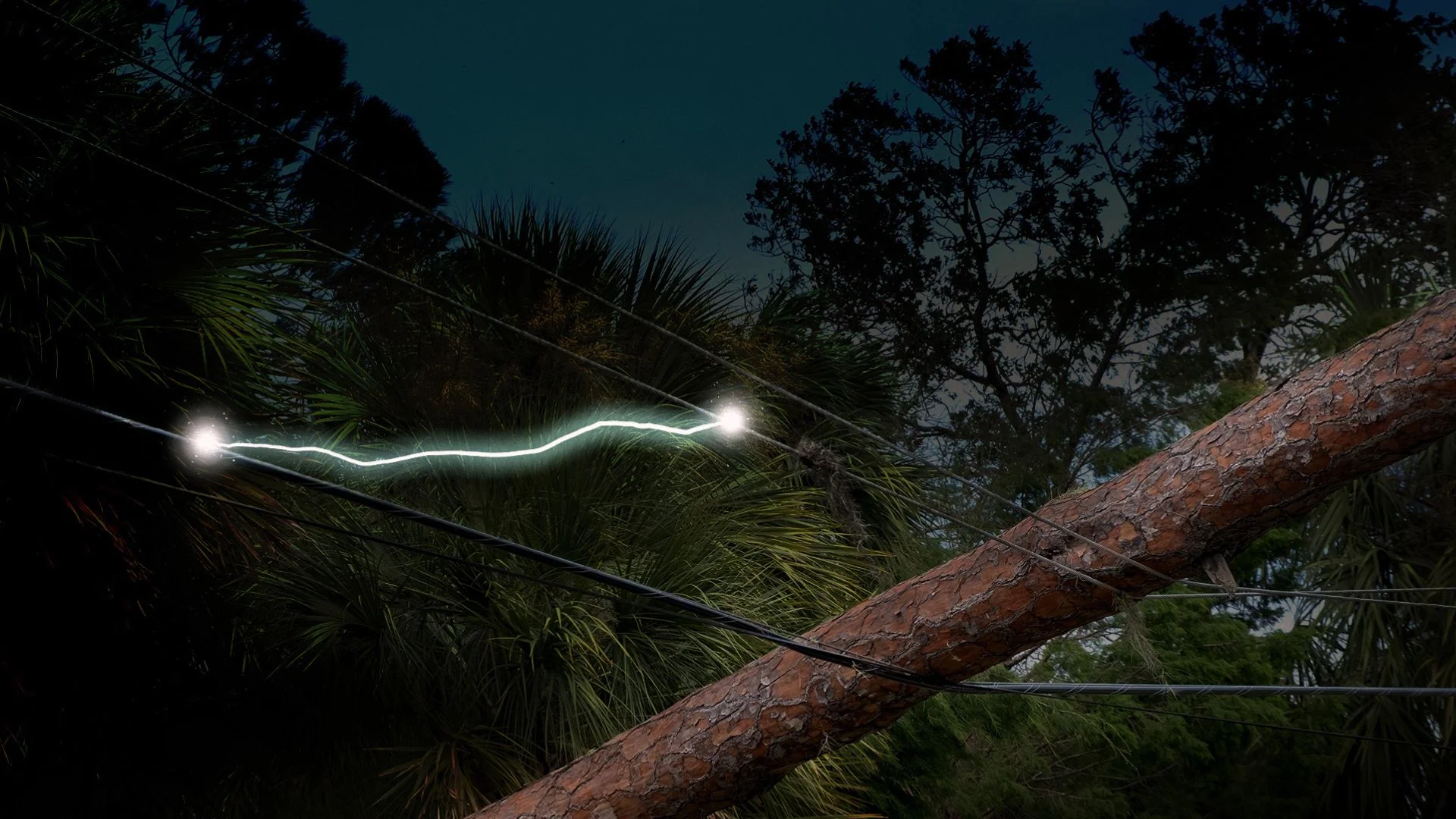
Electrical arcing occurs when electricity jumps through the air between a power line and another object. This object can be the ground, vegetation, or another poor conductor. Unlike traditional faults, arcing often does not create a large increase in electrical current.
Because the current increase is small, conventional protection systems may not recognize the problem. Circuit breakers often remain closed while the arc continues. This allows heat and sparks to persist for extended periods.
These sparks can ignite dry vegetation and trigger fast-moving wildfires. Utilities have struggled for years to identify such events before damage occurs. Detecting arcing quickly has become a major priority for power companies in wildfire-prone regions.
Several major disasters have highlighted the dangers associated with electrical faults. The 2018 Camp Fire in California caused 85 deaths and resulted in an estimated $16.5 billion in damage. The 2023 Maui wildfire also resulted in more than 100 deaths and approximately $5.5 billion in losses.
To address this challenge, ORNL researchers developed specialized signal-processing techniques. These methods examine waveform data collected from the power grid. Waveforms are visual representations of changes in voltage, current, and frequency over time.
READ ALSO: Savannah River Site Modernizes Nuclear Fuel Storage With Digital and Safety Upgrades
Many arcing faults are too subtle to appear clearly in raw waveform data. ORNL’s algorithms amplify weak signals and reveal patterns that operators might otherwise miss. This allows the AI system to detect events that conventional monitoring tools miss.
In one test using real utility data, the technology significantly improved signal visibility. Researchers reported that the waveform signal strength increased from 6 percent to 72 percent after processing. This improvement exposed disturbances that were previously difficult to identify.
Southern California Edison already collects large amounts of grid data through digital fault recorders. The utility also plans to use smart meters to expand monitoring capabilities. However, processing such large volumes of information quickly remains a challenge.
SCE senior engineer Michael Balestrieri said utilities need more than simple alerts. Operators must understand exactly what type of event is occurring. Knowing the nature of a fault allows teams to prioritize emergency responses more effectively.
The new system provides that additional level of detail. It can distinguish between different fault types and identify situations that require immediate attention. This information helps utilities dispatch crews faster when wildfire risks emerge.
Wildfires Begin With Faults
The platform was trained using data from the Grid Event Signature Library. This online resource contains more than 5,700 waveform signatures collected from various grid events. ORNL hosts the library for the Department of Energy’s Office of Electricity.
Researchers compared the platform’s findings against SCE’s historical outage records. The results showed a strong relationship between detected disturbances and actual grid events. This validation helped confirm the system’s ability to identify real-world problems.
The next stage focuses on improving the platform using additional utility-specific data. Engineers are developing a more advanced version trained directly on Southern California Edison’s records. This should further improve detection accuracy and operational performance.
WATCH ALSO: Microsoft delivers first large scale production cluster with more than 4,600 NVIDIA GB300 NVL72
The upgraded system will be tested on an SCE demonstration circuit. Researchers will evaluate how quickly it detects faults and how accurately it classifies them. They will also measure its sensitivity to subtle grid disturbances.
Once testing is complete, SCE plans to integrate the detection software into an internal data analysis platform currently under development. This step would allow utility operators to use the technology in their everyday operations. The integration is designed to support faster and more informed decisions.
The benefits extend beyond wildfire prevention. The system can also identify early signs of equipment deterioration. Utilities can use this information to repair or replace components before failures occur.
Preventive maintenance reduces outage risks and lowers operational costs. It also helps utilities improve grid reliability for homes, businesses, and critical infrastructure. Early warnings give operators more opportunities to act before service disruptions occur.
Interest in the technology is growing beyond Southern California Edison. Other utilities have expressed interest in adopting the detection framework. Companies that manufacture grid sensors are also exploring ways to integrate the algorithms into their products.
WATCH ALSO: Chinese firm’s humanoid robot can perfectly pick up tennis ball
One of those companies is GridVisibility, which is working with ORNL to examine potential applications. Embedding detection capabilities directly into sensors could expand monitoring coverage across electrical networks. This would create more opportunities for early fault detection.
ORNL plans to make the analytics platform available through a new open-source data analytics toolbox. The toolbox will include statistical signal-processing methods and machine-learning tools designed for waveform analysis. Utilities, researchers, and industry partners will be able to use the resources at no cost.
The project reflects a broader effort to modernize power grid operations using artificial intelligence and advanced analytics.