Researchers have identified a new way to improve carbon dioxide separation using chiral boron nitride nanotubes.
The study shows that these tiny tube-like structures help carbon dioxide move faster than nitrogen, improving separation efficiency. The findings offer a promising direction for developing advanced gas separation membranes that combine high performance with lower energy use.
Chiral Nanotubes Shift CO₂
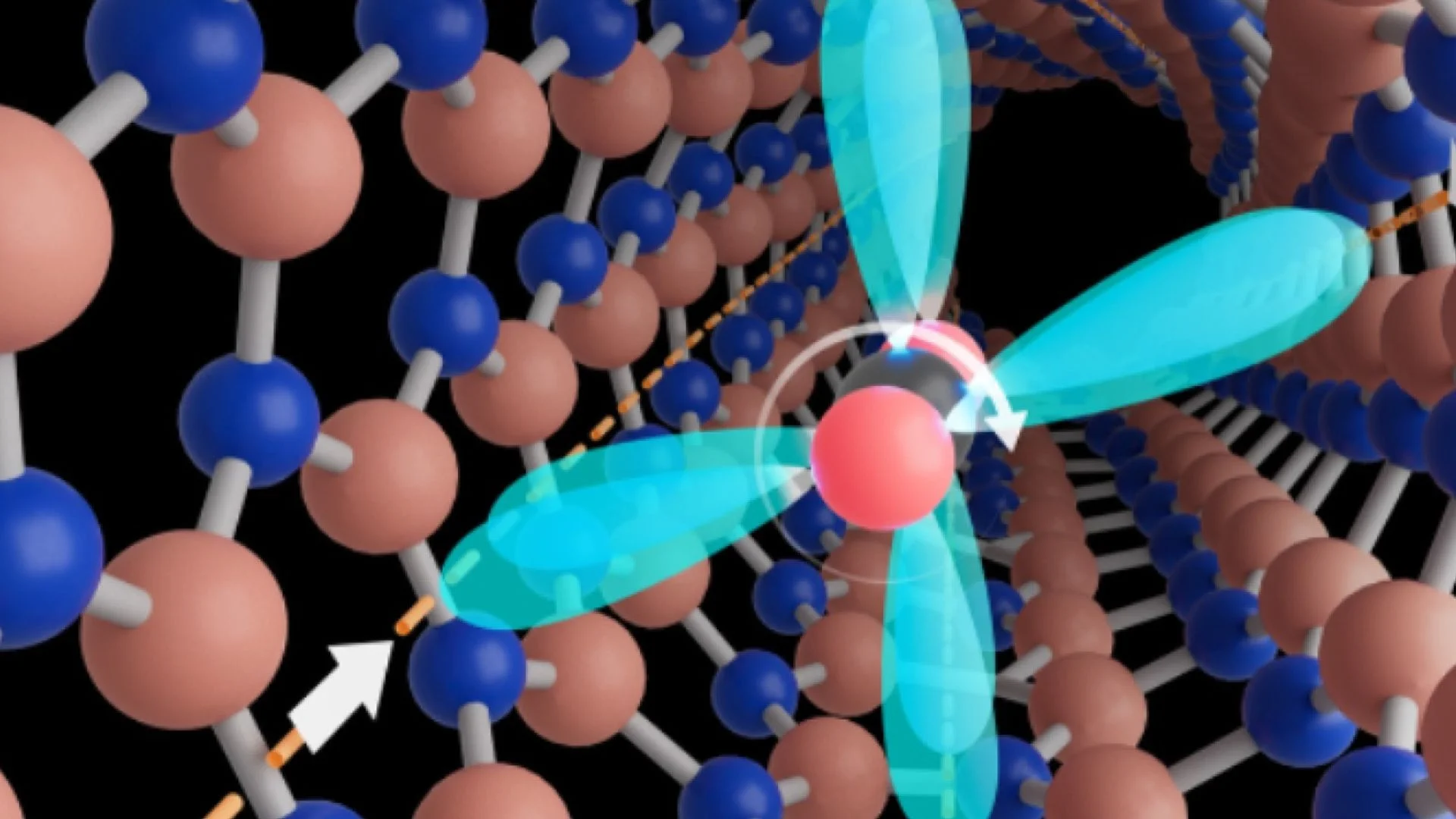
Scientists used detailed atomistic modeling to examine how carbon dioxide travels through chiral hexagonal boron nitride nanotubes(hBNNTs). These nanotubes are extremely small structures with a twisted atomic arrangement that gives them a unique property called chirality. The research focused on understanding how this structure affects the movement of gas molecules.
Gas separation is widely used across industries, including energy, chemicals, and environmental management. However, separating gases often requires significant energy, especially when the target molecules are present at low concentration. Improving membrane performance is therefore a major goal for researchers and industry alike.
READ ALSO: IKO’s New High-Thrust Linear Motor Stage Delivers Long Stroke Lengths in Constrained Spaces
The study found that carbon dioxide behaves differently within chiral nanotubes than in conventional structures. Instead of moving randomly, the molecules exhibit directional motion along the length of the nanotube. This directional motion increases the speed at which carbon dioxide travels through the material.
Researchers linked this behavior to a newly identified molecular phenomenon called precession. As carbon dioxide moves through the nanotube, its molecular shape becomes slightly distorted. This distortion changes how the molecule interacts with the nanotube walls.
Molecular Motion Enhances CO2 Separation
The distortion lowers the symmetry of the carbon dioxide molecule. As a result, the molecule begins a subtle precessional motion as it moves through the nanotube. This motion helps it avoid electron-rich regions located near nitrogen atoms along the pore walls.
By reducing these interactions, carbon dioxide experiences less resistance during transport. The reduced resistance allows the gas to move more efficiently through the nanotube. This effect creates faster directional diffusion compared with traditional nanotube designs.
The researchers compared chiral nanotubes with non-chiral nanotubes of similar and even larger diameters. They discovered that carbon dioxide moved faster through the chiral versions. The results suggest that the twisted atomic structure directly improves gas transport.
Among all nanotube configurations examined, the chiral (7,3) nanotube delivered the strongest performance. In this structure, carbon dioxide diffused 3.4 times faster than nitrogen gas. This large difference is important because it enhances the membrane’s ability to effectively separate the two gases.
Gas separation membranes are often judged by two key measures. The first is permeability, which describes how quickly a gas passes through a material. The second is selectivity, which measures how well the membrane distinguishes between gases.
Advanced Membranes Push Beyond Existing Limits
Using the simulation results, researchers modeled hypothetical membrane sheets made from aligned chiral (7,3) nanotubes. These virtual membranes achieved a carbon dioxide-to-nitrogen permselectivity value of 170. Such a high value indicates strong separation performance.
The calculations also showed exceptionally high carbon dioxide permeability. According to the study, the membrane design has the potential to exceed the Robeson upper bound for carbon dioxide and nitrogen separation. The Robeson upper bound is a widely recognized benchmark for evaluating membrane performance.
Exceeding this benchmark is significant because membrane designers often face a trade-off between permeability and selectivity. Materials that allow gases to pass quickly frequently lose separation accuracy. The chiral nanotube design addresses both requirements simultaneously.
Efficient carbon dioxide separation is important as industries seek ways to reduce emissions. Captured carbon dioxide can be reused as a feedstock for the production of chemicals, fuels, and other products. Better separation technologies can therefore support both environmental and industrial goals.
WATCH ALSO: YouTuber captures lightning in a bottle during stunning experiment
The findings also extend beyond carbon dioxide and nitrogen. Researchers believe the same principles of directional diffusion and molecular precession can be applied to other gas mixtures. This creates opportunities for designing specialized membranes for a wide range of industrial separations.
The study provides new insight into how molecular motion and nanoscale structure influence gas transport. These discoveries may help shape the next generation of energy-efficient separation technologies. Such advances can play an important role in carbon management, industrial processing, and sustainable manufacturing in the years ahead.