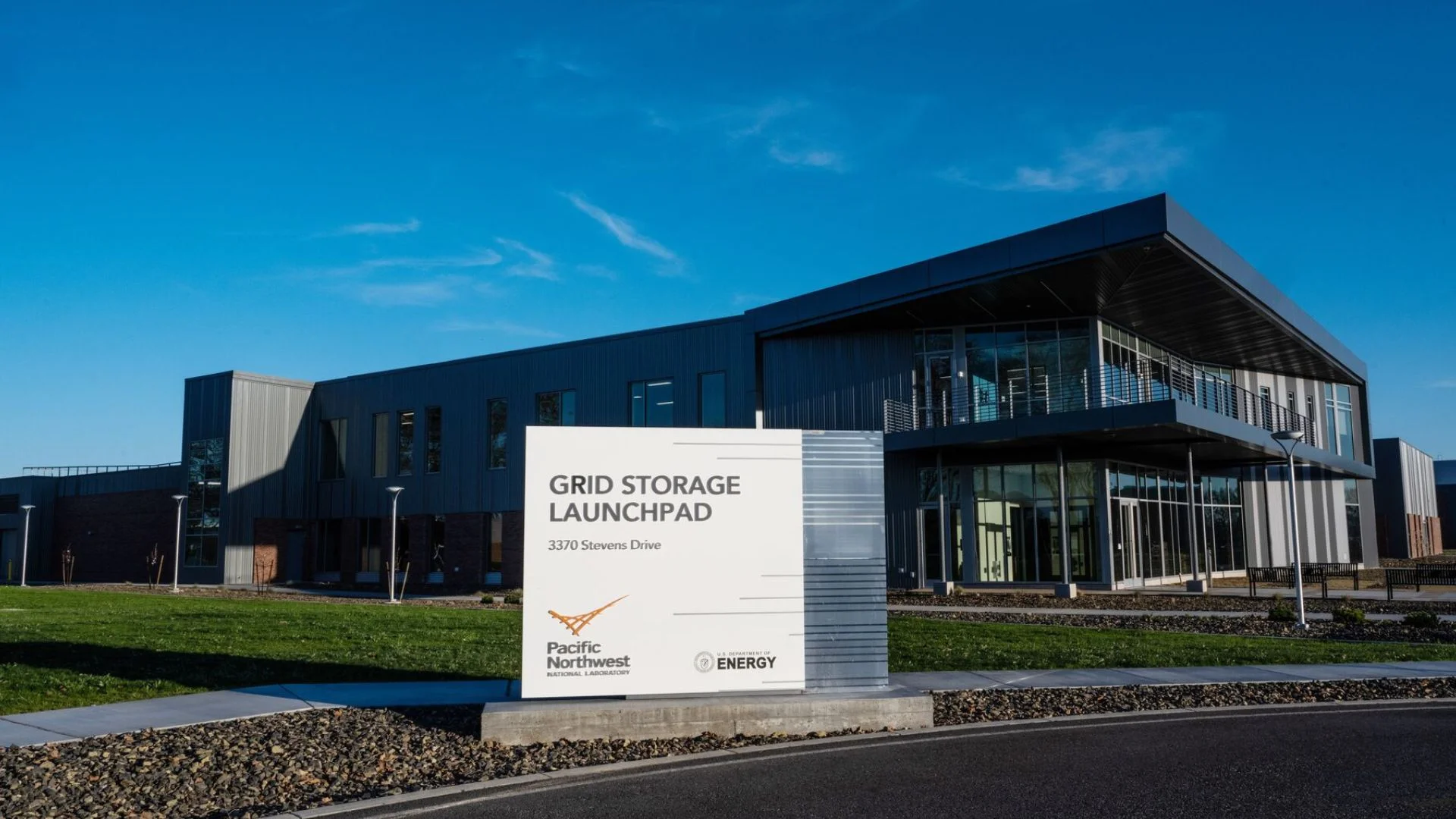
A major new battery research capability has started operations at the US Department of Energy’s Pacific Northwest National Laboratory (PNNL).
The new production line is dedicated to manufacturing and testing prismatic battery cells. Researchers say the facility will help advance promising battery technologies toward real-world use.
The production line occupies about 1,400 square feet of laboratory space. It consists of 16 specialized pieces of equipment designed for battery manufacturing. The system represents the first prismatic cell production line established within the US national laboratory network.
The facility is located at the Grid Storage Launchpad on PNNL’s campus in Richland, Washington. The center is funded by the Department of Energy’s Office of Electricity. It focuses on developing technologies that can strengthen and modernize power grids.
Researchers recently completed testing of the production line. The team is now finalizing operating procedures and preparing for large-scale validation work. These efforts will demonstrate that the facility can consistently produce high-quality battery cells.
READ ALSO: Boeing Lands WestJet’s Largest Aircraft Order: 67 Planes
According to PNNL, the new capability will also support collaboration with private companies. Industry partners will be able to test their battery materials and designs using the prismatic format. This creates a pathway for new technologies to move from research laboratories into commercial products.
Why Prismatic Batteries Are Gaining Attention
Battery cells come in several common shapes and sizes. Small coin cells are often used in watches and other compact electronics. Pouch cells are found in products such as power tools, while cylindrical cells are widely used in consumer devices and electric vehicles.
Prismatic batteries have a different design. They use a rectangular shape similar to a traditional 9-volt battery, although they are much larger. This design allows batteries to fit together more efficiently when assembled into larger energy storage systems.
One reason for growing interest in prismatic batteries is space efficiency. Their flat-sided design enables tighter packing compared to cylindrical cells. This allows more energy to be stored within a given area.
The cells also use a stronger metal casing. Metal transfers heat more effectively than many other battery materials. Better heat management can help improve safety and reduce the risk of overheating.
Researchers say these advantages are particularly important for grid-scale energy storage. Large battery installations require reliable performance, efficient use of space, and strong safety measures. Prismatic cells address many of these requirements in a single design.
Improved heat transfer can also reduce operating costs. Better thermal control reduces stress on battery systems over time. Combined with efficient packing, this can improve overall system performance.
READ ALSO: Hidden Cavities Found in 2D Devices Could Alter Their Electronic Behavior
Another important feature is mechanical uniformity. Prismatic cells maintain a consistent structure inside battery packs. This helps engineers design more predictable and reliable storage systems.
Testing Sodium-Ion and Lithium-Iron-Phosphate Technologies
To validate the new production line, PNNL researchers selected two battery chemistries for initial testing. These include sodium-ion batteries and lithium-iron-phosphate (LFP) batteries. Both technologies are attracting attention as alternatives to traditional battery materials.
Sodium-ion batteries use sodium rather than lithium as the key ingredient. Sodium is one of the most abundant elements on Earth. Because of its wide availability, it offers a potential route to lower-cost energy storage systems.
Many countries are exploring sodium-ion technology to reduce dependence on critical mineral supply chains. The technology is particularly attractive for stationary energy storage applications. These systems help balance electricity supply and demand on the grid.
The second chemistry, lithium-iron phosphate, has already achieved significant commercial adoption. LFP batteries use iron and phosphate instead of nickel and cobalt. Iron is more abundant and generally less expensive than many traditional battery metals.
LFP batteries are also known for their strong safety characteristics. They typically operate at lower thermal risk than some other lithium-based battery chemistries. This makes them appealing for large-scale storage projects.
WATCH ALSO: Blue dogs spotted in Chernobyl nuclear disaster site spark concern
Researchers will manufacture both battery types in prismatic cell form. The batteries will then undergo extensive testing. Performance, durability, and safety will be evaluated under different operating conditions.
The project will establish baseline performance data for the facility. These results will help researchers compare future battery technologies against known standards. The information will also provide confidence for future industry collaborations.
Scaling battery production remains one of the biggest challenges in energy storage development. A chemistry that performs well in a small laboratory cell does not always deliver the same results in a larger commercial format. The new facility is designed specifically to address this challenge.
Researchers note that a coin cell may require only a few milligrams of material. A prismatic battery cell, by contrast, can require more than a kilogram of material. Such differences create manufacturing challenges that must be solved before commercial deployment.
The Grid Storage Launchpad was created to help overcome these obstacles. By providing pilot-scale manufacturing and testing capabilities, the facility fills an important gap between laboratory research and full-scale industrial production. This stage is often difficult and expensive for companies to handle on their own.
WATCH ALSO: China sends 3 astronauts, 4 mice to space station for mammal study in orbit
PNNL expects the new production line to become a resource for battery developers across the energy sector. Companies will be able to test new materials, manufacturing processes, and cell designs before investing in large-scale production. This can reduce risk and shorten development timelines.
As global demand for energy storage continues to rise, the ability to evaluate safer and more efficient battery technologies is becoming increasingly important.
The new prismatic battery line gives researchers and industry partners a platform to accelerate innovation. Its work could help bring next-generation energy storage systems to market faster and support more reliable power grids in the years ahead.