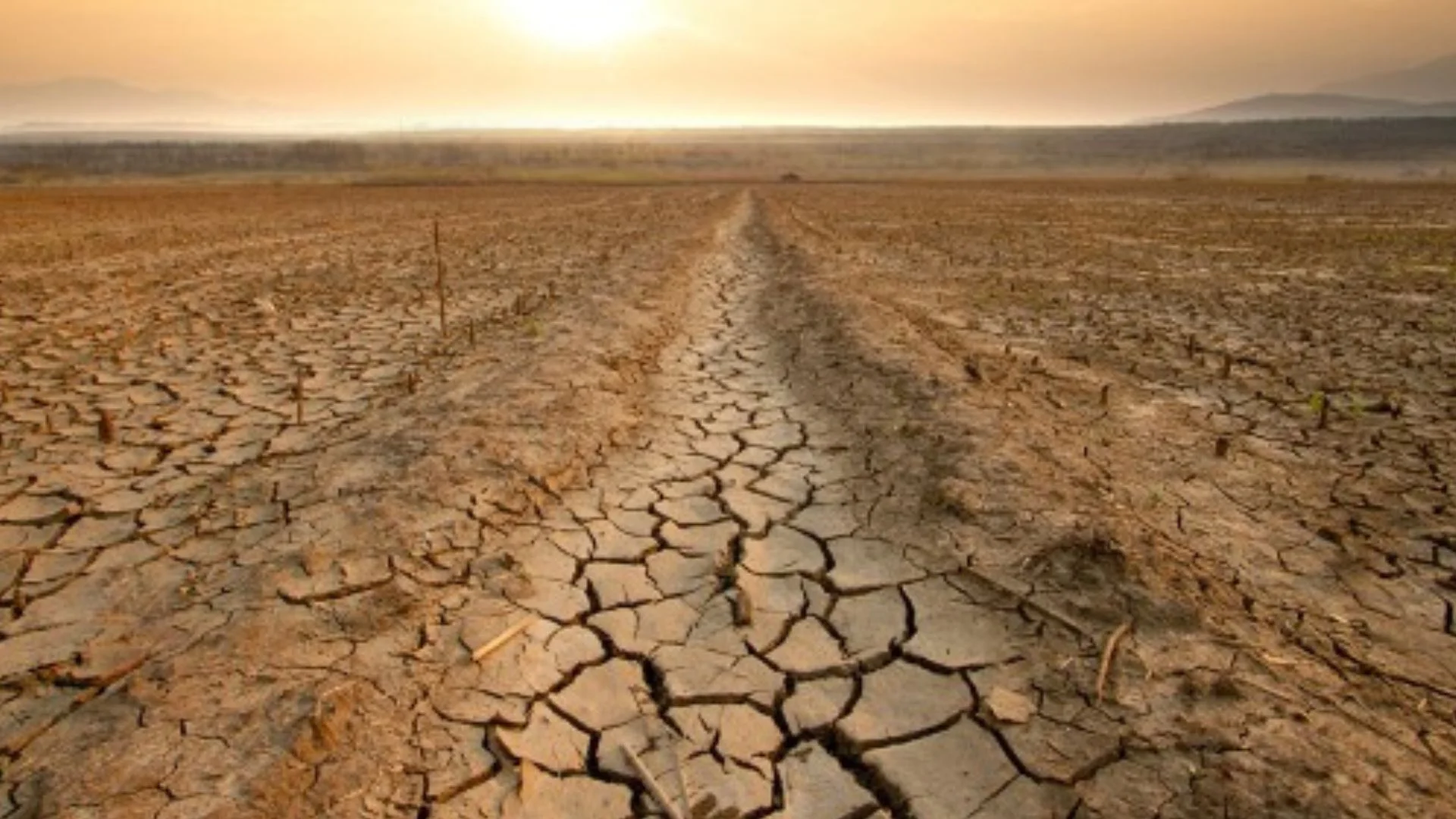
China has started a series of new desert control and desertification prevention projects in the Xinjiang Uygur Autonomous Region.
The initiatives focus on combating desertification, reducing land degradation, controlling sand movement, and protecting agricultural areas from environmental damage. The project aims to curb desert expansion, restore vulnerable ecosystems, and safeguard arable land from wind erosion and soil deterioration.
The projects were launched through the Chinese Academy of Sciences’ Xinjiang Institute of Ecology and Geography. They are designed to strengthen an ecological barrier around vulnerable regions, prevent further desertification, and improve long-term land sustainability.
Xinjiang plays a major role in China’s agricultural production. The region is also a key location in the country’s long-running effort to combat desertification and preserve fertile land.
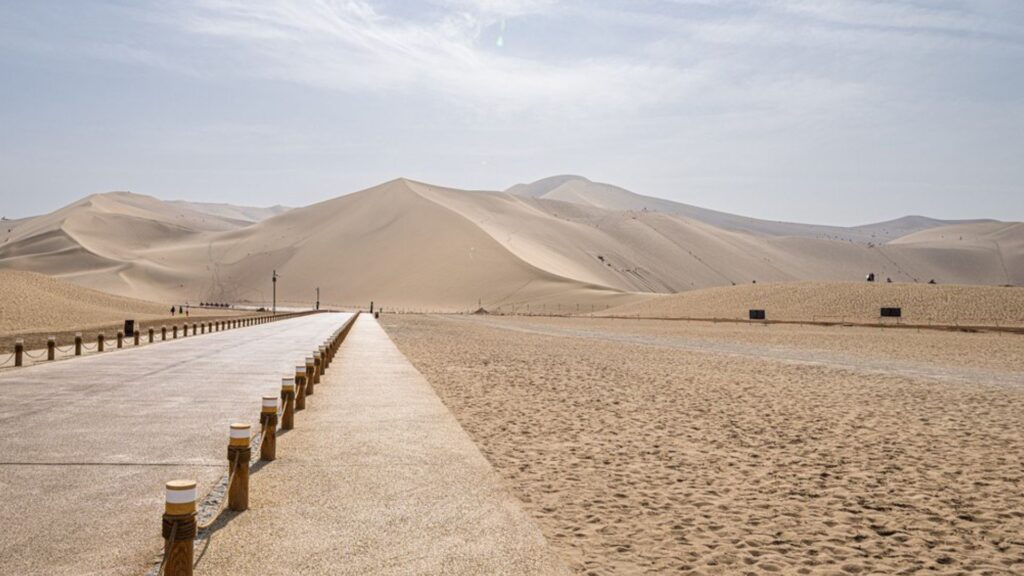
One of the main targets is the Taklamakan Desert. It is China’s largest desert and the world’s second-largest shifting-sand desert.
READ ALSO: Harvard-Led Team Charts Path for Muscle-Powered Biohybrid Robots
For years, China has worked to plant vegetation belts around parts of the desert. These green barriers use drought-resistant plants and other methods to reduce sand movement and limit the expansion of desert areas.
Basalt Fiber Fights Desertification
Among the new solutions being introduced are six environmentally friendly sand-control materials. One of the most notable materials is based on basalt fiber technology.
Basalt fiber is produced by melting volcanic rock at very high temperatures. The molten material is then drawn into thin, strong fibers that can be woven or combined with other materials for different applications.
The technology gained attention during China’s Chang’e 6 mission in 2024. The mission became the first in history to bring samples back from the far side of the Moon.
During that mission, a Chinese national flag made from basalt fiber was deployed on the lunar surface. The material was selected because it can withstand intense ultraviolet radiation and extreme temperature changes.
Researchers believe the same durability that helped the material survive harsh lunar conditions can also support environmental projects in desert regions. Basalt fiber is also considered less expensive than carbon fiber, making it suitable for large-scale deployment.
Scientists are also studying basalt fiber for future lunar construction projects. The Moon contains significant amounts of basalt, making it valuable to China’s long-term plans to establish a research base near the Moon’s south pole.
China and Russia are working together on the proposed International Lunar Research Station. The project aims to establish a permanent scientific presence on the Moon by 2035.
Smart Systems and New Materials Protect Farmland
The new desertification program includes additional materials beyond basalt fiber. Researchers are also using processed fly ash, a byproduct of coal-fired power plants.
Fly ash can be transformed into useful construction materials such as bricks and other structural products. Its use supports both waste recycling and environmental protection goals.
According to project scientists, the new materials are expected to improve the efficiency of desert control construction by around 50 percent. They are also expected to lower overall project costs by approximately 30 percent.
Another major focus is protecting farmland from salinity and wind erosion. High soil salinity can reduce crop yields and make agricultural land less productive.
Researchers are developing optimized shelterbelt forests to reduce wind damage. These tree barriers help slow wind speeds and prevent soil from being carried away.
The program also includes smart irrigation systems designed to remove excess salt from farmland. Additional technologies include underground drainage pipelines and vertical wells that help manage soil salinity more effectively.
To support these efforts, scientists are introducing a smart diagnosis and decision-support platform. The system will monitor environmental conditions and provide early warnings for sandstorms, wind erosion, and salinity-related risks.
WATCH ALSO: Falcon 9 rocket of SpaceX recently launched 24 Starlink internet satellites
The technology will help researchers and local authorities respond more quickly to environmental challenges. Real-time data and automated analysis are expected to improve decision-making and resource management.
China’s latest desertification campaign highlights how technologies developed for space exploration are finding practical uses on Earth.
As Xinjiang remains central to both national food production and environmental protection efforts, these projects are expected to play an important role in safeguarding farmland and strengthening long-term ecological resilience across the region.