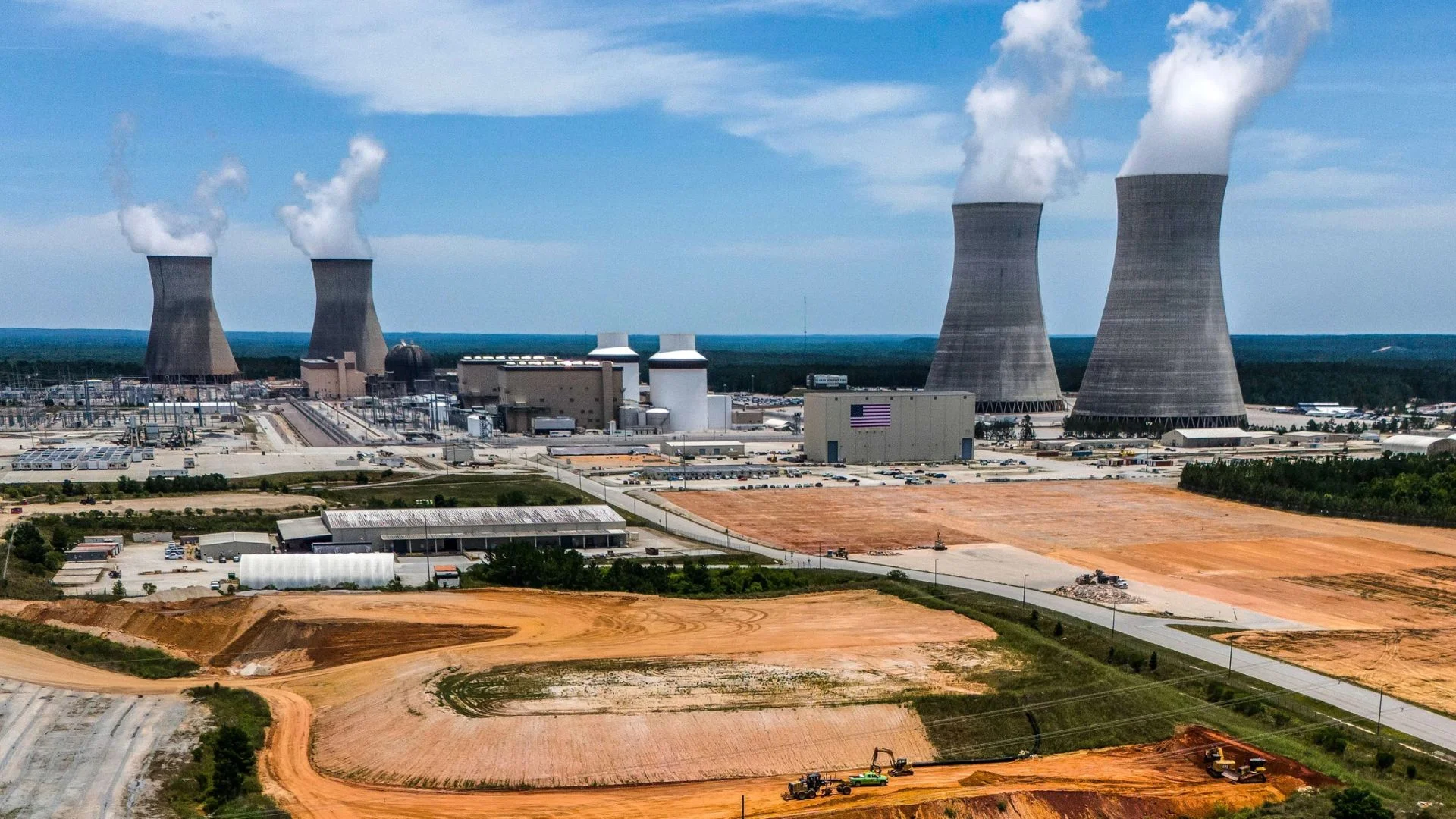
A doctoral researcher at MIT is developing autonomous nuclear plant control systems designed to make future reactors safer, more efficient, and less expensive to operate.
The work focuses on reducing manual tasks while keeping trained operators involved whenever needed. The research is expected to support the wider deployment of small nuclear reactors, especially in remote locations where maintaining large operating teams is difficult.
Nuclear power is gaining renewed attention as countries look for reliable sources of low-carbon electricity. While the technology produces large amounts of energy without direct carbon emissions during operation, building and operating nuclear plants remains expensive. One major cost comes from the large workforce required to safely monitor and manage reactor operations every hour of the day.
Lauren Fortier, a second-year PhD student in the Department of Nuclear Science and Engineering at the Massachusetts Institute of Technology (MIT), is working to address that challenge.
Her research centres on developing remote operation protocols and supervisory control systems that automate many routine activities while allowing human operators to remain in control whenever necessary.
From US Navy Experience
Fortier’s interest in nuclear operations began long before her doctoral studies. After earning a bachelor’s degree in materials science and engineering from Northwestern University through an ROTC scholarship, she joined the US Navy. She supervised nuclear plant operations aboard an aircraft carrier operating in the South China Sea.
Working at sea gave her first-hand experience of how critical nuclear reactors are to naval operations. She explained that the carrier depended entirely on its reactors for movement, making reliable plant operation essential for every mission.
During her naval service, Fortier became familiar with the science behind operating nuclear reactors as well as the practical challenges faced by operators. She noticed that many plant activities relied heavily on manual procedures, even when some tasks appeared suitable for automation.
Those observations led her to ask whether advanced control systems could reduce repetitive work without compromising safety. That question eventually shaped the direction of her academic research after the Navy offered her the opportunity to pursue a master’s degree.
READ ALSO: ORNL to Lead Nine DOE Genesis Mission Projects Driving AI, Fusion and Future US Science
Building Smarter Systems
Fortier selected nuclear engineering at MIT to expand her operational experience into research. During her master’s programme, completed in 2025, she designed a supervisory control system for nuclear plant operations using advanced reactor simulation software.
The simulator allowed researchers to study how a reactor responds to changing operating conditions, including heat transfer and fluid movement inside the system. These simulations helped test ideas before considering their use in real nuclear facilities.
The research also highlighted a growing challenge facing the nuclear industry. While today’s large nuclear power stations operate at high output with sizeable workforces, many future projects are expected to involve much smaller reactors serving remote communities or industrial sites.
These microreactors are designed to produce electricity for locations that may not have access to large power grids. Operating each small facility with a full team of specialists would increase costs, making widespread deployment more difficult.
Fortier believes carefully designed automation can help solve this problem. Instead of replacing human operators, the system is intended to handle routine procedures while allowing people to supervise operations and intervene whenever required.
She also recognised that many existing operating procedures were written specifically for people rather than machines. This limited the ability to combine automated systems with human decision-making efficiently.
Her goal became creating a flexible supervisory control system where humans and computers work together. In this approach, computers perform repetitive or predictable tasks while trained operators focus on decisions requiring judgement and oversight.
Inside MIT’s Nuclear Automation
After completing her master’s degree, Fortier continued the project through her doctoral research. She expanded the work by collaborating with experts across MIT, the Idaho National Laboratory (INL), and nuclear industry partners.
Her primary research adviser, Sacit Cetiner, holds appointments at both MIT and INL, allowing the project to draw on expertise from both organisations. Fortier also worked with senior human factors scientist Katya Le Blanc to better understand how people interact with automated systems.
Human factors research examines how technology should present information so operators can respond quickly and accurately. This becomes especially important if a person needs to take control after an automated system encounters an unexpected situation.
Fortier said the collaboration helped her understand how to design systems that remain easy to operate even during complex events. The work also supported the development of cyber-physical systems, which combine computer software with physical equipment such as nuclear reactors.
READ ALSO: World’s First Certified Wave Energy Buoy Brings Ocean Power Closer to Commercial Reality
She further tested her ideas through a summer internship at Westinghouse in 2025. The company develops current and next-generation nuclear power technologies, giving her an opportunity to evaluate practical applications for her research.
At MIT, Fortier also worked with control systems expert Professor Anuradha Annaswamy. Her guidance helped strengthen the project’s mathematical and engineering foundations while connecting reactor operations with modern control theory.
Curtis Smith, formerly director of Nuclear Safety and Regulatory Research at INL and now KEPCO Professor of the Practice of Nuclear Science and Engineering at MIT, serves as another co-adviser. Together, the research team combines expertise in reactor safety, automation, and human-centred engineering.
Future Nuclear Operations
A central feature of Fortier’s work is introducing automation gradually instead of changing plant operations all at once. She believes operators gain confidence when automated systems first guide them through familiar procedures before taking on more complex responsibilities.
Her doctoral research also explores objective-oriented operations. Rather than following a fixed sequence of instructions, the supervisory control system identifies the desired outcome and determines the safest sequence of actions needed to achieve it.
The automation itself relies on a method known as finite state automata instead of artificial intelligence or machine learning. In simple terms, the system follows clearly defined rules where each event triggers a specific response, making every decision transparent and easy to verify.
This differs from AI systems that learn from large amounts of data and sometimes produce results that are difficult to explain. Because nuclear power requires strict safety validation, Fortier says transparent rule-based automation is currently better suited for reactor operations.
Her research has already gained national recognition. Fortier was among the winners of the 2025 Innovations in Nuclear Energy Research and Development Student Competition organised through the US Department of Energy’s Nuclear Energy University Program.
The long-term aim is to apply these supervisory control systems to next-generation commercial microreactors. Successful deployment would help lower operating costs, improve efficiency, and support the expansion of reliable nuclear energy in locations where traditional large plants are not practical.
As governments and industries continue investing in advanced nuclear technologies, projects like Fortier’s are becoming increasingly important. By combining automation with human oversight, the research aims to support safer, more flexible, and economically sustainable nuclear power systems for future energy needs.