Neuralink has released new trial footage showing participants with paralysis operating powered wheelchairs using only their thoughts.
The demonstration features the company’s N1 brain implant translating brain signals into movement commands. The technology remains under clinical investigation and has not received approval from the US Food and Drug Administration (FDA).
How System Works
The N1 implant contains more than 1,000 electrodes attached to over 100 flexible threads that are thinner than a human hair. A surgical robot places these threads into the brain’s motor cortex, the region responsible for planning and controlling body movement. When a participant thinks about moving, the implant records the electrical activity produced by nearby neurons.
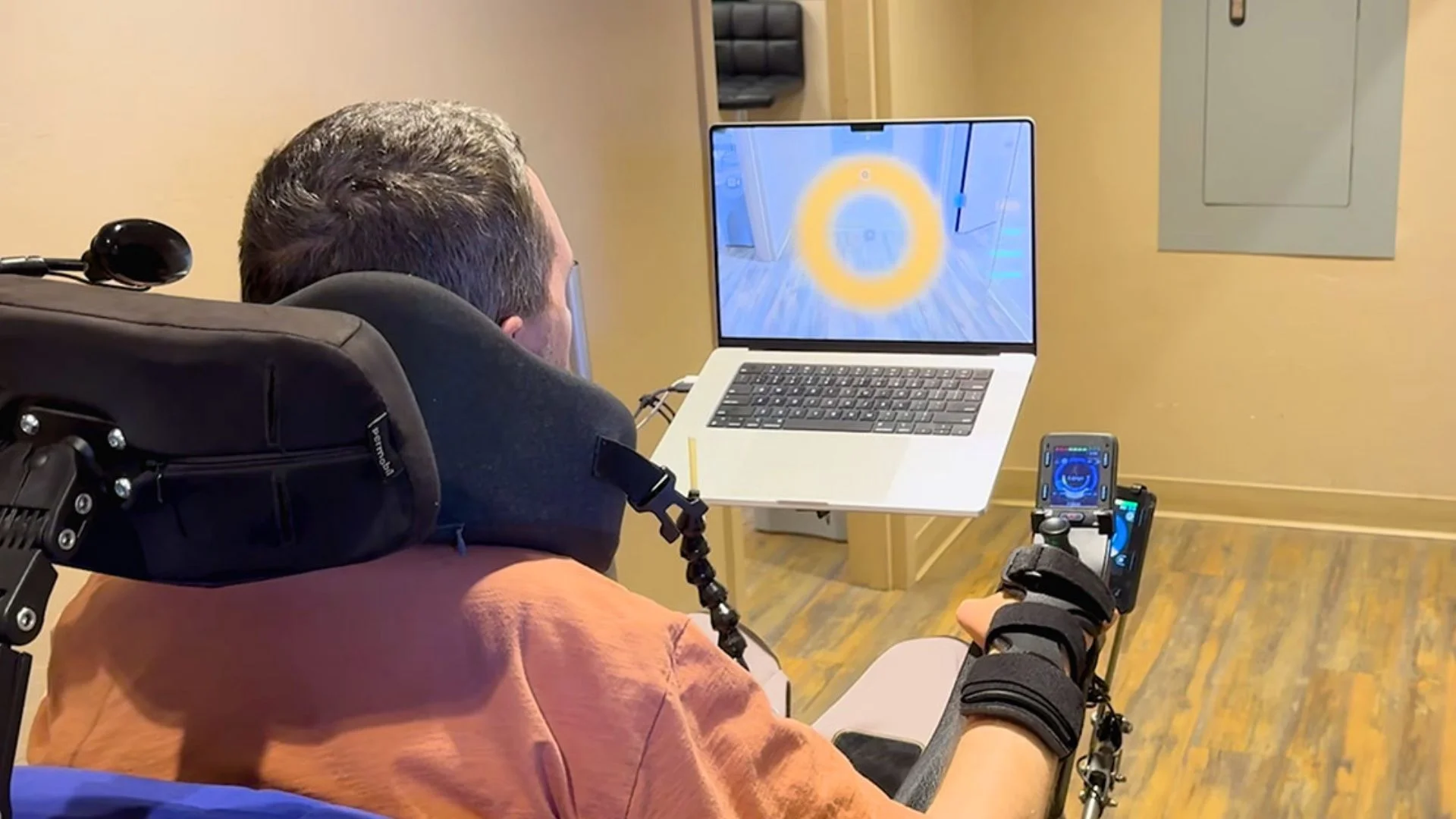
A machine learning model processes these brain signals and converts them into the movement of a computer cursor. The cursor appears in a custom interface showing a live camera view from the wheelchair. Moving the cursor in different directions controls speed, steering, and travel direction.
READ ALSO: KAIST’s Battery Scan Tech Detects Hidden EV Battery Defects at the Nanoscale
Brain Implant Enables Movement
The system converts cursor movements into commands that standard powered wheelchairs can understand. Users can drive forward, reverse, steer, and even adjust the seat position and backrest through brain activity alone. One participant said the movements initially felt uneven but became more natural after several minutes of use.
The participant also reported that the new control method allowed a more comfortable sitting position than a traditional joystick. He explained that joystick operation often forced him into an uncomfortable posture over time. The brain-controlled system reduced that physical strain during use.
Safety Features Included
Neuralink designed the system with built-in safety measures to reduce unintended movement. If the user stops concentrating, the cursor automatically returns to the center, slowing the wheelchair until it comes to a stop. This feature helps prevent unexpected or uncontrolled driving.
The wheelchair project builds on Neuralink’s earlier demonstrations that enabled users to move a computer cursor, type messages, play games, and interact with digital devices using brain signals. The company now describes the wheelchair application as extending digital control into real-world three-dimensional movement. Researchers are studying how well users can safely navigate everyday environments with the technology.
What Comes Next
The current demonstrations are part of ongoing clinical trials involving people living with paralysis. Neuralink says researchers will continue evaluating the system’s performance, safety, and usability before any wider deployment. If future studies confirm its benefits, brain-computer interfaces may offer new mobility options and greater independence for people with severe physical disabilities.