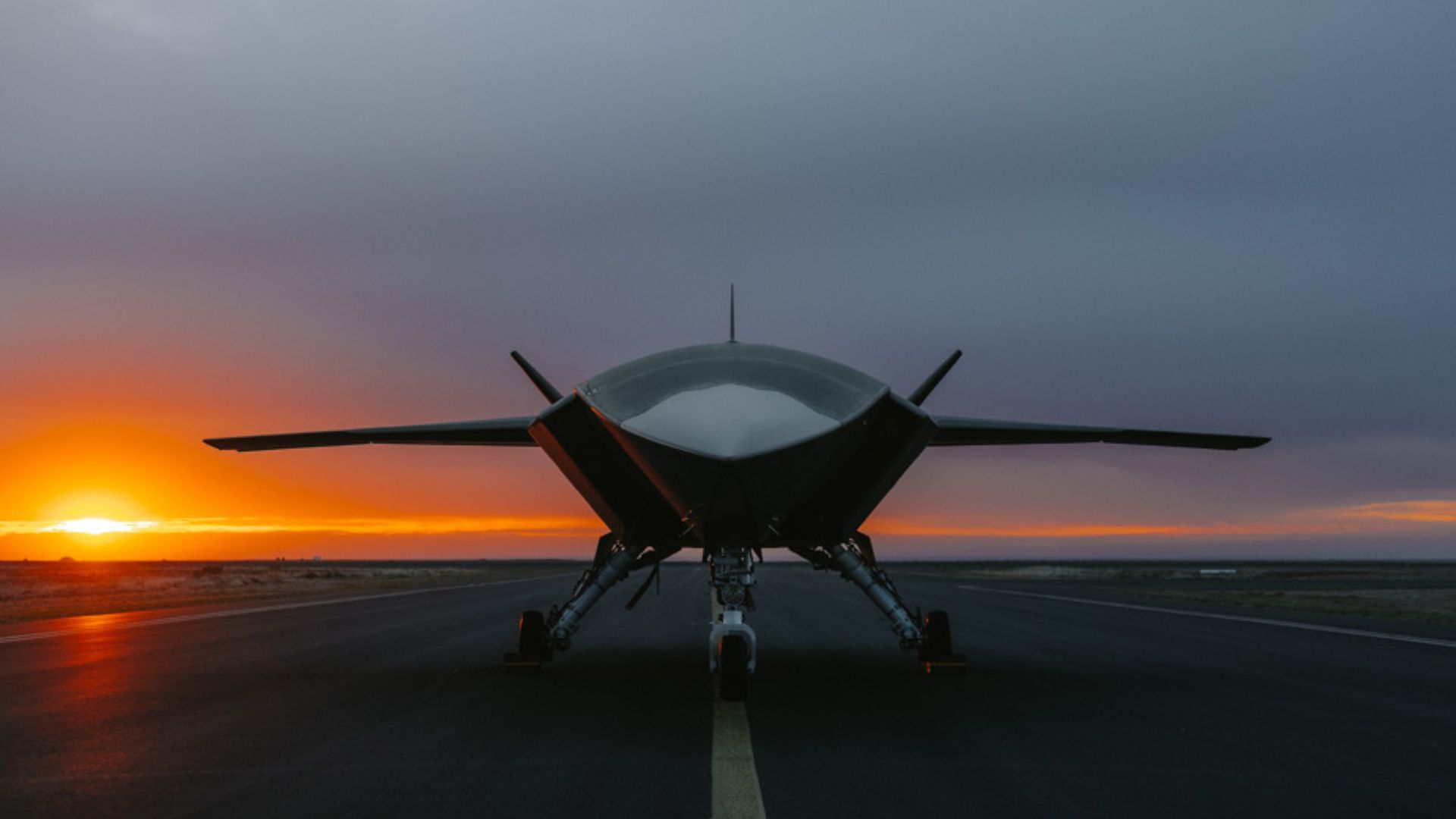
Boeing has begun flying its MQ-28 Ghost Bat combat drone over the Pacific Ocean from the US Navy’s Point Mugu base in California, marking the aircraft’s first known operations outside Australia.
The test campaign aims to demonstrate the drone’s operational readiness and its ability to operate from allied military facilities. The flights also signal Boeing’s growing effort to attract international buyers and deepen Pentagon interest in the autonomous aircraft program.
The MQ-28 recently completed multiple flights within the Point Mugu Sea Range, one of America’s most important military testing areas for advanced aircraft and weapons systems.
Located along the Southern California coast, Naval Air Station Point Mugu provides direct access to restricted Pacific airspace and is already heavily used for unmanned aviation testing. Boeing said the location offers ideal conditions for evaluating autonomous systems while meeting strict safety and airspace requirements.
MQ-28 Ghost Bat Beyond Australia
The MQ-28 Ghost Bat was originally developed in Australia under the Royal Australian Air Force’s Airpower Teaming System program.
Boeing Australia first revealed the aircraft in 2019, and the drone completed its maiden flight in 2021. Since then, the program has become one of the most closely watched unmanned combat aircraft projects outside the US.
Australia has already received eight Block 1 MQ-28s for testing and evaluation. These aircraft are being used to explore how autonomous drones can work alongside crewed military aircraft during combat missions.
Boeing and the Royal Australian Air Force have tested the drone with E-7A Wedgetail surveillance aircraft and F/A-18F Super Hornet fighter jets.
READ ALSO: Incat Tasmania Powers Up World’s Largest Battery-Electric Ship for Buquebus
The Ghost Bat is designed as a loyal wingman drone that can support human pilots during dangerous missions. It can fly ahead of fighter jets, gather intelligence, track enemy targets, or carry weapons. The aircraft uses artificial intelligence and autonomous systems to reduce pilot workload and increase battlefield awareness.
Boeing said the Point Mugu flights demonstrate that the MQ-28 can operate smoothly from allied bases outside Australia. This capability is important because future military operations between allies may require drones to quickly deploy across different countries and regions. The company also stated that all tests were conducted in accordance with strict range safety rules and airspace regulations.
The MQ-28 has a modular design that allows parts of the aircraft to be changed for different missions. Boeing released new images from California showing a Ghost Bat equipped with an infrared search-and-track sensor in its nose section. Earlier versions seen in previous appearances did not carry this sensor and used a different paint scheme with orange markings.
Infrared search-and-track systems help aircraft detect enemy aircraft by tracking heat signatures rather than radar signals. This allows the aircraft to identify targets while remaining harder to detect itself. Boeing’s updated configuration suggests the drone is being prepared for more advanced operational roles.
The exact number of MQ-28 drones currently located in the US remains unclear. Boeing has not publicly shared how many aircraft are involved in the California testing campaign. However, previous signs indicated that at least one Ghost Bat had already been used in America for autonomy and unmanned systems research.
In 2023, Boeing displayed an MQ-28 at MidAmerica Airport near St. Louis, Missouri. The drone appeared alongside Boeing’s MQ-25 Stingray tanker drone demonstrator for the US Navy. That appearance fueled speculation that Boeing was actively introducing the Ghost Bat to American military officials.
Growing Interest From US Navy
The California testing campaign has also drawn attention because of Boeing’s growing links to future US Navy drone programs.
WATCH ALSO: Researchers from German have developed a diving robot that can easily collect underwater waste
In 2025, the Navy awarded Boeing and several other defense companies contracts to develop conceptual designs for carrier-based Collaborative Combat Aircraft, also known as CCA drones. These aircraft are expected to play a major role in future naval air combat operations.
The Navy’s carrier-based CCA program remains in the early stages of development. Service officials have acknowledged that the Navy is moving more slowly than the US Air Force and Marine Corps in adopting autonomous combat aircraft. Even so, the service sees unmanned systems as an important part of future carrier air wings.
The MQ-28’s operations from Point Mugu are significant because the base already supports major naval drone activities. The site plays a central role in operations involving the MQ-4C Triton surveillance drone and several target drone programs. Testing the Ghost Bat there places the aircraft directly inside an active US Navy unmanned aviation environment.
Boeing has not officially confirmed whether the Point Mugu tests are connected to Navy CCA development. Still, defense analysts see the location and timing as highly important. The flights come as the Pentagon increases investment in autonomous aircraft designed to operate alongside manned fighters and surveillance planes.
The US Navy has also shown increasing public interest in the MQ-28 program. Earlier in 2025, Navy officials stated that the United States was interested in the drone’s artificial intelligence systems and modular architecture. Those features are seen as useful for future air combat missions that require flexible and low-cost unmanned support aircraft.
The Ghost Bat’s modular structure allows the drone to adapt to many mission types without redesigning the entire aircraft. Different nose sections and mission systems can be swapped out as needed. This approach reduces development costs and improves mission flexibility for military operators.
Boeing is currently working on the next generation of the aircraft known as Block 2. The company plans to build 9 Block 2 drones before moving to the larger, more capable Block 3 version. The future Block 3 aircraft is expected to carry internal weapons and offer a longer operational range.
According to Boeing, the Block 3 version will feature an internal weapons bay capable of carrying one AIM-120 AMRAAM air-to-air missile or two GBU-39 Small Diameter Bombs. Internal weapons storage is important because it helps reduce radar visibility. This makes the aircraft harder for enemy defenses to detect during missions.
The company has already tested live missile launches from earlier Block 1 drones. In one test, the MQ-28 successfully launched an AIM-120 missile carried under its fuselage. The demonstration showed that the aircraft can support combat operations beyond reconnaissance and surveillance missions.
Global Competition in Autonomous Air Combat
Interest in autonomous combat drones is rising rapidly across the global defense industry. Countries are investing heavily in unmanned aircraft that can work alongside traditional fighter jets. These systems are viewed as a lower-cost way to increase combat power while reducing risks to human pilots.
Boeing has openly promoted the Ghost Bat to international customers outside Australia. Japan has been publicly identified as a potential buyer of the aircraft. Boeing Australia has also partnered with German defense company Rheinmetall to explore opportunities with Germany’s military.
The company has even proposed a carrier-capable version of the MQ-28 for the UK. That design included a tail hook for aircraft carrier landings and launches. Such a version would allow the aircraft to operate directly from naval carriers during overseas missions.
At the same time, Boeing is also advancing development of the MQ-25 Stingray tanker drone for the US Navy. The MQ-25 recently completed an important flight milestone as the Navy prepares to introduce the aircraft into carrier operations. The service views the MQ-25 as a stepping stone toward larger future drone programs.
WATCH ALSO: Called Ascentia, the platform is developed by American company Collins Aerospace
The rise of aircraft like the MQ-28 reflects broader changes in modern warfare. Militaries increasingly want autonomous aircraft that can support pilots, gather intelligence, and conduct missions in dangerous areas. These drones are expected to become central elements of future air combat strategies.
Boeing’s latest flights from Point Mugu show that the MQ-28 Ghost Bat is moving beyond its Australian origins and entering a wider international stage. The tests also place the aircraft closer to potential future opportunities inside the US military.