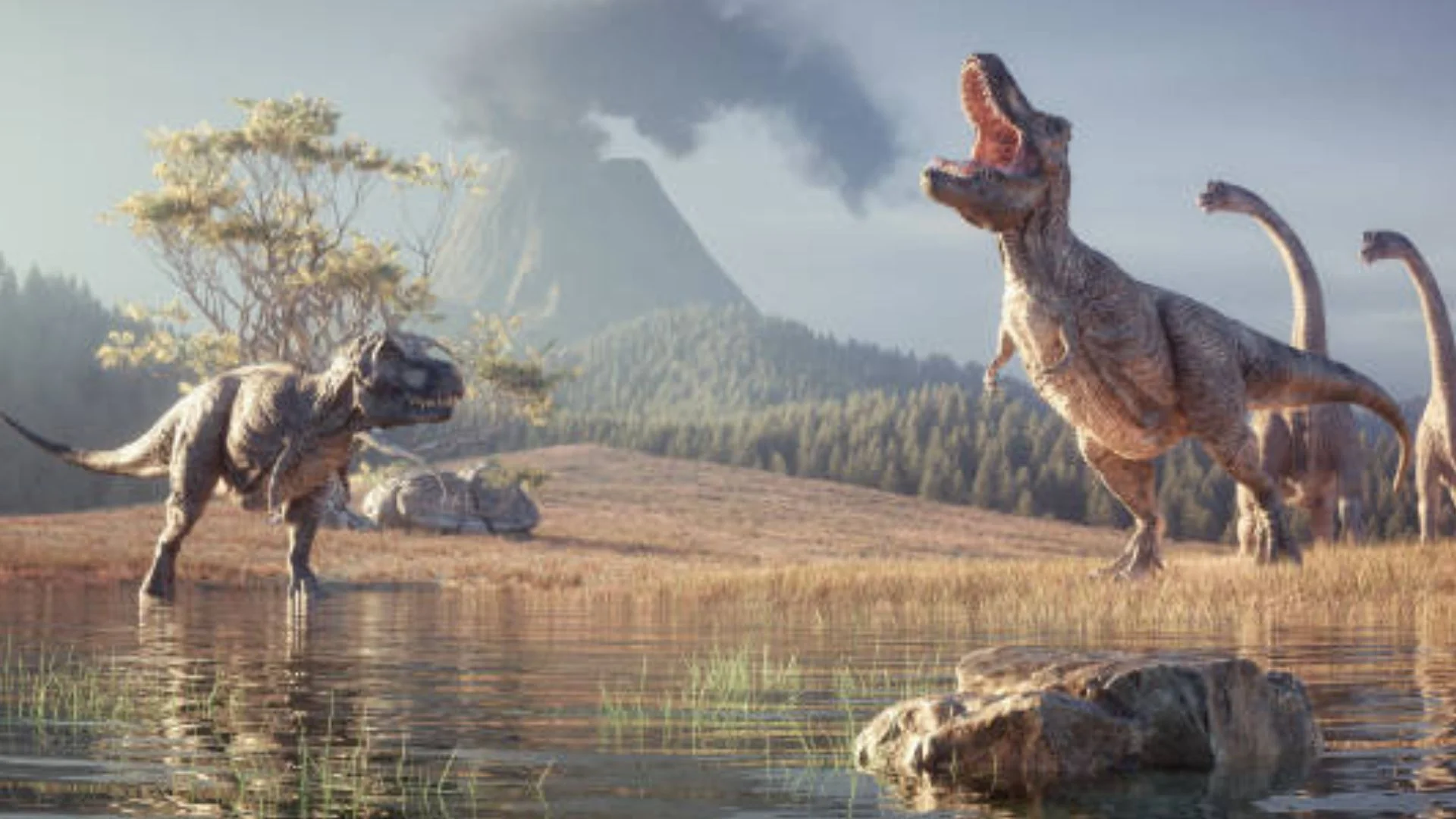
A massive dinosaur footprint site discovered in North China has revealed new details about prehistoric life from more than 100 million years ago.
Researchers found over 5,000 preserved dinosaur footprints in Zhangjiakou’s Xuanhua district, making it one of the largest footprint discoveries in China. The site also revealed the slowest-known walking speed ever recorded for a carnivorous dinosaur.
The exposed area stretches across nearly 30,000 square meters and contains more than 5,000 preserved dinosaur tracks. Scientists said such large collections of dinosaur footprints are rarely found at a single site in China.
The findings were reported by the local newspaper, Zhangjiakou Daily, after years of field surveys and scientific studies. Experts from the Hebei Bureau of Geology and Mineral Resources Exploration conducted an examination of the site. Researchers believe the discovery offers important clues about dinosaur life and behavior during the Early Cretaceous period.
Scientists divided the area into three footprint sections: Site I, Site II, and Site III. Site I was discovered earlier and became known for containing tracks from different dinosaur species in one place. These included giant sauropods, medium-sized theropods, and smaller raptor-like dinosaurs.
Further investigations later uncovered Site II and Site III southeast of the original location. Site II lies around 1.5 kilometers away from Site I, while Site III is about 2.25 kilometers away. The newer sites added more evidence of carnivorous dinosaurs living in the region millions of years ago.
READ ALSO: ZenaTech Pushes Three Drone Platforms Into Blue UAS Cybersecurity Certification Phase
Researchers found 27 well-preserved three-toed dinosaur footprints at the newer sites. These tracks ranged in length from 10.1 centimeters to 26.7 centimeters. The footprints belonged to theropod dinosaurs, a group that included many meat-eating species.
Slowest Carnivorous Dinosaur Walking Speed Recorded
One of the most surprising discoveries from the site involved the walking speed of a carnivorous dinosaur. Scientists studied five clear footprints found at Site III. The measurements showed the dinosaur moved at only one kilometer per hour.
Researchers identified the footprints as grallator tracks, commonly associated with small theropod dinosaurs. The stride length measured between 32 and 46 centimeters. Based on these numbers, scientists calculated the dinosaur’s speed using standard methods of fossil track analysis.
The result shocked researchers because carnivorous dinosaurs are usually seen as fast and active hunters. Most small theropods from the same period are believed to have moved at speeds between 9 and 14 kilometers per hour. In comparison, the dinosaur from Xuanhua moved at a speed similar to that of a tortoise.
Dinosaur Footprints Tell Everything
Xing Lida from the China University of Geosciences joined the research team studying the tracks. He said the slow pace does not mean the dinosaur was weak or unable to move quickly. Instead, the animal was probably slowing down while searching for food or checking its surroundings for danger.
Scientists explained that dinosaur footprints can reveal behavior, not just body size or movement. A slower walking speed can suggest hunting patterns, environmental awareness, or social behavior. This makes the Xuanhua tracks especially valuable for paleontologists studying ancient ecosystems.
WATCH ALSO: United States is considering to conduct air strikes against drug cartels in Venezuela
Why the Discovery Matters
The Xuanhua footprint site adds important information to China’s growing dinosaur fossil record. China already has several famous dinosaur fossil regions, but sites containing thousands of footprints remain uncommon. Footprints provide different information compared to bones because they show movement and activity in real time.
The discovery also helps researchers better understand the environment that existed more than 100 million years ago. Scientists now believe the area supported a wide range of dinosaur species living together in the same ecosystem. Large plant-eaters, fast hunters, and smaller predators all appear to have shared the landscape.
Footprint fossils form when animals step into soft ground that later hardens into rock over millions of years. Rain, sediment, and geological changes can preserve these impressions in remarkable detail. In Xuanhua, many tracks remained clear enough for scientists to measure stride length and walking direction.
READ ALSO: Kratos Picks Indiana for New Hypersonic Testing Facility Under Project Helios
Experts say the site still has strong research potential for future studies. More detailed mapping and excavation work could uncover additional trackways or even unknown dinosaur species. The findings also strengthen China’s role in global dinosaur research and fossil preservation.
Researchers believe the Xuanhua site will continue to provide new insights into dinosaur behavior, movement, and survival patterns. Future studies may reveal how dinosaurs interacted with their environment during daily life.