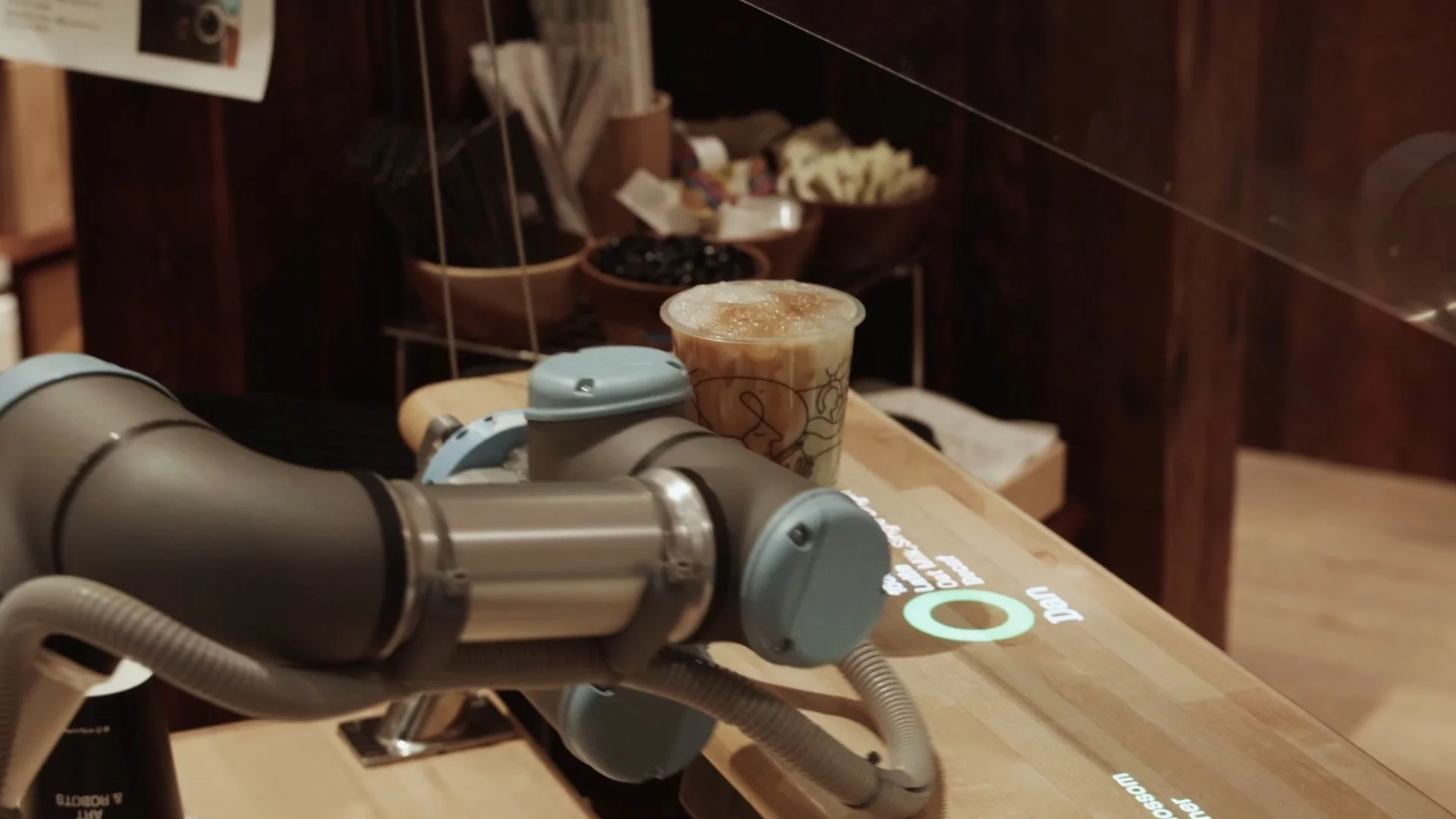
Robotics company Artly is bringing automation into specialty coffee with its Barista Bot system.
The robotic coffee maker is already serving drinks at locations such as MUJI Portland and aims to deliver cafe-quality coffee with consistent results. The company combines robotics, computer vision, and championship-level coffee expertise to recreate the workflow of a skilled human barista.
Artly developed the Barista Bot to handle coffee preparation with precision and consistency. The company wants to automate repetitive cafe work without removing the experience that customers expect from a coffee shop. Its system focuses on maintaining drink quality during busy working hours.
The project brings robotics engineers and professional coffee experts together. Artly’s founding team previously worked on computer vision and facial recognition technology before selling their startup to Amazon. After spending years in the tech industry, they shifted their focus toward robotics and hospitality automation.
Coffee became a practical starting point for the company. Seattle’s strong coffee culture and the large global cafe market helped shape that decision. The team reportedly built its first prototype in a garage within six months before presenting it at a coffee trade event.
That event connected the company with Joe Yang, who later became Artly’s Chief Coffee Officer. Yang is known for winning US championships in Brewers Cup, latte art, and coffee roasting. His expertise became central to training the robotic system.
Yang did not begin his career in coffee at an early age. He grew up in China and only started drinking coffee while studying in Auckland, New Zealand, in 2007. His interest gradually developed into a professional career in specialty coffee and international competitions.
READ ALSO: OCI Energy and CPS Energy Start Major Texas Battery Storage Project to Power 30,000 Homes
How Barista Bot Copies Human Techniques
Artly designed the Barista Bot to learn directly from human movement. Engineers attached motion capture equipment to Yang’s arm to record the exact motions he used while pouring milk for latte art. The robotic arm then learned to repeat those movements with high precision.
The system does not rely only on fixed programming. Cameras and sensors constantly monitor each step during drink preparation. The robot checks ingredient levels, cup placement, milk texture, and tamping pressure while making coffee.
After preparing a latte, the robotic arm photographs the finished drink. Computer vision software then compares the latte art with the expected result. If the quality is slightly off, the system adjusts future pours to improve accuracy.
This feedback system separates the Barista Bot from simple vending-style coffee machines. Traditional machines repeat the same process without learning from mistakes. Artly’s system is designed to monitor results and recalibrate itself over time.
According to the company, the Barista Bot measures ingredients with a variation of only 0.1 gram. It also controls extraction timing, water levels, and milk steaming temperatures. These small adjustments play a major role in how coffee tastes and feels.
Yang personally helped fine-tune many details in the process. He adjusted the positions of the steam wand, the extraction timing, and the system’s bean roasting methods. The goal was to recreate the texture and sweetness found in high-end cafe drinks without adding extra sugar.
WATCH ALSO: Tesla’s Optimus humanoid robot steals spotlight at ‘Tron: Ares’ premiere
Robot Cafes Reflect Automation Trends
Artly says the system performs particularly well during busy cafe operations. Human baristas often work under pressure while managing long queues and multiple drinks orders at once. The company believes that automation supports maintaining stable quality in those situations.
Barista Bot is not fully independent from human workers. Staff members continue to refill beans, milk, cups, and syrups throughout the day. The machine mainly focuses on drink preparation, cleaning, and quality checks.
This hybrid setup reflects a growing trend in food service automation. Many restaurant companies are exploring robotics to reduce repetitive work while keeping human staff involved in customer service. Automated systems are increasingly being used in kitchens, delivery operations, and beverage preparation.
Artly also plans to expand beyond coffee service. The company says it is testing robotic systems for cocktails, mocktails, smoothies, and other food-related tasks. It is also working with Virginia Tech on robotic fish filleting projects.
The company sees the Barista Bot as an example of how robotics can enter skilled work areas that once relied entirely on human experience. Instead of replacing creativity, the system focuses on reproducing techniques with reliable consistency.
READ ALSO: Ukraine’s SBU Finds Depleted Uranium in Russian Missile Warhead Found in Chernihiv
That approach could influence how automation develops across the hospitality and manufacturing industries in the coming years.
Artly’s robot cafe system arrives at a time when businesses are seeking ways to improve efficiency without compromising service quality. As robotics and AI tools become more advanced, automated food preparation systems are expected to appear in more public spaces.
The success of projects like the Barista Bot will help determine how quickly consumers accept robots in everyday service industries.