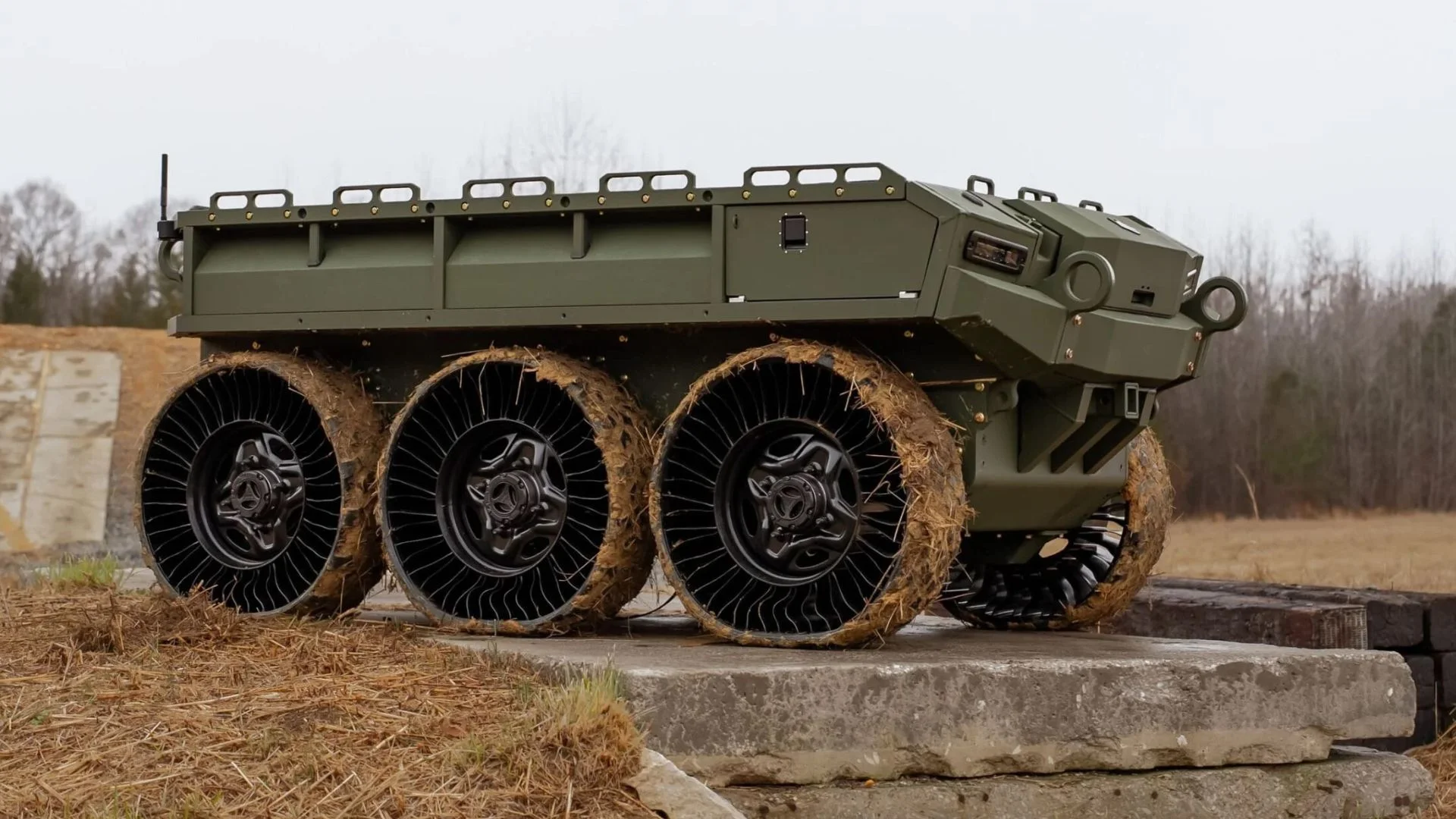
HDT Robotics has delivered its Hunter WOLF unmanned ground vehicles to the US Army as part of a new training and field evaluation program at Fort Polk in Louisiana.
The vehicles are being used by the 3rd Brigade of the 10th Mountain Division under the Ground Optionally Autonomous Transport (GOAT) initiative.
The delivery marks the start of hands-on training for soldiers who will operate and maintain the robotic systems in realistic field conditions.
The week-long Operator New Equipment Training (OPNET) program is designed to introduce troops to the system’s functions and mission roles.
It also focuses on how unmanned ground vehicles can support infantry units in logistics, communication, and medical evacuation. The effort reflects the Army’s ongoing push to integrate robotic platforms into active military formations.
READ ALSO: Meet Gabi: South Korea’s Robot Monk Joins Buddhist Rituals Ahead of Buddha’s Birthday
Fort Polk serves as the training location for this exercise because it prepares infantry units for deployment conditions. Soldiers are learning how to operate the system in varied terrain and mission scenarios. The training also includes demonstrations of different modular payload setups.
Training and Deployment at Fort Polk
The Hunter WOLF unmanned ground vehicles were delivered directly to soldiers participating in the GOAT program. The system is now part of active training rather than long-term laboratory testing. This approach helps the Army evaluate the platform under real operational conditions.
The training is being conducted with soldiers from the 3rd Brigade of the 10th Mountain Division. This unit has experience operating in harsh environments, including mountains, deserts, and remote regions. Its operational history makes it suitable for testing robotic support systems.
Instructors from HDT Robotics are guiding soldiers through system controls and maintenance procedures. They also demonstrate how the platform adapts to different mission needs. The focus is on building practical skills for field use.
The GOAT program emphasizes rapid integration of technology into combat units. Instead of limiting unmanned systems to experimental roles, the Army is introducing them directly to infantry formations. This allows faster feedback from soldiers using the equipment in realistic scenarios.
Capabilities of the Hunter WOLF UGV
The Hunter WOLF is a modular unmanned ground vehicle designed for multiple battlefield roles. It can carry supplies, transport equipment, and reduce the load carried by soldiers. The system can also operate in autonomous or remote-controlled modes.
In logistics roles, the vehicle serves as a cargo carrier, following troops across rough terrain. This helps reduce the physical strain on soldiers who often carry heavy equipment. The system is designed to operate alongside infantry units during movement.
READ ALSO: Baggage Bots: Japan Airports Deploy Chinese Humanoid Robots Amid Labour Shortages
The platform can also support casualty evacuation missions. In this configuration, it transports injured personnel from dangerous areas to safer zones. This function is intended to improve response times in battlefield conditions.
Another key role is communications support. The vehicle can act as a mobile relay system to extend network coverage. It also supports intelligence, surveillance, and reconnaissance (ISR) tasks by carrying sensors into forward areas.
The system is built using commercially available components. This design choice makes repairs easier in field environments. It also reduces dependency on specialized military supply chains.
GOAT Program and Army Modernization Efforts
The Ground Optionally Autonomous Transport (GOAT) program is part of the US Army’s effort to reduce the physical burden on infantry soldiers. Troops often carry loads exceeding 100 pounds during missions. These loads include weapons, ammunition, water, and communication gear.
Heavy loads can reduce mobility and increase fatigue during long operations. They also raise the risk of injury over time. The GOAT program aims to address these challenges by leveraging robotic support platforms such as the Hunter WOLF.
The program also supports the Army’s broader transformation efforts. By introducing unmanned systems into field units, the Army is testing how robotics can improve battlefield efficiency. The approach focuses on real-world use rather than isolated testing environments.
Selecting the 10th Mountain Division is important given its operational experience. The unit has been deployed in regions such as Afghanistan, Iraq, and Somalia. These environments require soldiers to operate in difficult terrain with limited logistical support.
WATCH ALSO: Humanoid robot plays table tennis like human beings
Operational Impact and Future Role
HDT Robotics stated that the Hunter WOLF has already undergone extensive testing before deployment. Company representatives emphasized its role in reducing risk and improving soldier mobility. The system is intended to support troops while limiting physical strain.
Soldiers participating in the training are also learning autonomy features. These features allow the vehicle to follow troops or operate remotely. This flexibility helps adapt the system to different mission requirements.
The Army is also evaluating how the platform performs in coordinated operations. This includes cargo movement, medical evacuation, and communications support in a single system. The goal is to assess how one platform can replace multiple logistical tasks.
Future use of the system will depend on field feedback and performance during training. The GOAT program continues to test how robotic vehicles can be integrated into frontline units. The results will help guide wider deployment decisions.
The introduction of the Hunter WOLF at Fort Polk reflects a growing shift toward robotic support in military logistics. As the program continues, the focus will remain on improving mobility, reducing soldier workload, and expanding the use of unmanned systems in operational environments.