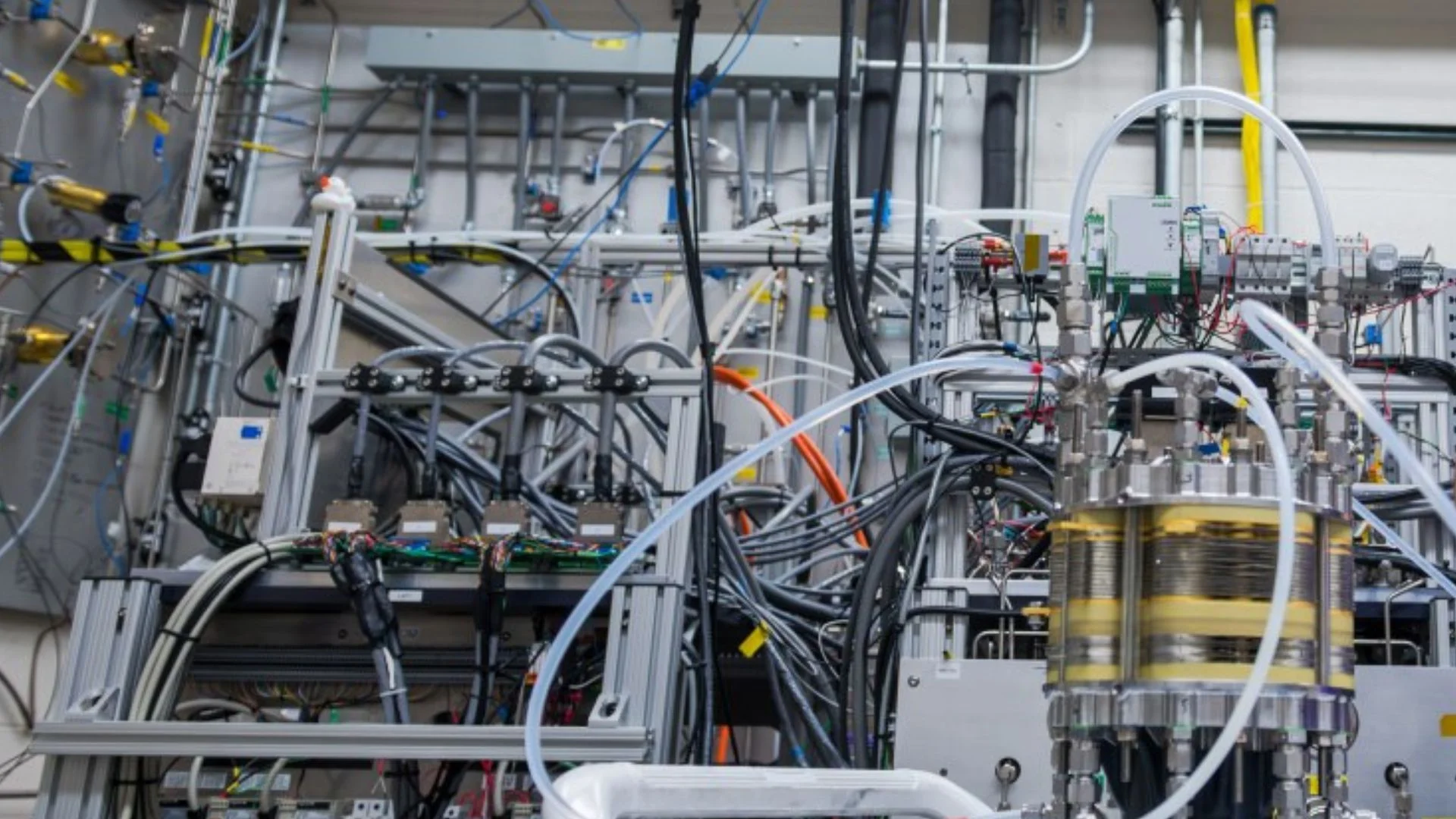
NASA researchers are preparing to test a massive regenerative fuel cell system that can play a key role in future moon missions.
The system was developed at NASA’s Glenn Research Center in Cleveland as part of efforts to support the Artemis program.
Engineers believe the technology can provide reliable energy storage for astronauts living and working on the lunar surface.
The fuel cell system is roughly the size of a sedan and stands as tall as a person. Inside the structure are nearly 1,000 components and around 270 sensors connected through a network of tubes and wires. Researchers recently moved the system into a testing cart using a small crane before beginning a new phase of experiments.
READ ALSO: China’s Tansuo-1 Returns After 156-Day Mission With Deep-Sea Life Finds in Pacific Trenches
Dr. Kerrigan Cain, the project’s lead engineer, described the system as one of the largest and most exciting technologies his team has worked on. The project has been under development at NASA Glenn for more than 5 years.
Initial testing was conducted in 2025 to better understand how the system operates and identify areas for improvement.
The regenerative fuel cell operates differently from the traditional batteries used in today’s space missions. When electricity is needed, the system combines stored hydrogen and oxygen to create water, heat, and electrical power. During recharge, it reverses the process by using electricity to split water back into hydrogen and oxygen for later use.
This cycle allows the system to repeatedly store and release energy without depending on frequent supply deliveries from Earth. NASA says that capability is especially important for future moon missions where cargo shipments may be limited. The technology is also lighter than many comparable battery systems while storing the same amount of energy.
Fuel Cell Powers Artemis Lunar Energy Storage
Energy storage has become one of NASA’s biggest challenges for long-term lunar exploration. Unlike Earth, the moon experiences nights that can last nearly two weeks in some regions. During these long periods of darkness, solar panels cannot generate electricity, creating a major obstacle for astronauts and equipment.
NASA believes regenerative fuel cells may help solve that problem by storing solar energy collected during the lunar day. The stored energy can then power habitats, rovers, communication systems, and scientific equipment during the cold lunar night. This would allow astronauts to continue operating without interruption even when sunlight disappears.
WATCH ALSO: Apple launches iPhone 17 lineup with contoured edges, and thinner borders
The Artemis program aims to establish a sustainable human presence on the moon over the coming years. NASA plans to use the moon as a testing ground for future missions to Mars and deeper parts of space. Reliable power systems are considered essential for supporting astronauts during these long missions.
Cain said regenerative fuel cells fit well into NASA’s long-term plans for lunar exploration. The technology can support habitats and vehicles while reducing dependence on traditional batteries alone.
Engineers also see potential for using the system in remote environments where long-duration energy storage is critical.
Fuel cells are not entirely new to space missions. NASA has used similar systems in earlier programs, including the Apollo missions and the Space Shuttle era. However, regenerative fuel cells are more advanced because they can recharge themselves by recycling water into fuel.
NASA Prepares for Tougher Lunar Environment Testing
The upcoming test campaign will focus on operating the entire fuel cell system as a single integrated unit. For the first time, researchers will store the hydrogen and oxygen produced during the recharge cycle. NASA hopes the tests will reveal how efficiently the system performs over long periods of operation.
Testing will take place inside NASA Glenn’s Fuel Cell Testing Laboratory. Researchers will secure the laboratory area and monitor the system remotely from a nearby control room. Once activated, the technology is designed to operate largely on its own, with minimal human intervention.
Engineers plan to collect large amounts of performance data during the tests. The information will help NASA identify technical issues and improve the system before it is considered for actual lunar missions. Researchers say every test is important because the technology must perform reliably in extreme conditions.
The moon presents environmental challenges far harsher than a controlled laboratory setting on Earth. Temperatures can swing dramatically between daylight and darkness, while lunar dust and radiation create additional risks. NASA plans to eventually test the fuel cell system in simulated lunar conditions to confirm it can survive those environments.
The project also highlights growing cooperation between NASA and private industry partners working on space technologies. Building permanent infrastructure on the moon will require new energy systems that are efficient, durable, and reusable.
READ ALSO: NASA Mars Helicopter Rotor Blades Cross Mach 1 in Groundbreaking JPL Flight Tests
NASA believes regenerative fuel cells may become one of the key technologies supporting the next era of human space exploration.
Researchers say the work is demanding but rewarding because of its long-term importance for future missions. The system remains under development, but the upcoming tests represent a major step toward making lunar energy storage practical.
The technology can help astronauts stay on the moon longer and support deeper exploration missions in the years ahead.