Adjusting the size of counter anions in polymeric ionic liquids (PILs) can dramatically boost carbon dioxide capture, a new joint study by Tohoku University and Nitto Boseki Co., Ltd. has found.
Led by Associate Professor Kouki Oka and published in Reaction Chemistry & Engineering, the research identifies anion size as a key factor in enhancing CO2 adsorption efficiency.
PILs are solid polymer materials that combine the strong gas-attracting properties of ionic liquids with the stability of plastics.
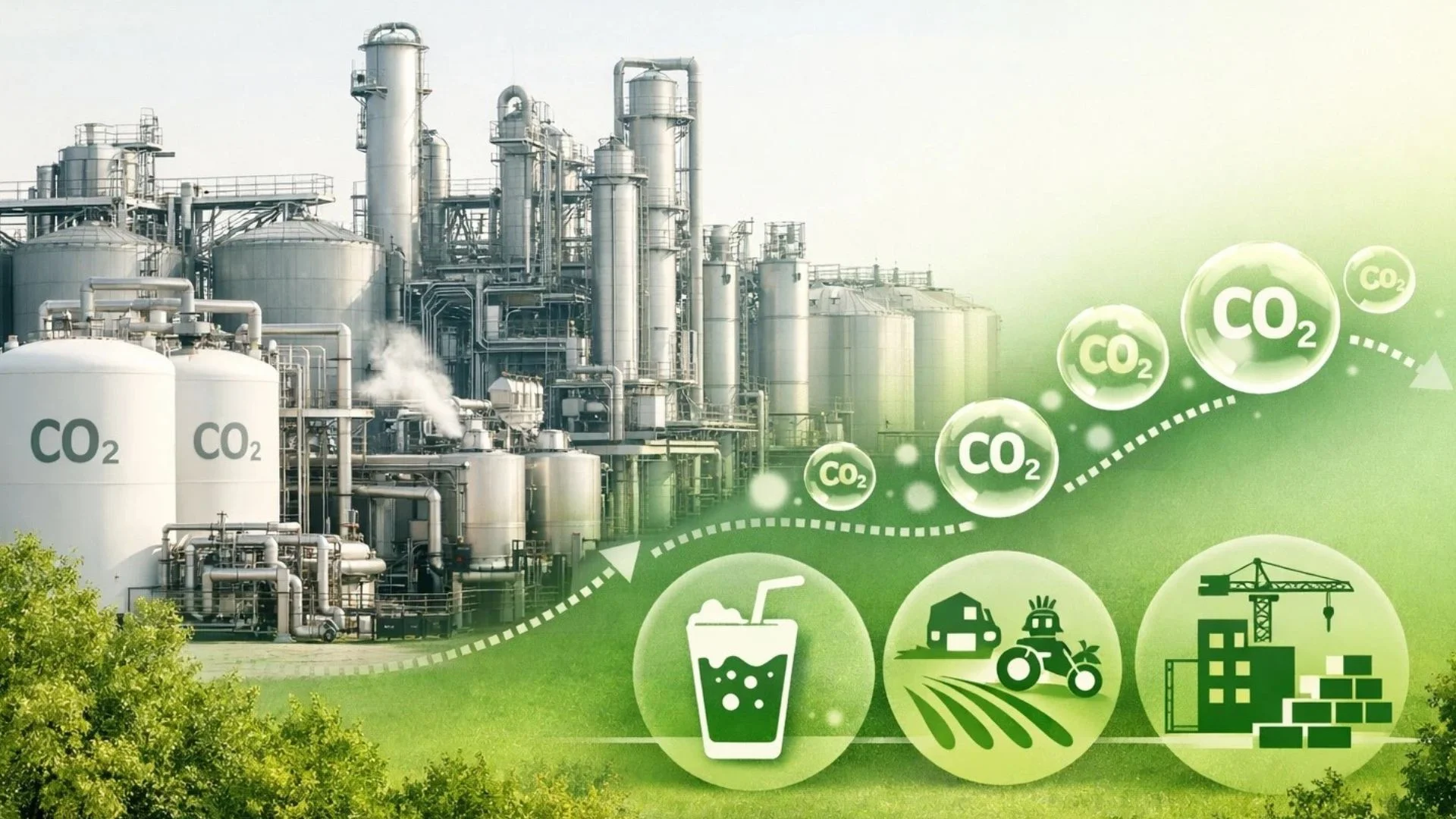
Scientists consider them promising for carbon capture because they can separate CO2 from industrial emissions and the surrounding air more efficiently than many traditional materials. Their solid structure also makes them easier to process into filters, membranes, and industrial recovery systems.
READ ALSO: US Air Force Flies Defensive Missions Over Hormuz to Keep Shipping Lanes Open
Anion Size Increased Carbon Capture Performance
The team studied a material called poly(diallyldimethylammonium chloride), also known as P[DADMA][Cl]. Researchers replaced the chloride ion with three anions: acetate, thiocyanate, and trifluoromethanesulfonate. These anions were selected because they vary in molecular size, allowing the team to examine how size influences CO2 adsorption.
One of the main challenges in previous studies was the presence of leftover inorganic salts generated during the manufacturing process. These impurities often remained trapped within the material, affecting performance measurements. To solve this issue, the researchers used a precise purification process that completely removed the unwanted salts.
The team confirmed the removal of impurities using Scanning Electron Microscopy-Energy-Dispersive X-ray Spectroscopy (SEM-EDX). This method allowed researchers to verify that chlorine and other reaction by-products had fully disappeared from the final material. Producing highly purified PILs enabled the team to more accurately evaluate the true adsorption performance.
The results showed a clear trend between anion size and CO2 absorption performance. Materials containing larger anions captured significantly more carbon dioxide than those containing smaller anions. The PIL using trifluoromethanesulfonate, the largest anion tested, achieved a CO2 adsorption capacity 7 times that of the original raw material.
Why the New Carbon Capture Method Matters
Efficient carbon capture technologies are becoming increasingly important as industries face pressure to reduce greenhouse gas emissions.
WATCH ALSO: World’s first motorbike backflip between two moving trucks successfully completed
Many governments and companies are investing in systems that can capture CO2 from factories, power plants, and chemical facilities before it enters the atmosphere. Materials that enhance adsorption efficiency may help lower operating costs and improve the performance of large-scale carbon recovery systems.
The study also provides a new design strategy for future gas separation membranes. Instead of changing only polymer structures, researchers can now improve performance by carefully selecting and designing counteranions. This approach may accelerate the development of advanced materials for environmental and industrial applications.
Researchers believe the findings will support the next generation of carbon capture devices and separation technologies. The ability to fine-tune PIL performance through anion engineering opens new possibilities for cleaner industrial processes and more efficient climate-focused technologies.
As global demand for carbon-reduction solutions grows, materials like these may become increasingly important in future emission-control systems.