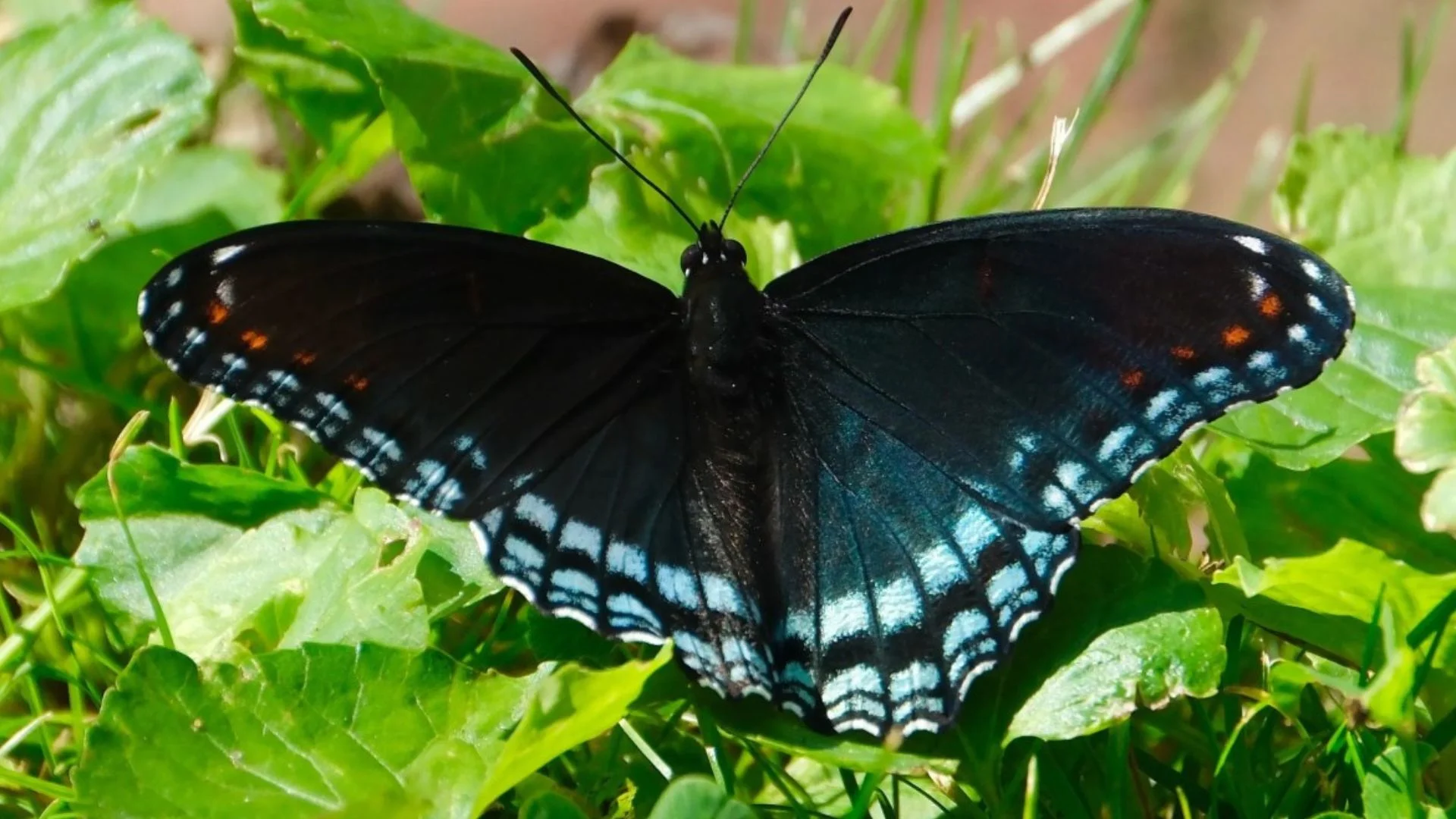
Butterfly wings are helping engineers design stronger, safer buildings that can better withstand earthquakes and other heavy impacts.
Researchers from China and Japan have developed a new structural design inspired by how butterfly wings distribute stress across their surfaces.
The approach aims to reduce the risk of building collapse during earthquakes while keeping structures lightweight and durable.
The research was published in the International Journal of Mechanical Sciences. Scientists from Wuhan University of Technology and Tohoku University worked together on the project. Their design focuses on improving how buildings absorb energy during sudden shocks.
READ ALSO: DARPA XRQ-73 Hybrid-Electric Drone Begins Flight Testing at Edwards Base
Butterfly Wing Structure Inspires Earthquake-Resistant Buildings
Butterfly wings may look delicate, but their structure is highly efficient at handling stress and movement. The researchers studied how the wings spread pressure evenly rather than concentrating it in one spot. They then applied that principle to architectural lattice structures used in construction and engineering.
Traditional lightweight lattice designs are useful because they reduce weight while maintaining strength. However, these structures often fail when subjected to a force at a weak point. Stress concentration can trigger cracks or sudden collapse during strong impacts or earthquakes.
To solve that issue, the team created a butterfly-inspired Body-Centered Cubic Topology(BCCB). The design uses interconnected geometric patterns that can twist, stretch, and redistribute pressure more effectively. This helps the structure absorb energy without suffering severe damage.
A major feature of the new system is its anisotropic lattice design. Anisotropy means a material behaves differently depending on the direction of force applied to it. Wood is a common example because it splits more easily along the grain than against it.
WATCH ALSO: Elon Musk’s Neuralink Robot Makes Brain-Computer Connection Possible
The researchers used this concept to create controlled deformation during compression and impact. Instead of breaking suddenly, the structure deforms and spreads the stress over a wider area. This process helps prevent catastrophic failure during earthquakes or heavy mechanical loading.
How Butterfly-Inspired Design Handles Impact
The team tested the design through computer simulations and mechanical experiments.
These tests included dynamic impact loading, which measures how structures perform during sudden shocks. The researchers also used quasi-static compression tests to study how the structures behave under gradual pressure. In both cases, the butterfly-inspired design outperformed conventional lattice systems.
Researchers found that the structure redistributed force in a pattern similar to outstretched butterfly wings. This movement reduced local damage and improved the material’s ability to survive repeated impacts. The design also demonstrated greater resistance to buckling, a common cause of structural collapse.
According to the researchers, most lightweight lattice materials struggle to survive strong localized pressure. The new anisotropic structure handled these forces more effectively while remaining relatively lightweight. That balance is important for modern buildings, vehicles, and aerospace systems, where strength and reduced weight are both critical.
The study also highlights the growing use of biomimicry in engineering. Biomimicry involves copying solutions found in nature to solve human design problems. Scientists have already used butterfly wings in technologies such as anti-counterfeit security features, advanced optical computing, and light-scattering materials that reduce the need for toxic paints.
READ ALSO: IBM and RIKEN Simulate 12,635-Atom Protein Using Quantum Supercomputing
Why Safer Building Designs Matter
Earthquakes continue to cause widespread destruction around the world every year. In 1995, the Kobe earthquake in Japan destroyed around 100,000 buildings in just 20 seconds. The 2011 Tōhoku earthquake and tsunami killed more than 15,000 people and displaced thousands of families.
The 2004 Sumatra-Andaman earthquake triggered deadly tsunamis across South Asia and East Africa. More than 280,000 people died, and over one million people lost their homes. These disasters showed the urgent need for buildings that can better survive seismic activity.
Engineers believe the butterfly-inspired design may help reduce injuries, property damage, and rebuilding costs in future earthquakes. Structures that deform without collapsing entirely may allow faster repairs and safer evacuations. That could also reduce the number of homes abandoned after major disasters.
WATCH ALSO: Poland and Portugal Gain New Space Capabilities After ICEYE Launch
The researchers now plan to explore wider applications for the design. Future uses may include automobiles, aircraft, spacecraft, and infrastructure projects where impact resistance is essential.
As cities continue to grow in earthquake-prone regions, nature-inspired engineering may play a larger role in protecting people and important infrastructure.