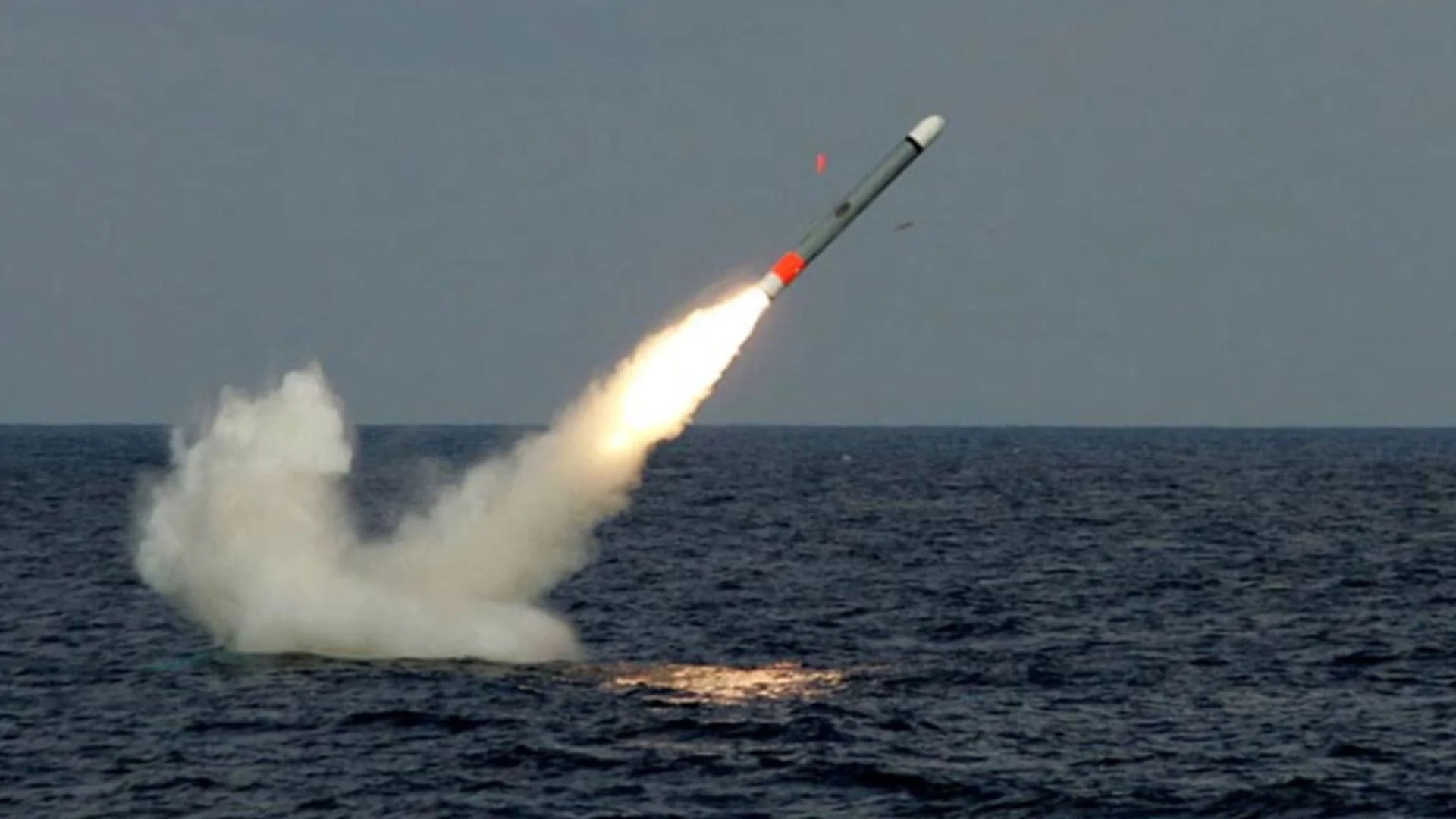
The US Air Force is advancing a plan to reshape future warfare by producing large numbers of low-cost, long-range missiles designed for mass launches from cargo aircraft.
This effort is called the Family of Affordable Mass Missiles – Beyond Adversary’s Reach (FAMM-BAR). It focuses on producing a single, flexible missile that can be used across different platforms and missions. The goal is to make weapons that are cheaper, easier to produce, and effective at long distances.
According to a recent Request for Information (RFI), the Air Force wants to produce between 1,000 and 2,000 missiles every year for five years. That scale shows how serious the effort is. The service wants to simplify the battlefield by using a single, affordable, adaptable, long-range missile.
The first version of this missile is expected to target ships. The Air Force has set clear requirements. The missile should travel at least 1,000 nautical miles, reach speeds of over 533 miles per hour, and use mid-course navigation to stay on track. It is mainly designed to hit slow-moving maritime targets.
READ ALSO: Rolls-Royce’s UK 3D Printing Hub Targets Future Military Aircraft Engines
But the project goes beyond just one mission. The Air Force is also exploring whether the same missile can be used by different branches of the military. The RFI asks companies if their designs can work on fighter jets, bombers, cargo aircraft, and even naval or ground systems.
This creates a major technical challenge. The missile must be able to fit inside cargo pallets, attach under aircraft wings, or be carried inside bomb bays. It also needs to work in maritime environments and withstand threats such as GPS jamming.
The Air Force has made it clear that this is still an early-stage effort. Officials said the request is only for gathering ideas and not a final requirement for other services.
FAMM-BAR is part of a broader missile program. It builds on earlier efforts like FAMM-P (palletized) and FAMM-L (lugged), which have shorter ranges of 250 to 500 nautical miles. The Air Force recently tested FAMM-L on the F-16 to check compatibility.
WATCH ALSO: American company’s next-generation ejection seat offers a 92% survivability rate
Funding is already being planned. The Air Force’s fiscal 2027 budget request includes $300 million in mandatory funding and $55 million in discretionary funds to buy 1,000 FAMM missiles.
Future versions of the missile may include new features. These include beyond line-of-sight communication, extended range, improved targeting systems, and different payload options.
The US has been using large numbers of missiles in ongoing conflicts, including tensions involving Iran. Experts warn that current usage rates are too high and could quickly deplete stockpiles.
READ ALSO: China’s First Batch of 10 Cloned Yaks Born Naturally, Herd Growth Draws Attention
Some analysts are concerned that if the trend continues, the US may struggle to maintain enough weapons for a major conflict, especially in regions like the Indo-Pacific.
FAMM-BAR aims to solve that problem by focusing on both quantity and capability. Instead of relying solely on expensive, advanced weapons, the Air Force is now looking to build more missiles at lower cost and use cargo aircraft as launch platforms to deploy them at scale.