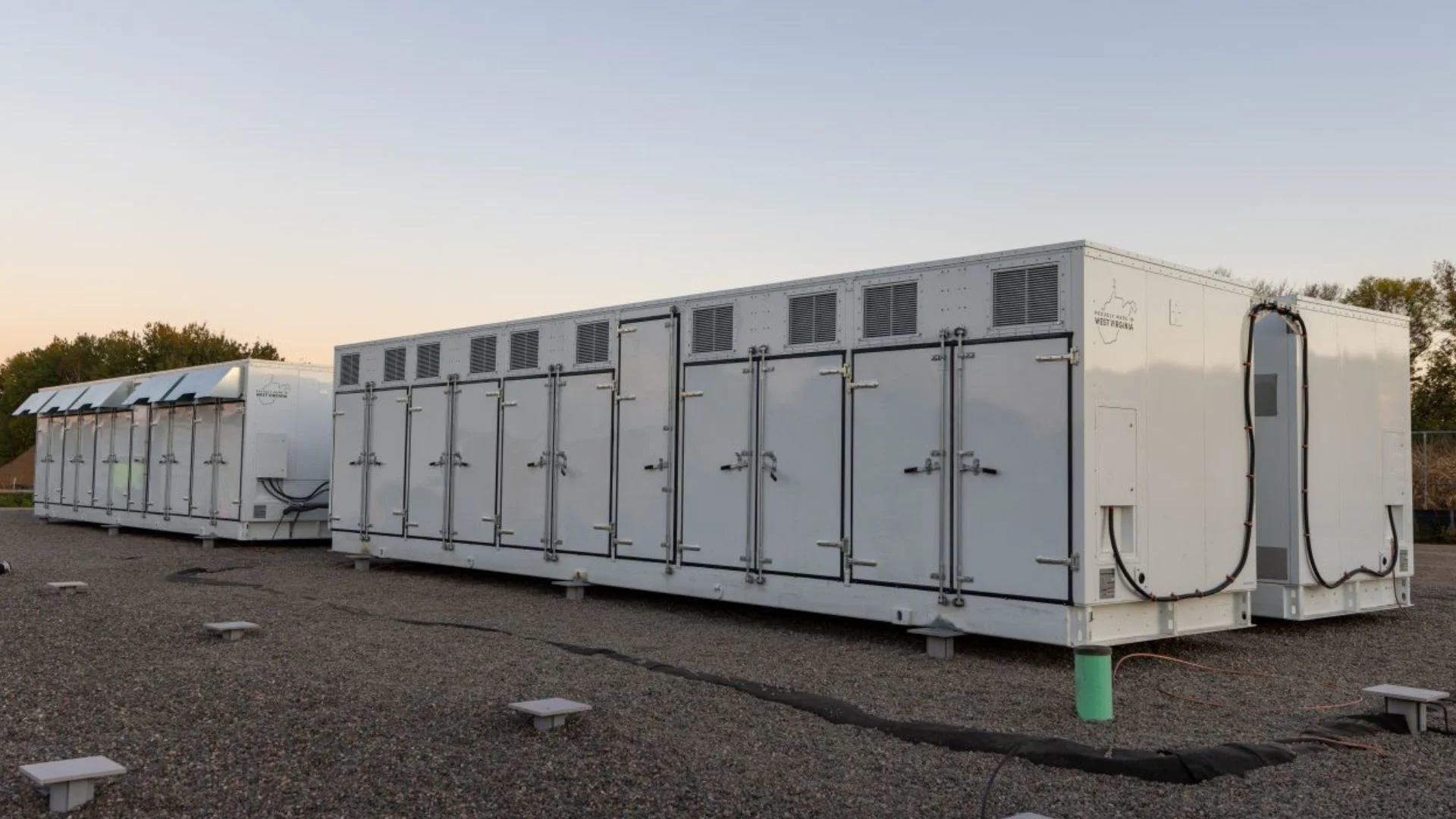
China has unveiled a low-cost all-iron flow battery with a long lifespan, aiming to transform renewable energy storage.
The innovation focuses on solving one of the biggest problems in clean energy: reliably and at scale storing power from solar and wind sources.
The research comes from a team at the Institute of Metal Research, part of the Chinese Academy of Sciences (CAS). Their findings were published in the journal Advanced Energy Materials. The scientists say their design can run for thousands of cycles with almost no loss in performance.
READ ALSO: Bold but Risky: Bering Strait Dam Plan to Prevent AMOC Collapse, Sparks Climate Debate
Energy storage has long been a weak link in the global shift to renewables. Solar and wind power are not always available, and storing excess energy for later use remains expensive. Lithium-ion batteries dominate the market today, but they come with high costs and safety concerns. Lithium itself is also much more expensive than iron, costing over 80 times as much as a raw material.
This is where iron-based batteries gain attention. Iron is cheap, widely available, and safer to use. All-iron flow batteries also use water-based electrolytes, making them non-flammable and suitable for large installations. However, these systems have struggled with stability issues, limiting their commercial use.
The main challenge lies in the battery’s internal chemistry. In earlier designs, the active iron materials would degrade over time. They could also leak across the membrane inside the battery, reducing efficiency and shortening lifespan. These problems made long-term operation difficult.
The Chinese research team addressed these issues at the molecular level. They introduced a ‘synergistic design’ strategy. This approach combines physical and electrostatic protection to stabilize the battery’s active materials.
WATCH ALSO: Engineers from Australia have introduced a spray that enhances the fire-resistance of clothing
At the center of the design is a newly engineered iron complex. This molecule acts like a shield. Its bulky structure blocks harmful particles, such as hydroxide ions, from damaging the iron. At the same time, the molecule carries a strong negative charge. This creates an electrostatic barrier that pushes away other negatively charged particles, preventing leakage across the membrane.
Lead researcher Tang Ao explained the concept clearly. “We combined high steric hindrance with a negatively charged interface for the first time,” he wrote. “This dual protection mechanism addresses both degradation and crossover at the molecular origin.”
The battery operated for more than 6,000 charge and discharge cycles without losing capacity. According to CAS, there was no buildup of unwanted materials and no structural damage during the tests. The system maintained stability throughout.
The performance is equal to more than 16 years of daily use. Even after such a long operation, the battery continued to perform efficiently. It achieved a coulombic efficiency of 99.4 percent, meaning very little energy was lost to side reactions. The system also maintained 78.5 percent energy efficiency under high-power conditions.
READ ALSO: From Weeks to Hours: AI’s Silent Takeover of US Nuclear Licensing
Another key improvement is the reduction in material crossover. The new design lowered this issue by two orders of magnitude compared to older systems. This directly improves the battery’s lifespan and reliability.
CAS highlighted the importance of these results in its press release. The organization stated, “The battery operated stably for over 6,000 cycles with no capacity decay.” It added that the research sets a new standard for the design of iron-based electrolytes.
Around the world, efforts to develop iron flow batteries are increasing. In the US, companies like ESS Tech are working on similar systems, though challenges remain. Issues such as hydrogen generation and dendrite formation still affect performance in many designs.
Other research groups, including teams at the Georgia Institute of Technology and Worcester Polytechnic Institute, are also exploring different approaches. These include alternative chemistries and system designs to improve efficiency and durability.
The Chinese team’s work stands out for its focus on an alkaline system and its use of precise molecular engineering. Instead of changing the entire battery structure, they improved the core chemistry that drives performance.
WATCH ALSO: Called Ascentia, the platform is developed by American company Collins Aerospace
If scaled successfully, this technology could significantly lower the cost of energy storage. That is a critical factor for large grid systems, where batteries must operate for decades. Lower costs and longer lifespans make renewable energy more practical and stable.
As countries push toward cleaner energy systems, storage solutions like this will play a key role. The new all-iron flow battery shows that simple materials, when engineered carefully, can compete with expensive technologies and may even surpass them in long-term performance.