Scientists in Germany have discovered a new way to improve the removal of hazardous chemicals from drinking water. The study focuses on glyphosate, the world’s most widely used herbicide, and its breakdown product AMPA.
The research was carried out by teams at the Karlsruhe Institute of Technology(KIT), working with partners from Ruhr University Bochum, the University of South Bohemia in the Czech Republic, and the University of Łódź in Poland. Their findings were published in Nature Communications.
Glyphosate is used heavily in agriculture and gardening to kill weeds. After use, it can enter soil and water systems. AMPA, its main breakdown product, remains in the environment for longer periods and raises similar concerns.
Scientists say both compounds may pose risks to human health, including possible links to cancer, nerve damage, and harm to biodiversity. Because of this, clean water treatment is becoming more important than ever.
READ ALSO: Squire WIG Drone’s Low-Altitude 40-Knot Flight Signals New Way To Move And Fight
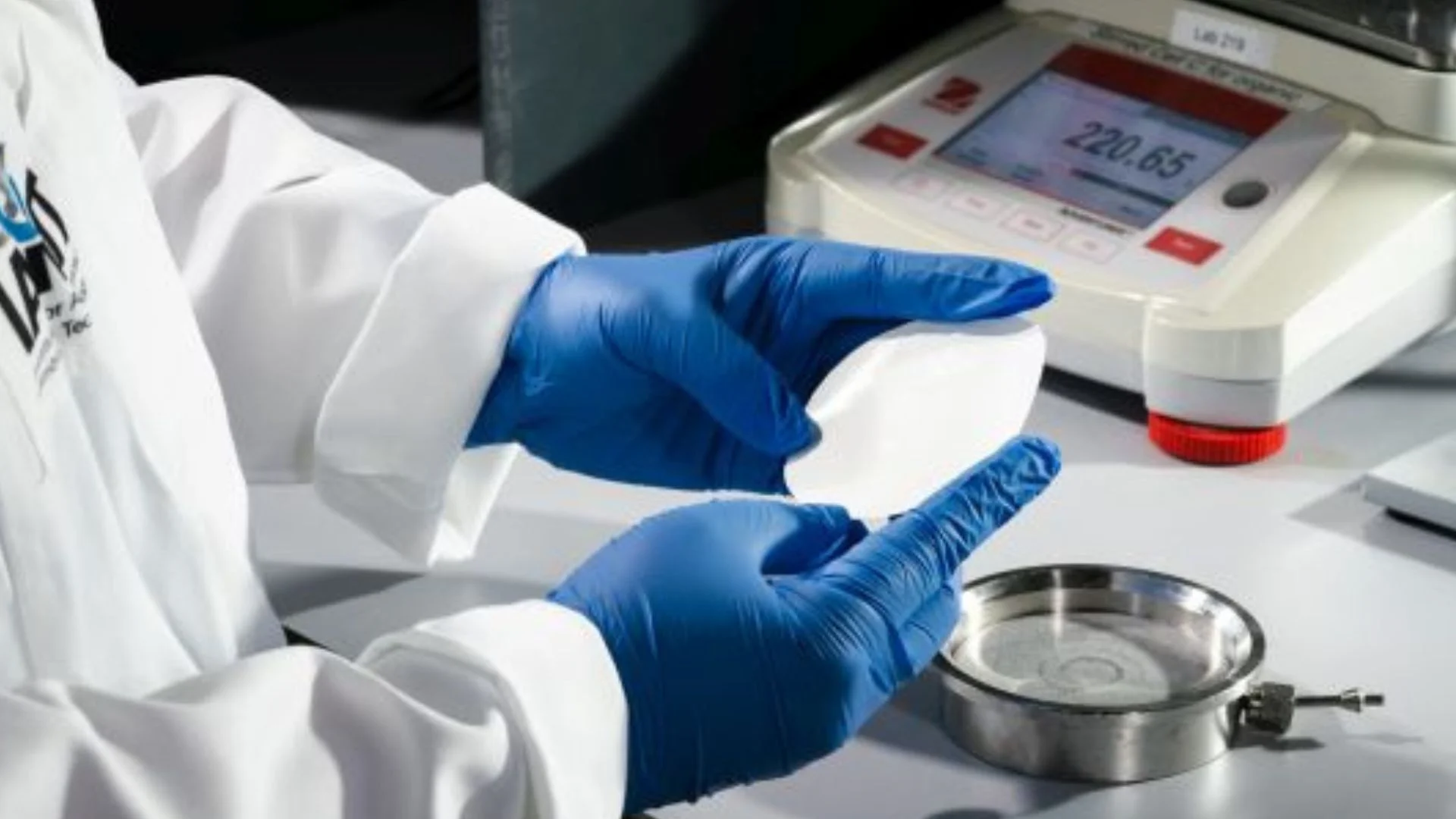
The research team studied nanofiltration, a water cleaning process that uses membranes with extremely small pores, only a few nanometers wide. These membranes act like very fine filters. Water passes through, while pollutants are trapped.
But the study shows that filtration is not just about size or electrical charge. Water is another hidden factor.
Researchers discovered that molecules in water are surrounded by a layer of water molecules, called a hydration shell. This shell alters the molecule’s behavior. It can make the molecule appear larger and harder to push through the membrane.
Professor Andrea Iris Schäfer from KIT explained the key insight clearly. She said, “We show that removing pollutants like glyphosate depends not only on size and charge, but strongly on how molecules interact with water.” She added that this understanding can help design better filtration systems for safe drinking water worldwide.
WATCH ALSO: BYD SEAL Delivers Lightning-Fast Acceleration for Effortlessly Smooth Drives
The study also found that water chemistry plays a major role. At higher pH levels, meaning more alkaline conditions, molecules carry different electrical charges. This increases their interaction with the membrane and improves removal. A higher pH also strengthens the hydration effect, making it harder for glyphosate and AMPA to cross.
However, pressure changes during filtration can have the opposite effect. When pressure increases too much, it can weaken or partially break the hydration layer. This makes it easier for some pollutants to slip through, reducing filtration efficiency.
Phuong Bich Trinh, a doctoral researcher at KIT, highlighted this balance. She explained that both pH and pressure must be carefully controlled to achieve optimal results when filtering glyphosate and AMPA from water.
To understand these effects in detail, researchers used advanced tools. At Ruhr University Bochum, scientists applied Fourier-transform infrared spectroscopy (FTIR). This method uses infrared light to study how molecules vibrate and behave in water.
READ ALSO: Battlefield AI: Startups Compete to Shape Future of Military Technology
At the same time, researchers from the University of South Bohemia and the University of Łódź ran computer-based molecular simulations. These simulations helped show how water molecules form hydration shells around pollutants and how these shells change under different conditions.
These methods gave scientists a clearer picture of what happens at the molecular level during filtration. The study shows that nanofiltration is more complex than previously thought. It is not just a physical sieve. It is a system shaped by chemistry, electricity, and the behavior of water itself.
Researchers say this new understanding can help design better membranes in the future. These improved systems could be more efficient, more energy-saving, and more affordable.
WATCH ALSO: Two Humanoid Bots Tackle 32-Box Job With Zero Human Help
Clean water is a global challenge, especially in areas where agricultural chemicals enter rivers and groundwater. This research takes a step forward in developing technologies that can better protect water resources.
By revealing the hidden role of water’s hydration shell, scientists believe they have opened a new direction in water purification science, one that could help deliver safer drinking water to more people around the world.