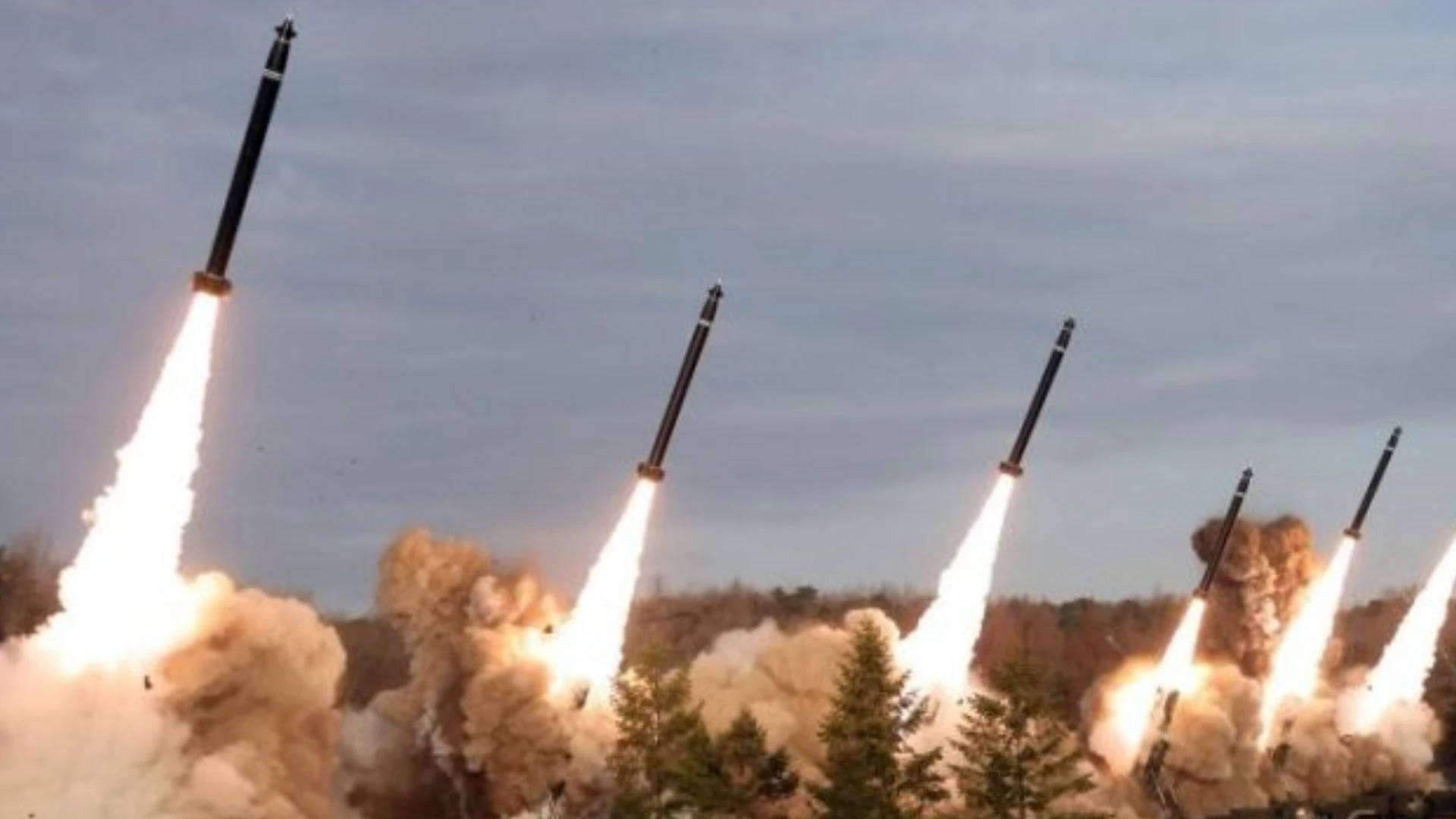
Tensions on the Korean Peninsula have risen again after North Korea launched multiple ballistic missiles into the sea off its east coast.
The latest tests came as Pyongyang dismissed expectations of improved relations with South Korea, signaling a continued hardline stance.
According to South Korea’s military, the launches took place early Wednesday morning. The Joint Chiefs of Staff said the missiles were fired at around 8:50 a.m. from an area near Wonsan, a coastal city in North Korea.
The missiles traveled approximately 240 kilometers before landing in the sea. Officials said South Korean and US authorities are working together to closely analyze the details of the launch.
READ ALSO: Lenovo’s 1000Wh Battery Reveal Signals More Than Just Better Battery Life
This was not an isolated event. South Korea’s military had already detected another suspected ballistic missile launch a day earlier, on Tuesday. That projectile appeared to have been fired from near Pyongyang, the North’s capital.
According to Yonhap News Agency, citing military sources, the missile launched on Tuesday failed. It flew eastward but experienced an abnormality early in its flight and disappeared.
Despite this, South Korean officials believe it was likely a ballistic missile.
In Japan, the government confirmed that none of the missiles entered its territory or exclusive economic zone. Authorities also reported no damage linked to the launches.
Japan’s Chief Cabinet Secretary, Minoru Kihara, strongly criticized the tests.
WATCH ALSO: US firm successfully demonstrates ship-based Sea Launcher for autonomous underwater vehicle ops
“These actions threaten the peace and security of the region and the international community,” Kihara said. He added that Japan would continue working closely with the United States and South Korea, including by sharing real-time missile-tracking data and analyzing developments.
South Korea also responded quickly. The presidential office, known as the Blue House, convened an emergency meeting of the National Security Council. Officials described the launches as a clear provocation and said they violated United Nations Security Council resolutions.
South Korea has consistently condemned such tests because North Korea is banned from conducting ballistic missile launches under UN resolutions. However, Pyongyang rejects these restrictions and insists they violate its right to self-defense.
The missile launches come at a sensitive time. There had been cautious optimism in South Korea about a possible easing of tensions. Earlier statements from the North had hinted at a softer tone, raising hopes of renewed dialogue.
But those hopes were quickly challenged.
A senior North Korean official made it clear that Pyongyang’s position had not changed. Jang Kum Chol, speaking through the state media Korean Central News Agency, rejected any suggestion that North Korea might view South Korea differently.
READ ALSO: Harvard, TU Wien Unveil Racetrack Laser Producing Stable Mid‑Infrared Frequency Comb
“The identity of the ROK as the most hostile enemy cannot change,” Jang said. He stressed that no actions or statements from Seoul would alter that view.
His comments came shortly after another message from North Korea had sparked speculation.
Earlier in the week, North Korea described South Korean President Lee Jae Myung as very fortunate and wise for expressing regret over alleged drone incursions. Some observers saw this as a rare conciliatory gesture from the North.
However, Jang dismissed such interpretations.
He clarified that the earlier statement, issued by Kim Yo Jong, the influential sister of leader Kim Jong Un, was not meant as a sign of goodwill. Instead, he described it as a warning to South Korea.
Experts say the sequence of events reflects a calculated strategy. Yang Moo-jin from the University of North Korean Studies explained that Pyongyang appears determined to control the narrative.
“North Korea briefly acknowledged efforts to reduce tensions,” Yang said. “But it moved quickly to shut down optimistic interpretations and reinforce its hostile stance.”
The Korean Peninsula remains technically at war, as the 1950–1953 conflict ended in a truce rather than a peace treaty. This long-standing tension continues to shape relations between the two sides.
The latest missile tests highlight the fragile nature of the situation. While diplomatic signals may occasionally suggest a shift, actions on the ground often tell a different story. North Korea’s continued weapons testing serves as a reminder of its focus on strengthening military capabilities.
READ ALSO: From Weeks to Hours: AI’s Silent Takeover of US Nuclear Licensing
At the same time, regional powers are closely monitoring developments. South Korea, Japan, and the US are maintaining coordination and surveillance to respond to any further escalation. The emphasis remains on security, intelligence sharing, and preparedness.
Hopes of improved relations appear uncertain. The combination of missile launches and strong political messaging suggests tensions will likely remain high in the near future.