Chinese researchers have unveiled a gravity detector with world-leading precision. The device, built by the Chinese Academy of Sciences (CAS), measures tiny changes in gravity to detect objects. It solves a key military problem: submarines can evade sonar and radar, but they cannot mask gravity.
The instrument uses a superconducting quantum interference device(SQUID), to detect gravity shifts. It is about the size of an office cubicle, not a kilometer-long lab setup.
READ ALSO: Harvard, TU Wien Unveil Racetrack Laser Producing Stable Mid‑Infrared Frequency Comb
CAS’ Institute of Mechanics’ Gravitational Wave Experimental Center developed the device. This is their third-generation instrument. Experts from several top Chinese institutions evaluated it on site and ranked it “the world’s best.”
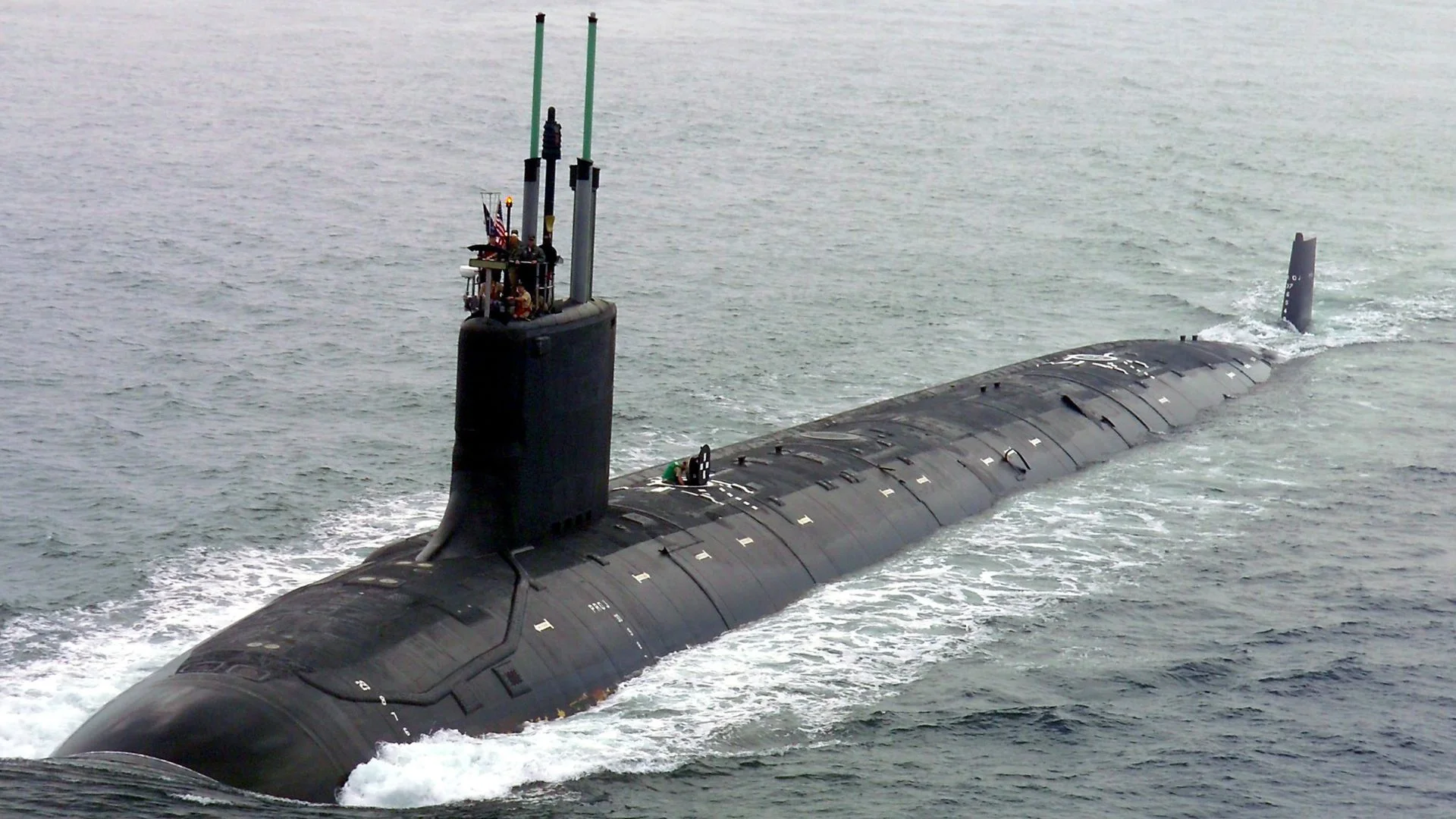
Existing submarine detection methods — sonar, magnetic anomaly detection, and radar — can all be fooled. Gravity, however, is impossible to hide. A 2019 study showed that detecting a US Navy Ohio-class nuclear submarine using gravity is feasible.
How does it work? When cooled, a superconductor expels magnetic fields (the Meissner effect). The team uses this to suspend an object without any friction. A SQUID, the world’s most sensitive magnetic sensor, then measures the tiniest movements caused by gravity. By comparing four suspended objects, the system creates a detailed gravity map.
The device can be used for scientific research, the exploration of underground resources, geophysical exploration, and hydrological monitoring. But its military potential is clear: spotting stealthy submarines.
WATCH ALSO: China commissions world’s largest open-sea offshore solar photovoltaic project
However, major limits remain. The current accuracy is 0.02 E (a unit of gravity gradient). The 2019 study estimated that detecting a submarine 220 meters underwater requires 0.01 E. To match the range of modern magnetic detectors, sensitivity would need to reach 0.0001 E. Also, the superconducting system must work stably on an aircraft or ship — not just in a lab. And even with a gravity map, identifying a submarine from other objects is hard.
China is steadily closing the gap. The Tianqin satellite program aims to build a space-based gravity observatory by 2035. If this ground-based detector continues to improve, it could change naval detection forever. Gravity cannot be masked — so submarines may one day have nowhere to hide.