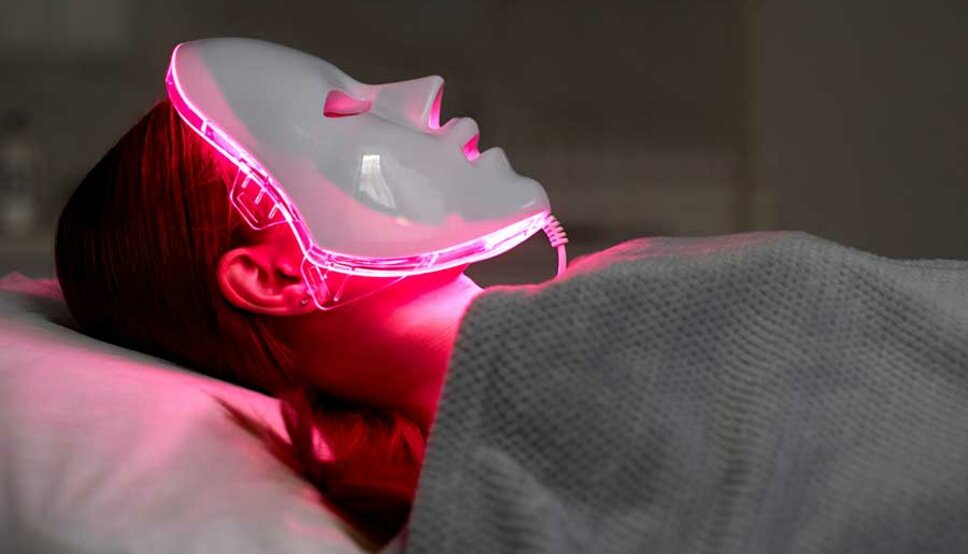
Red-light therapy is no longer a niche trend. It is rapidly becoming part of everyday wellness culture. From glowing face masks to full-body light beds, these devices are now found in dermatology clinics, gyms, and even homes.
The demand is rising fast. Companies are promoting these products as solutions for everything from ageing skin to chronic pain and mental health conditions. Social media has amplified the excitement, turning red-light therapy into a global wellness phenomenon.
Yet beneath this growing popularity lies an important question: Does it actually work, or is it just another overhyped trend?
For dermatologist David Ozog, red-light therapy became personal during a crisis. His teenage son suffered a severe stroke while on a family holiday. The situation was critical, and recovery seemed uncertain.
During that difficult time, a colleague suggested something unusual. He recommended using red and near-infrared light on the brain, based on early research suggesting it could protect damaged nerve cells.
READ ALSO: No Motors, No Propellers: These Bird-Like Robots Are Rewriting How Drones Fly
Ozog took the idea seriously. He spent hours reading scientific studies and eventually ordered light-emitting devices. Quietly, he began using them in his son’s hospital room.
Today, his son has recovered significantly and returned to university. Ozog cannot prove that light therapy was responsible. But the experience changed his perspective. What once seemed implausible began to look scientifically possible.
Red-light therapy was once dismissed as fringe science. Many experts struggled to accept that light could influence biological processes deep inside the body.
However, the broader role of light in health is well established. Sunlight helps the body produce vitamin D. Bright-light therapy is commonly used to treat seasonal depression. Ultraviolet light has long been used to treat skin conditions such as psoriasis.
Red and near-infrared light therapy, also known as photobiomodulation, builds on this understanding. It uses specific wavelengths of light to interact with cells and influence their activity.
READ ALSO: Plasma Meets Lemon: This 15-minute Trick Recovers 95% of Battery Minerals
The idea first gained attention decades ago when researchers noticed that low-level red light could stimulate hair growth in animals. Later, scientists observed faster wound healing under red LED lights during space-related experiments. These early observations laid the foundation for modern research.
In recent years, scientific evidence has become stronger and more focused. Clinical studies have shown that red-light therapy can help in certain conditions, particularly those involving tissue damage and inflammation.
Doctors have reported improvements in nerve-related disorders, certain eye diseases, and wound healing. It is also used to treat hair loss and to reduce the painful side effects of cancer treatments, such as mouth ulcers.
In some cases, expert groups now recommend it as part of standard care. Regulatory approvals for specific devices have further strengthened its credibility.
At the same time, researchers are careful not to overstate its benefits. While some applications are well supported, others remain uncertain and require more study.
Beyond established uses, scientists are exploring how red-light therapy might help in other areas of health. Early studies suggest potential benefits in muscle recovery, chronic pain conditions, and even mental health.
Some research indicates that it may reduce symptoms of depression and improve physical recovery after exercise. Other studies are examining its role in metabolic and cardiovascular health.
WATCH ALSO: The Future of Work: Robots That Think, Move, and Learn Like Humans
One of the most exciting areas of research involves the brain. In animal studies, red-light therapy has shown promise in protecting brain cells in conditions like Parkinson’s disease. Early human trials are now underway, raising hope for future treatments.
Although these findings are encouraging, they are still in early stages. Larger and more rigorous studies are needed to confirm these effects.
How Red-light Therapy Works Inside the Body
The science behind red-light therapy centres on the mitochondria, often called the powerhouses of the cell. These structures produce ATP, which fuels nearly every cellular function.
When red and near-infrared light enters the body, it can penetrate deeper tissues more effectively than shorter wavelengths, such as blue light. Some of this light reaches the mitochondria and interacts with key enzymes involved in energy production.
This interaction appears to boost ATP production, giving cells more energy to repair themselves and function efficiently. As a result, processes such as healing, blood circulation, and inflammation control may improve.
This mechanism helps explain why the therapy shows promise in conditions involving tissue damage or cellular stress.
One interesting pattern has emerged from research. Healthy cells often show little response to red-light therapy. In contrast, stressed or damaged cells respond more strongly.
This may explain why results vary between individuals and conditions. The therapy seems to work best where the body needs support the most.
It also highlights why some people report dramatic benefits while others see minimal change. Cell health plays a key role.
WATCH ALSO: US firm successfully demonstrates ship-based Sea Launcher for autonomous underwater vehicle ops
Beyond Mitochondria: Unanswered Questions
Although mitochondria are central to the explanation, they may not tell the whole story. Scientists are exploring other possible mechanisms.
Some researchers suggest that red light may influence how water behaves inside cells, making biological processes more efficient. Others are studying the role of biophotons, tiny light signals produced by cells that may help them communicate.
These ideas are still being investigated, and the science is far from settled. But they point to a deeper and more complex interaction between light and biology than previously understood.
A major hurdle in red-light therapy is ensuring that enough light reaches the target tissues. This is especially challenging when treating deeper areas, such as the brain.
The human skull blocks much of the light, making it difficult to deliver effective doses. Researchers are developing new technologies to overcome this limitation, including advanced devices and alternative delivery methods.
However, increasing light intensity raises safety concerns. Some high-powered devices may not be suitable for home use, highlighting the need for careful regulation.
Dosage is one of the most critical factors in red-light therapy. Too little light may have no effect, while too much could reduce benefits or even cause harm.
Scientists often describe this as a sweet spot, where the right balance produces the best results. Finding this balance is challenging because it depends on several variables, including wavelength, exposure time, and the specific condition being treated.
At present, there is no universal standard, which adds to the complexity of using the therapy effectively.
Another intriguing idea is that modern lifestyles may limit our exposure to beneficial wavelengths of light. People spend more time indoors, and artificial lighting often lacks the full spectrum of sunlight.
Red and near-infrared wavelengths are less common in indoor lighting. Some scientists believe this reduction could have subtle biological effects over time.
They argue that humans evolved under natural sunlight, which provides a balanced mix of wavelengths. Losing part of that spectrum may influence health in ways we are only beginning to understand.
Despite its promise, experts warn against exaggerated claims. Many commercial products lack strong scientific evidence. Some may not deliver the correct wavelengths or intensity needed for real benefits.
READ ALSO: Japan’s Insect-Inspired Robot Tracks Odors Even with One Sensor
Researchers stress that red-light therapy should not replace proven medical treatments. Instead, it should be seen as a complementary approach that may support overall health in certain conditions.
More high-quality studies are needed to separate genuine benefits from marketing hype.
Red-light therapy is at a turning point. It is moving from the fringes of science into more serious medical research and clinical use.
Scientists are working to answer key questions about how it works, who benefits most, and how it should be used. As research continues, clearer guidelines and more reliable applications are likely to emerge.
Red-light therapy is neither a miracle cure nor an empty trend. It represents a growing field of science with real potential, but also many unanswered questions.
In some areas, its benefits are already clear. In others, it remains experimental. For now, the best approach is to stay informed and cautious. Science is evolving, and while the light shows promise, its full power is still being understood.